
Early on, we saw several different design prototypes for the iPhone 8 that made it difficult to suss out both the final look and the features we can expect, but both later leaks and information accidentally shared by Apple have given us a pretty clear picture of what to expect. Originally, there were rumors about prototypes featuring a water drop design, a rear Touch ID button, and an edge-to-edge design with no Touch ID button at all, but it appears the third option won out.
Apple in late July released firmware for the upcoming HomePod speaker and inadvertently released an image of the iPhone 8 that developers dug out of the code. Though just a simple outline, The image heavily resembles leaked iPhone 8 parts and design schematics, featuring full-front display with thin bezels, no Home button, and a notch at the top for the earpiece and sensors.

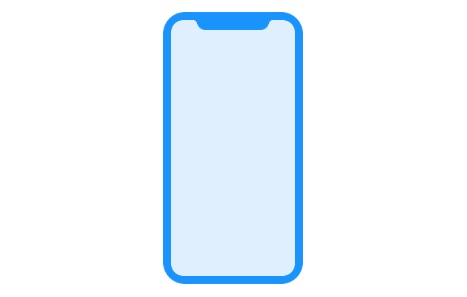
Given that the image looks both nothing like existing devices and so much like iPhone 8 leaks, it’s reasonable to assume that this is indeed representative of what we can expect to see in September when the device launches. We’ve seen many clearer schematics, renderings, dummy devices, and part leaks that give a clearer picture of what the iPhone 8 will look like, with those images available below. Much of this information has come from sources within Apple, supply chain leaks, and accessory makers that use leaks to build early versions of iPhone cases.

As outlined above, the iPhone 8 is expected to feature an edge-to-edge display, a glass body, and no visible Touch ID button anywhere on the device, pointing towards an iPhone 8 with Touch ID located under the display or no Touch ID functionality at all, as can be seen in the rendering below. The rendering is based on leaked schematics that suggest it will measure in at 137.54mm tall by 67.54mm wide, similar in size to the iPhone 7.
Thickness is not shown, but there’s a nearly edge-to-edge display that measures 5.767 inches on the diagonal. A 4mm bezel is pictured around the display, with half of that being the 2.5D curved glass at the edges. All of this is in line with rumors suggesting an iPhone 7-sized device with an iPhone 7 Plus-sized display.
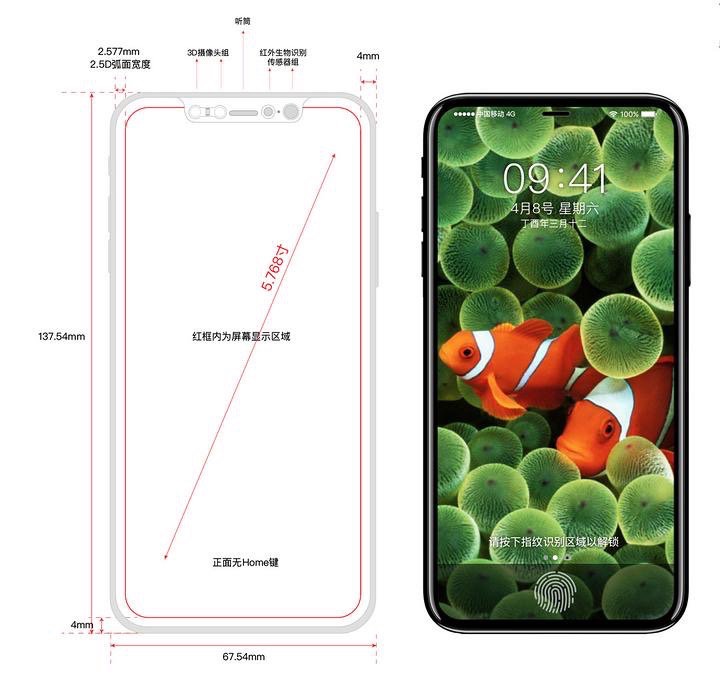
A narrow earpiece is depicted on the front of the device alongside cameras and sensors that appear to be embedded in the display area. There is no Home button and no visible Touch ID sensor.
An image of an iPhone 8 dummy model sourced from Chinese social networks features front and rear panels made from slightly curved 2.5D glass held together with a stainless steel frame that matches the glass back.
The dummy iPhone 8 also includes an edge-to-edge screen with no Home button and a visible notch cut out of the front to house a camera and other sensors. At the rear of the device, there’s a vertical dual-lens camera with no other markings. There is no rear Touch ID sensor nor an Apple logo.

At the sides, though not visible, there are volume buttons and a mute switch on the left, with an elongated power button and a SIM tray on the right.
We went hands-on with an iPhone 8 dummy model and compared it with an iPhone 7, iPhone 7 Plus, and iPhone 8 to get a closer look on what the device will look like in comparison with existing devices. We can’t confirm for sure that this is the final design, but we believe it’s likely to be as these dummies are used by accessory makers and are very often spot on.
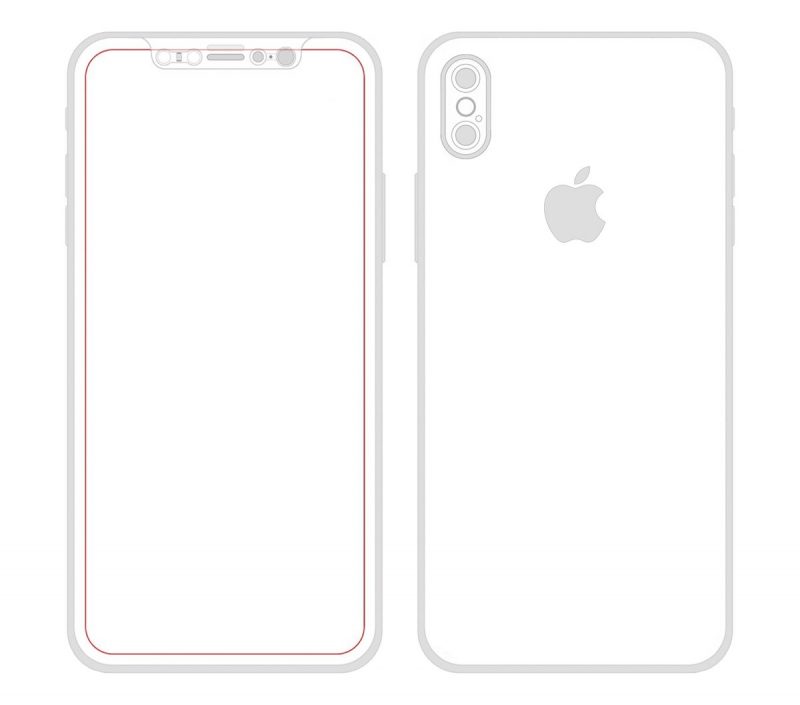
Schematics “based on blueprints” that allegedly give a look at the sensors located under the display and inside the device have also leaked. At the top of the device, there’s an embedded camera, flash, and ambient light sensors, all designed to power a new facial recognition system Apple is working on.
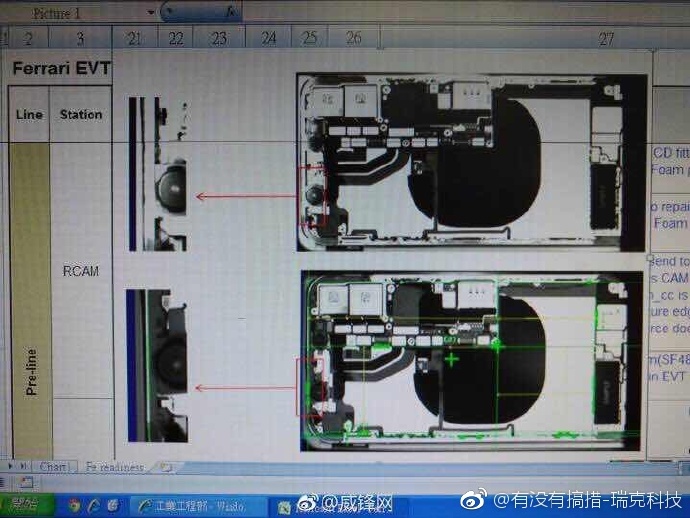
Additional images said to be sourced from a Foxconn employee appear to show off the internal structure of the device, depicting internal components like a wireless charging coil, a dual rear camera module, an L-shaped battery, and a stacked logic board design, with the latter two features suggesting better battery life.
Our first glimpse of components that could be destined for the iPhone 8 surfaced in mid-June. The images, said to be sourced from a case manufacturer who received them from a glass supplier in China, depict what is said to be the front and back panels of the iPhone 8.
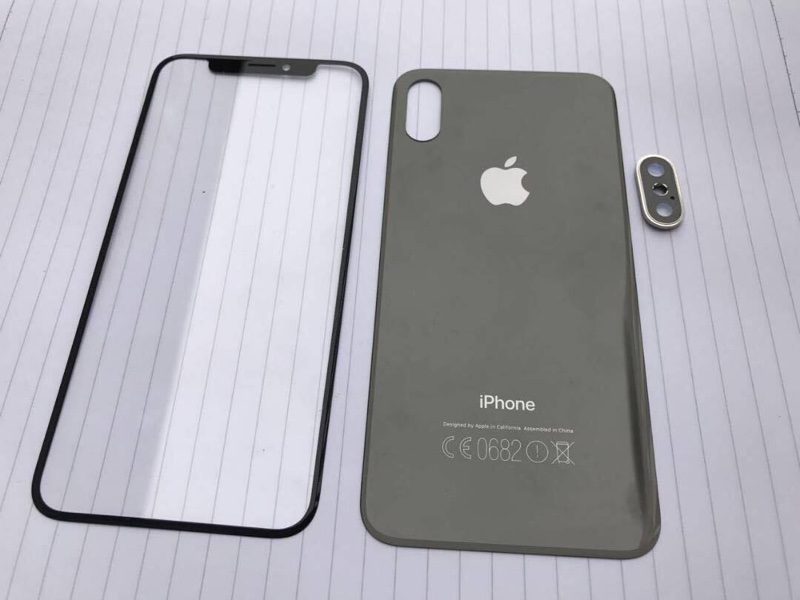
There’s a thin bezel around the sides along with a top bar that could perhaps house a front-facing camera, microphone, and speaker. Notably, there’s no cutout for a Touch ID fingerprint sensor, which is in line with the rumors that suggest Apple will embed it in the display or eliminate it.

A second photo depicts the two alleged iPhone 8 components next to components said to be for the 4.7-inch iPhone 7s and the 5.5-inch iPhone 7s Plus. All three rear shells are made from glass to support wireless charging. There’s no way to verify the authenticity of the components in the images, so they should be viewed with caution until we get additional part leaks.
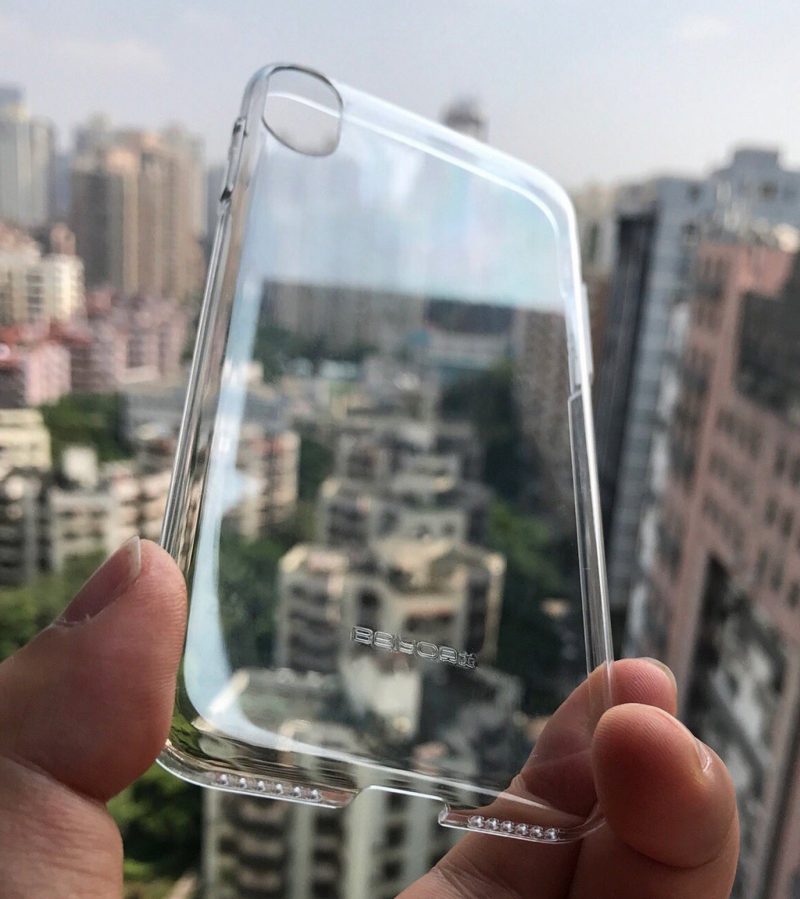
An iPhone case said to be for the iPhone 8 has leaked, showing off a design that’s similar to many of the prototype 1 renderings. It features a cutout for a vertical dual-lens rear camera and because it has no cutout for Touch ID or other features, it suggests it is for a device with no rear-facing Touch ID button.
It continues to have pill-shaped volume buttons, but there is a longer power button located on the left, something we’ve also seen in renderings and other desk leaks.
A comparison image that shows dummy models for the 2017 ~5-inch OLED iPhone, 4.7-inch iPhone, and 5.5-inch offers a look at the size differences between the devices. The 5.5-inch iPhone continues to be much larger, while the OLED iPhone, which is rumored to have a 5.8-inch display, is similar in size to the 4.7-inch iPhone because it has no display bezels.

All three feature glass backs. The 5.8-inch iPhone has a vertical camera and a longer power button, features that have been seen in previous leaks, as well as a prominent notch on the front for the front-facing camera and sensors, believed to enable facial recognition features.
A dummy model of the iPhone 7s Plus is compared to the iPhone 7 Plus and an iPhone 8 dummy model in the video below. The iPhone 7s Plus is identical in size and style to the iPhone 7 Plus, with the exception of the glass back and metal frame. The video also offers a solid look at the size differences between the two devices.
iPhone 8 renders based on a device that’s 144mm tall, 71mm wide, and 7.7mm thick were compared to the iPhone 7 and the iPhone 7 Plus, giving us yet another look at how the iPhone 8 fits into the iPhone lineup.
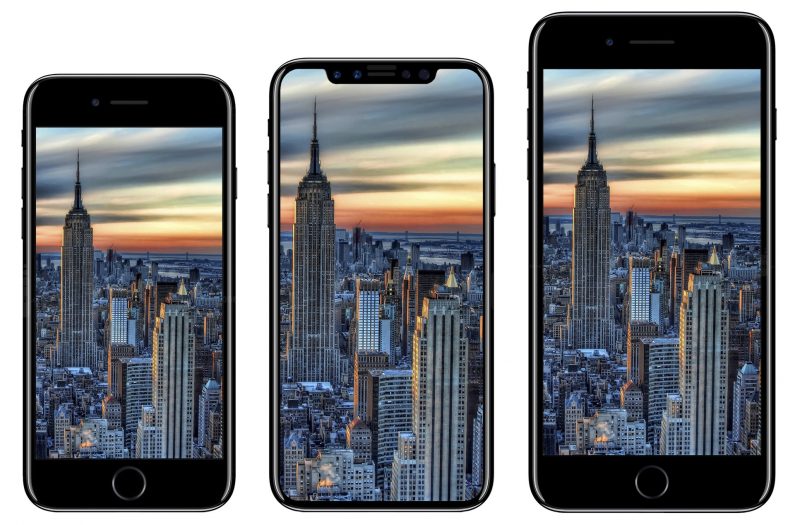
The iPhone 8, if the measurement predictions are accurate, is wider, thicker, and taller than the iPhone 7, but not as large as the iPhone 7 Plus.
MacRumors went hands on with several iPhone 8 cases and an iPhone 8 dummy model to demonstrate how cases will fit on Apple’s new device. Even though there’s a nearly bezel-free design, there’s still enough of a bezel to support a case that can protect the front of the iPhone. Cases also feature vertical dual-camera cutouts at the rear and the traditional cutouts for the Lightning port, volume buttons, and sleep/wake button. All in all, there’s not too much difference between the new device and existing iPhones when it comes to cases.
A screen protector said to be designed for the iPhone 8 is in line with many of the display rumors, renderings, and part leaks we’ve seen.
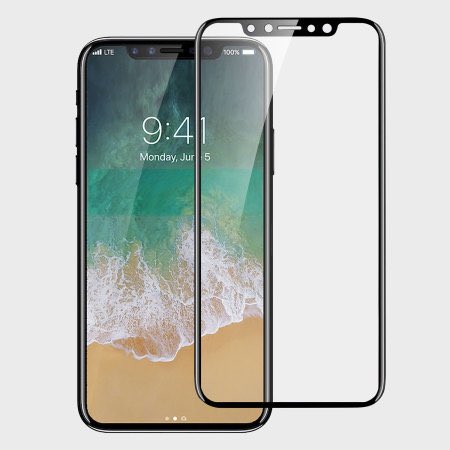
Designed to mirror the look of the iPhone 8, the screen protector features a 2.5D rounded edge, thin bezels, and a front-facing cutout for the camera, ambient light sensor, proximity sensor, and perhaps other features rumored for the front-facing camera, like a 3D sensing module.
Images that could potentially feature the wireless charging pad circuitry that will be built into iPhone 8 accessories surfaced in August, but it’s difficult to determine their authenticity. The photos depict inductive charging kits in a plastic tray and on a black PCB board with bare circuitry visible.

Images depicting what’s said to be the iPhone 8’s OLED display assembly, Lighting connector cables, and flex cables leaked in August. The display assembly images match an earlier leaked display component.

There’s no way to confirm the authenticity of the components, but it is common to see iPhone parts leaking out at this stage of the production process, and the parts are similar to but not identical to components used in previous generation iPhones.

Photos depicting four bare logic boards designed for the iPhone 7s Plus surfaced in August. While the logic boards do not include components, there are spaces earmarked for the Apple A11 chip and an Intel modem.

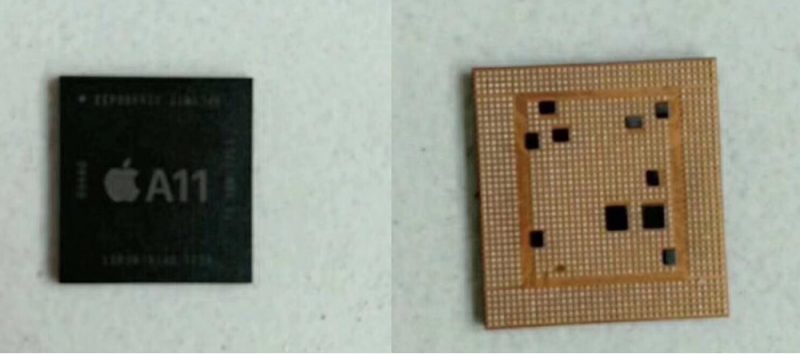
The logic board looks much like the logic board of the iPhone 7 Plus, suggesting a similar internal structure. The design also lines up with a leaked image of an A11 chip that also surfaced in August. A “3217” timestamp on the logic board suggests it was manufactured in the 32nd week of 2017, aka early August.
Images of what’s said to be the display assembly of the iPhone 7s were also recently spotted on Chinese social networking site Weibo, confirming that the front of the new device will look identical to the iPhone 7.