About · Research · Impact · Publications · AI Models · Book · Contact
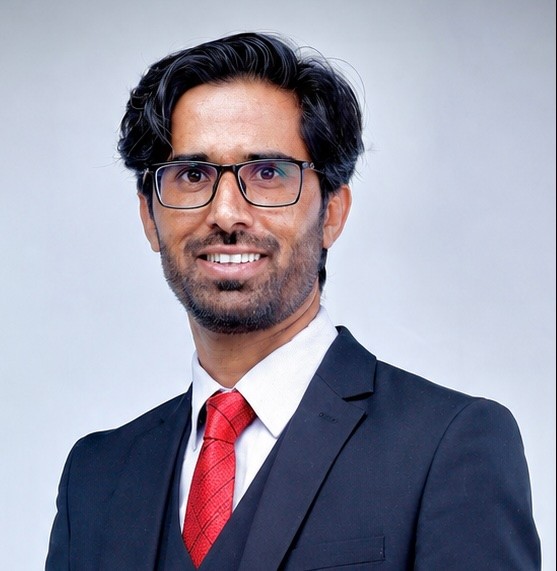
Dr. Muhammad Bilal Zafar
Senior Lecturer
Universiti Teknologi Malaysia (UTM)
Scientific Editor · Elsevier
Adjunct Associate Professor · Institute of Business Management, Pakistan
Financial Economics · Sustainable Finance · Islamic Finance · ESG · Climate Risk · AI · Machine Learning · NLP
Google Scholar | Scopus | ORCID | Hugging Face | GitHub
59
Scopus publications
50
Web of Science publications
19
Google Scholar h-index
6
Open AI/NLP projects
About
Dr. Muhammad Bilal Zafar is a Senior Lecturer at Universiti Teknologi Malaysia (UTM) and holds a PhD from the University of Malaya. His research focuses on financial economics, sustainable finance, Islamic banking, corporate governance, and emerging financial technologies.
His work integrates financial econometrics, machine learning, natural language processing (NLP), and data analytics to investigate contemporary challenges in financial markets and institutions.
His academic portfolio includes internationally indexed publications, externally funded projects, international consultancy, postgraduate supervision, academic editing, and open-access AI models for financial research.
Research expertise
Interdisciplinary research across financial economics, sustainability, Islamic financial systems, and computational methods.
Financial economics & banking
Financial stability, banking performance, corporate finance, risk management, and financial intermediation.
Sustainable finance & ESG
Climate finance, environmental risk, ESG performance, sustainability reporting, and corporate disclosures.
Islamic finance & banking
Shariah governance, Islamic capital markets, Islamic fintech, social finance, financial performance and risk.
Artificial intelligence in finance
Machine learning, BERT, NLP, explainable AI, fintech and financial text analytics.
Governance & ethical finance
Corporate governance, ethical financial practices, CSR and financial inclusion.
Quantitative methodologies
Panel econometrics, systematic reviews, meta-analysis, machine learning and computational methods.
Research record and citation impact
- Indexed publications: 59 Scopus-indexed and 50 Web of Science-indexed publications.
- Journal rankings: 33 Scopus Q1 and 21 Q2 publications; 24 Web of Science Q1 and 20 Q2 publications.
- Research leadership: 55 first- or corresponding-author publications and 13 single-authored indexed papers.
- Citation impact: Google Scholar h-index 19; Scopus h-index 13; Web of Science h-index 11.
- Books: Five Scopus-indexed book chapters and a scholarly book with Emerald Publishing.
- Open science: Six financial AI and NLP model projects and associated research repositories.
Selected publications
Zafar, M. B. (2026). Do Climate Risks Precede Climate Communication? Global Evidence From Central Banks. International Journal of Finance & Economics. DOI (Scopus/WoS Q1; Wiley)
Zafar, M. B., & Ali, H. (2026). Sustainable talk, digital walk: ESG dynamics and stakeholder engagement in family firms. Business Strategy and the Environment. Advance online publication. DOI (Scopus/WoS Q1; Wiley)
Zafar, M. B., Ali, H., & Aysan, A. F. (2026). Signals from the noise: Decoding global AI discourse in central bank communications. Central Bank Review, 26, 100268. DOI (Scopus/WoS Q1; Elsevier)
Zafar, M. B. (2026). Exploring the intellectual landscape of ROSCAs: A fifty-year bibliometric review. International Journal of Bank Marketing. DOI (Scopus/WoS Q1; Emerald)
Zafar, M. B. (2026). Talk or action? Unveiling the nature and depth of climate disclosures in Islamic banks using machine learning. Borsa Istanbul Review. DOI (Scopus/WoS Q1; Elsevier)
Zafar, M. B. (2026). CentralBank-BERT: Machine learning evidence on central bank digital currency discourse. Journal of Economics and Business. DOI (Scopus/WoS Q1; Elsevier)
Open science and AI models
Open-access models supporting computational research in central banking, climate disclosure, Islamic banking, human capital, and artificial intelligence.
CentralBank-BERT · Central bank language modeling
Domain-adaptive language model trained on 19,609 BIS speeches, approximately 2.09 million sentences and 66.36 million tokens. Domain perplexity improved from 13.06 to 4.66. Downstream applications include CBDC, sentiment, stance, discourse, and named entity recognition.
CentralBank-AI · Central bank AI and sentiment
Models for detecting AI-related central-bank statements and classifying sentiment. AI classification achieved 98.12% accuracy and macro-F1; sentiment classification achieved 80.4% accuracy and 79.0% macro-F1.
Islamic-FinClimateBERT · Climate disclosures in Islamic banking
Fine-tuned ClimateBERT trained on 1,132 annotated sentences and evaluated using 79,876 sentences from 838 annual reports of 103 Islamic banks. Reported accuracy and F1: 98.68%.
HC-BERT-IFIs · Human capital disclosure analytics
BERT model using 98,298 balanced sentences from 638 annual reports of 86 Islamic banks in 21 countries. Reported accuracy: 97.06%; F1: 97.00%.
FinAI-BERT-IslamicBanks · AI disclosures in Islamic banking
Domain-specific BERT model using 2,632 validated sentences from 855 annual reports of 106 Islamic banks. Reported accuracy: 98.67%; ROC AUC: 0.9999.
BankAI-BERT · AI disclosures in US banking
Sentence-level classifier trained on 1,586 annotated sentences from U.S. bank reports. Reported accuracy: 99.37%, F1: 0.993, ROC AUC: 1.000; includes SHAP and replication materials.
Scholarly book and book chapters
Human Capital and the Economics of Talent in Islamic Finance: Theory, Ethics and Practice
Muhammad Bilal Zafar, Hussain Mohi-ud-Din Qadri & Hassnian Ali (2026). Emerald Publishing. ISBN 9781805927228.
Five Scopus-indexed book chapters
- Zafar, M. B., & Yasin, T. (2026). Emerging technologies and Islamic banking: A retrospective analysis using machine learning-based topic modelling. In Artificial Intelligence and the Future of Islamic Finance. Routledge. DOI
- Shukri, W. A. A. B. W. M., Abu-Hussin, M. F. B., Mohamad, M. T. B., & Zafar, M. B. (2026). Governing AI in Islamic FinTech: Advancing social welfare in Islamic finance. In Artificial Intelligence and the Future of Islamic Finance. Routledge. DOI
- Zafar, M. B. (2026). Machine learning and artificial intelligence for energy optimisation and sustainability. In Digital Platforms for Sustainable Business. Elsevier. DOI
- Zafar, M. B., & Sulaiman, A. A. (2020). Islamic banking in Pakistan: Emergence, growth, and prospects. In A. Rafay (Ed.), Growth and Emerging Prospects of International Islamic Banking (pp. 61–77). IGI Global. DOI
- Nasir, N., Zafar, M. B., & Nawaz, M. (2023). Involvement of women in Islamic finance in Pakistan: Challenges and prospects. In Strategies and Applications of Islamic Entrepreneurship (pp. 136–152). IGI Global. DOI
Complete publication record
View all 59 publications (2019–2026)
2026
- Sualeh Khattak, M., Zafar, M. B., Wong, Z. A. H., & Wong, H. A. (2026). Linking green intellectual capital and sustainable performance through a meta-analysis. Business Process Management Journal. DOI [Scopus/WoS Q1; Emerald]
- Zafar, M. B. (2026). Do Climate Risks Precede Climate Communication? Global Evidence From Central Banks. International Journal of Finance & Economics. DOI [Scopus/WoS Q1; Wiley]
- Zafar, M. B. (2026). Happiness, religiosity and economic hardship: cross-national evidence on household financial position. Review of Behavioral Finance. DOI [Scopus/WoS Q2;Emerald]
- Zafar, M. B., & Ali, H. (2026). Sustainable talk, digital walk: ESG dynamics and stakeholder engagement in family firms. Business Strategy and the Environment. Advance online publication. DOI [Scopus/WoS Q1; Wiley]
- Zafar, M. B., Ali, H., & Aysan, A. F. (2026). Signals from the noise: Decoding global AI discourse in central bank communications. Central Bank Review, 26, 100268. DOI [Scopus/WoS Q1; Elsevier]
- Zafar, M. B., Bhatti, M. I., & Sulaiman, A. A. (2026). Audit quality, risk exposure and financial performance: A dynamic panel study of Islamic banks. Journal of Financial Reporting and Accounting. DOI [Scopus/WoS Q2; Emerald]
- Zafar, M. B., & Ali, H. (2026). Shariah governance standard on generative AI for Islamic financial institutions. Journal of Islamic Accounting and Business Research. DOI [Scopus/WoS Q2; Emerald]
- Zafar, M. B., Ali, A. J., & Abu-Hussin, M. F. (2026). Diverging paths to well-being: A cross-national hierarchical analysis of Islamic work ethic among working Muslims. International Journal of Psychology, 61, e70232. DOI [Scopus/WoS Q1; Wiley]
- Zafar, M. B. (2026). Exploring the intellectual landscape of ROSCAs: A fifty-year bibliometric review. International Journal of Bank Marketing. DOI [Scopus/WoS Q1; Emerald]
- Zafar, M. B. (2026). A domain-specific BERT model for identifying AI disclosures in Islamic banking. Discover Analytics, 14(12). DOI [Scopus; Springer]
- Zafar, M. B. (2026). A computational mapping of global digital discourse on ChatGPT and the emergence of generative artificial intelligence. Discover Artificial Intelligence. DOI [Scopus; Springer]
- Zafar, M. B. (2026). Human capital disclosure in Islamic banks: A multi-method analysis using machine learning. Journal of Intellectual Capital. DOI [Scopus/WoS Q1; Emerald]
- Zafar, M. B. (2026). Talk or action? Unveiling the nature and depth of climate disclosures in Islamic banks using machine learning. Borsa Istanbul Review. DOI [Scopus/WoS Q1; Elsevier]
- Zafar, M. B. (2026). From people to profits: Examining human capital efficiency in Islamic banking through machine learning. Journal of the Knowledge Economy. DOI [Scopus Q1; Springer]
- Zafar, M. B., & Aziz, Y. (2026). Zakat and sustainable development goals: Does Islamic almsgiving reduce food insecurity? Food Ethics. DOI [Scopus Q2; Springer]
- Zafar, M. B. (2026). CentralBank-BERT: Machine learning evidence on central bank digital currency discourse. Journal of Economics and Business. DOI [Scopus/WoS Q1; Elsevier]
- Zafar, M. B., Ali, A. J., & Abu-Hussin, M. F. (2026). Exploring Islamic work ethic in the workplace: A systematic literature review. Personnel Review. DOI [Scopus/WoS Q1; Emerald]
- Zafar, M. B., & Jafar, A. (2026). A meta-analytic structural equation model of halal purchasing behavior: Extending the theory of planned behavior with religiosity. Current Psychology, 45, Article 630. DOI [Scopus/WoS Q1; Springer]
- Zafar, M. B. (2026). Corporate social responsibility in Islamic finance: A two-decade bibliometric analysis. Journal of Islamic Accounting and Business Research. DOI [Scopus/WoS Q2; Emerald]
- Zafar, M. B., & Jafar, A. (2026). Waqf over a century: Innovation and tradition in shaping social equity and sustainable development. International Journal of Sociology and Social Policy. DOI [Scopus/WoS Q1; Emerald]
- Zafar, M. B. (2026). Happiness, economic shocks, and household savings: A multi-country mixed-effects analysis. Journal of Family and Economic Issues. DOI [Scopus/WoS Q1; Springer]
- Zafar, M. B., Ali, H. (2026). Generative AI and tourism futures: mapping thematic domains through structural topic modeling. SN Business and Economics. 6, 425. DOI [Scopus Q3; Springer]
- Abu-Hussin, M. F., Zafar, M. B., Hassan, A., & Junaidi, J. (2026). From religious obligation to market state: The politics of halal certification in Malaysia. Journal of Islamic Marketing. DOI [Scopus/WoS Q2; Emerald]
- Zafar, M. B. (2026). The longitudinal dynamics of the trade-off between environmental consciousness and economic growth. Discover Environment. DOI [Scopus/WoS; Springer]
- Zafar, M. B., & Ali, H. (2026). Waqf as a socioeconomic institution and its governance and development for welfare and sustainability. Discover Global Society, 4, Article 58. DOI [Scopus; Springer]
- Zafar, M. B., & Mehmood, U. (2026). Understanding maintenance cost drivers in higher education: A multi-model econometric study. Built Environment Project and Asset Management. DOI [Scopus/WoS Q1; Emerald]
2025
- Zafar, M. B., Yasin, T., & Ali, H. (2025). Emerging technologies and Islamic finance: A bibliometric review. Journal of Islamic Marketing. DOI [Scopus/WoS Q2; Emerald]
- Mehmood, U., & Zafar, M. B. (2025). Generative AI in facility management: A structural topic modelling review with qualitative synthesis. Journal of Facilities Management. DOI [Scopus/WoS Q3; Emerald]
- Khattak, M. S., Zafar, M. B., Anwar, M., & Aziz, Y. (2025). Linking intellectual capital and firms’ internationalization through a meta-analysis. Journal of Intellectual Capital. DOI [Scopus/WoS Q1; Emerald]
- Zafar, M. B., & Shair, W. (2025). Community-driven financial practices: Socioeconomic determinants of interest-free ROSCAs in Muslim communities. Journal of Islamic Accounting and Business Research. DOI [Scopus/WoS Q2; Emerald]
- Zafar, M. B., Jafar, A., & Ali, H. (2025). Corporate social responsibility and profitability in Islamic insurance firms: Insights from explainable AI. Journal of Islamic Marketing. DOI [Scopus/WoS Q2; Emerald]
- Zafar, M. B., & Mehmood, U. (2025). Climate policy enforcement and ESG alignment in green building startups. International Journal of Building Pathology and Adaptation. DOI [Scopus/WoS Q2; Emerald]
- Ali, H., Zafar, M. B., & Aysan, A. F. (2025). Generative AI in finance: Replicability, methodological contingencies, and future research directions. Finance Research Letters, 86, 108797. DOI [Scopus/WoS Q1; Elsevier]
- Zafar, M. B., & Yasin, T. (2025). A meta-analysis of CSR disclosure in Islamic banks. Journal of Global Responsibility. DOI [Scopus/WoS Q2; Emerald]
- Zafar, M. B., & Ali, H. (2025). Pathways to economic resilience: Assessing economic diversification efforts in the GCC countries. Contemporary Review of the Middle East. DOI [Scopus/WoS Q2; Sage]
- Zafar, M. B., & Abu-Hussin, M. F. (2025). Faith, growth, and ethics: Cross-cultural analysis of religiosity and environmental protection vis-à-vis economic priorities among Muslims. Journal of Environmental Psychology, 106, 102716. DOI [Scopus/WoS Q1; AJG 3; Elsevier]
- Qadri, H. M., Zafar, M. B., Ali, H., & Tahir, M. (2025). Wealth, wisdom, and the will to protect: An examination of socioeconomic influences on environmental behavior. Social Indicators Research. DOI [Scopus/WoS Q1; Springer]
- Zafar, M. B., & Abu-Hussin, M. F. (2025). Halal purchasing decisions and consumer behavior: A multi-method review. Journal of Islamic Marketing. DOI [Scopus/WoS Q1; Emerald]
- Jafar, A., & Zafar, M. B. (2025). Corporate social responsibility disclosure in the takaful sector. International Journal of Ethics and Systems. DOI [Scopus/WoS Q1; Emerald]
- Zafar, M. B., & Yasin, T. (2025). Intellectual capital and financial performance of Islamic banks: A meta-analysis. Accounting Research Journal. DOI [Scopus/WoS Q2; AJG 2; Emerald]
- Zafar, M. B., & Abu-Hussin, M. F. (2025). Religiosity and Islamic work ethic: A cross-cultural comparison in majority and non- majority Muslim countries. International Journal of Intercultural Relations. DOI [Scopus/WoS Q1; Elsevier]
- Zafar, M. B., & Abu-Hussin, M. F. (2025). Mapping the landscape of Islamic work ethic: Topic modelling and key research drivers. Journal of Islamic Accounting and Business Research. DOI [Scopus/WoS Q2; Emerald]
- Abu-Husin, M. F., Afifah, K., Rusydiana, A. S., Asnawi, Zafar, M. B., Noor, M. H. M., Mustafa, S. N. M., & Salleh, M. A. (2025). Research trends in Islamic financial technology and blockchain: A bibliometric analysis. Malaysian Journal of Syariah and Law, 13(1), 147–163. DOI [Scopus]
- Afifah, K., Abu-Hussin, M. F., & Zafar, M. B. (2025). Transforming Islamic social finance: Determinants of blockchain technology adoption for zakat payment. Journal of Islamic Accounting and Business Research. DOI [Scopus/WoS Q2; Emerald]
- Zafar, M. B., & Jafar, A. (2025). Human capital and Islamic banking: A systematic literature review. Journal of Islamic Accounting and Business Research. DOI [Scopus/WoS Q2; Emerald]
2024
- Zafar, M. B., & Abu-Hussin, M. F. (2024). Reliability generalization meta-analysis of measuring Islamic work ethic. Current Psychology. DOI [Scopus/WoS Q2; Springer]
- Zafar, M. B., Abu-Hussin, M. F., & Ali, H. (2024). Mapping research on the halal industry: A retrospective analysis. Journal of Islamic Marketing. DOI [Scopus/WoS Q1; Emerald]
- Zafar, M. B., Abu-Hussin, M. F., & Sulaiman, A. A. (2024). Digital distractions and work-leisure balance: Excessive information through digital consumption and its impact on work ethic among Muslims. International Journal of Ethics and Systems. DOI [Scopus/WoS Q2; Emerald]
- Zafar, M. B. (2024). Islamic financial accounting standards in Pakistan: A comparison with AAOIFI. Journal of Islamic Accounting and Business Research. DOI [Scopus/WoS Q2; Emerald]
- Zafar, M. B. (2024). Human capital and financial performance of Islamic banks: A meta-analysis. Accounting Research Journal. DOI [Scopus/WoS Q2; Emerald]
- Ahmad, M., Zafar, M. B., & Perveen, A. (2024). Consumer shift behavior from conventional to Islamic banking: Decision- making analysis through AHP. Journal of Islamic Marketing. DOI [Scopus/WoS Q2; Emerald]
- Wasim, M. H., & Zafar, M. B. (2024). Shariah governance and Islamic banks: A systematic literature review. Journal of Islamic Accounting and Business Research. DOI [Scopus/WoS Q2; Emerald]
- Wasim, M. H., & Zafar, M. B. (2024). Shariah governance framework for Islamic banking in Pakistan: A critical review and comparison with AAOIFI. Journal of Islamic Accounting and Business Research. DOI [Scopus/WoS Q2; Emerald]
2022
- Zafar, M. B., & Sulaiman, A. A. (2022). Corporate social responsibility disclosure and Islamic banks: A case study of Pakistan. Journal of Islamic Accounting and Business Research, 13(1), 73–97. DOI [Scopus/WoS Q2; Emerald]
- Zafar, M. B., Sulaiman, A. A., & Nawaz, M. (2022). Does corporate social responsibility yield financial returns in Islamic banking? Social Responsibility Journal, 18(7), 1285–1310. DOI [Scopus/WoS Q1; Emerald]
- Ul Hameed, W., Nawaz, M., Nisar, Q. A., Basheer, M. F., Imtiaz, S., & Zafar, M. B. (2022). Open innovation solution: New model in the hospitality industry. Journal of Hospitality and Tourism Technology, 13(4), 742–762. DOI [Scopus/WoS Q1; Emerald]
2021
- Zafar, M. B., & Sulaiman, A. A. (2021). CSR narrative under Islamic banking paradigm. Social Responsibility Journal, 17(1), 15–29. DOI [Scopus/WoS Q1; Emerald]
2020
- Zafar, M. B., & Sulaiman, A. A. (2020). Measuring corporate social responsibility in Islamic banking: What matters? International Journal of Islamic and Middle Eastern Finance and Management, 13(3), 357–388. DOI [Scopus/WoS Q2; Emerald]
2019
- Zafar, M. B., & Sulaiman, A. A. (2019). Corporate social responsibility and Islamic banks: A systematic literature review. Management Review Quarterly, 69(2), 159–206. DOI [Scopus/WoS Q1; Springer]
Contact and research profiles
Academic correspondence and research collaboration in financial economics, banking, sustainability, Islamic finance, and financial AI.
Institutional email: bilalzafar.muhammad@utm.my
Google Scholar | Scopus | Web of Science | ORCID | Hugging Face | GitHub
