Molecular Dynamics Made Simple: A Beginner’s Guide with GROMACS
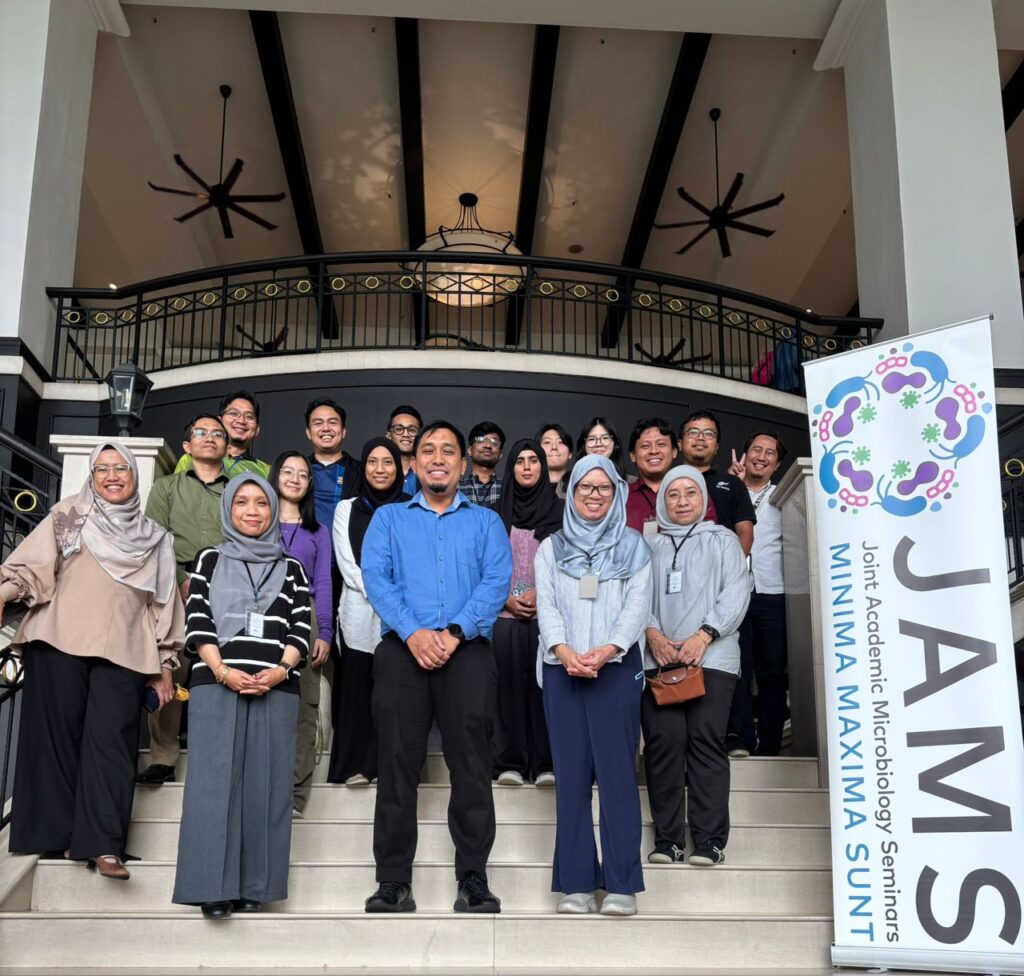
Title : Molecular Dynamics Made Simple: A Beginner’s Guide with GROMACS
Date : 11 November 2025
Venue : Raya Hall, Bangi Resort Hotel, Bangi
Organizer : Joint Academic Microbiology Seminars Kuala Lumpur (JAMSKL) & Malaysian Society for Microbiology (MSM)
Trainer : Dr. Muhamad Arif Mohamad Jamali (USIM)
The workshop began with a brief introduction to structural biology delivered by Dr. Liyana Binti Azmi. She outlined the fundamental techniques used to determine 3D biomolecular structures, including X-ray crystallography, cryo-EM, and NMR. She also provided an overview of the applications of molecular dynamics across different field, such as drug-discovery.
Following the introduction, the floor was handed over to Dr. Muhamad Arif Mohamad Jamali, who led the main hands-on sessions. In UCSF Chimera, the protein and ligand structures were fetched from the RCSB Protein Data Bank (PDB) and PubChem respectively. Pre-docking preparation (e.g., removing water molecules, irrelevant ligands, and creating docking grid box) and molecular docking simulation were performed by the participants using UCSF Chimera and Autodock Vina integrated within Chimera respectively. The resulting docked protein–ligand result was analyzed, and the top conformer was then saved as a PDB file.
Next, Dr. Arif introduced CHARMM-GUI and demonstrated its features for automated system preparation, such as solvation, ion addition, and generating MD-ready input files. Although the workflow was shown in detail, hands-on practice was not included because new user account registration could take several days.
The main practical segment focused on running molecular dynamics (MD) simulations using GROMACS. Participants conducted the exercises using the committee’s laptops which were remotely connected to the trainers’ workstation. Pre-prepared input files and command sets were provided, allowing participants to practice all standard MD steps, including energy minimization, equilibration, and production MD. At each stage, plots generated from MD output were examined to determine whether the step was sufficiently completed. For example, checking if the potential energy reached a plateau during minimization, or confirming stable temperature and pressure during equilibration. These plots were essential for assessing system readiness before proceeding to the next phase.
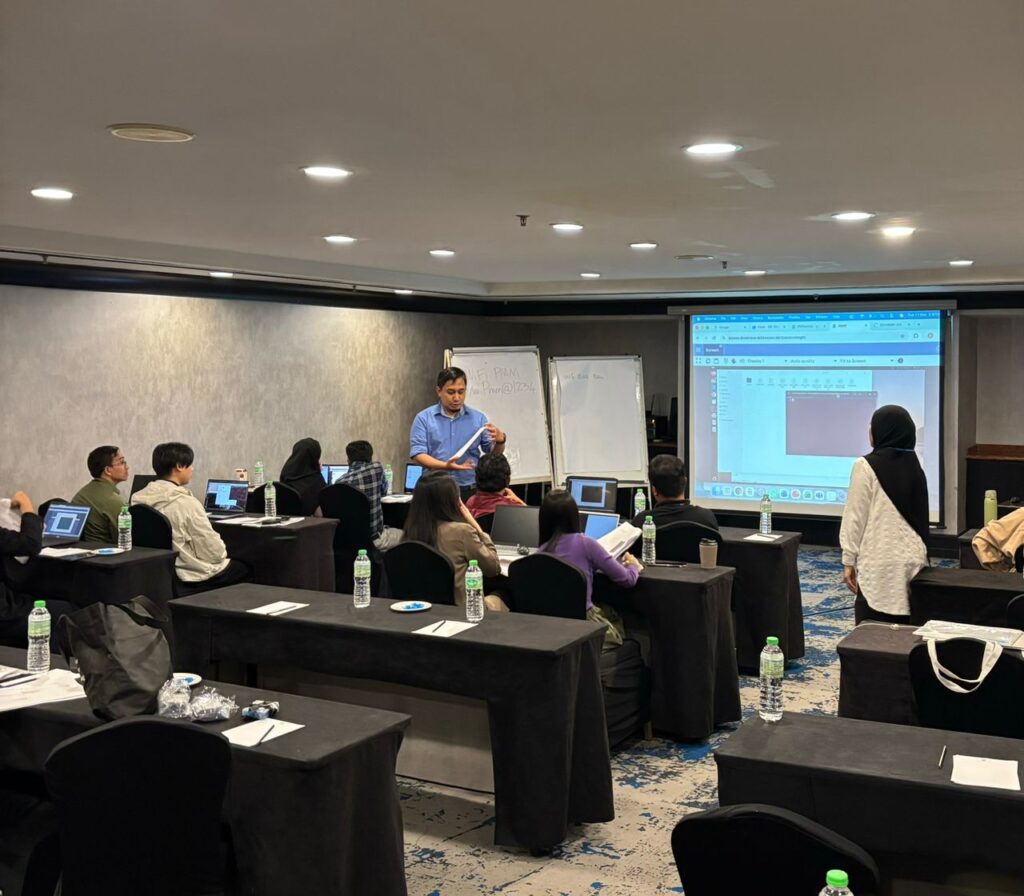
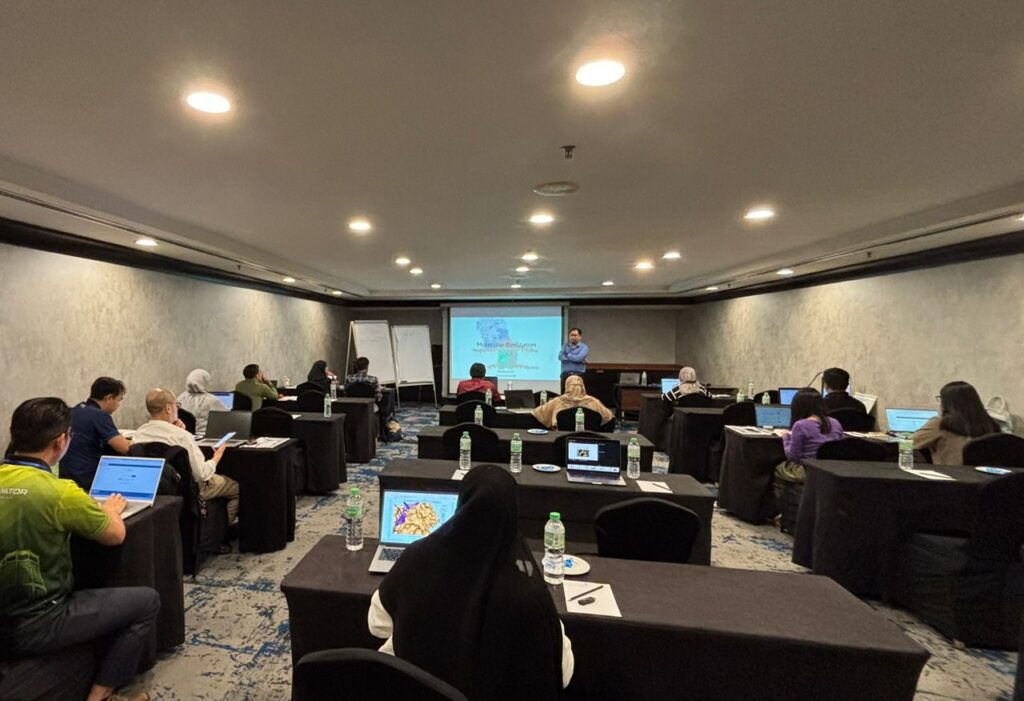
The workshop concluded with sharing on the post-MD analysis techniques such as root-mean-square deviation (RMSD), radius of gyration, hydrogen bond, and MM/PBSA analysis each measuring different aspects of the system behaviors (e.g., structural stability, protein folding or unfolding, and total binding free energy). These tools were shown to be valuable for interpreting protein–ligand interactions.
Throughout this workshop, I learned how to use UCSF Chimera for structure preparation and discovered the integrated AutoDock Vina within Chimera, which is far simpler than using the command-line interface of AutoDock Vina. I also got to know CHARMM-GUI webserver, which will be useful for preparation of my own simulation systems without the need to manually creating all the parameter files. Furthermore, I learned the standard approach of running MD simulation with GROMACS along with its post-MD analysis. Throughout the session, Dr. Arif and the committee helped clarify several doubts I had about MD simulations and provided valuable advice to my research. Overall, this workshop has been significantly enhanced my knowledge of MD and beneficial for my research.
Written by: Jia Qi


0 Comments