
Empowering Future Path Through Self-Leadership
SKAA Module: Self-Leadership in Higher Education
My Journey as a Scholar: My First Steps at UTM
I started my journey as a lecturer at Universiti Teknologi Malaysia (UTM) in June 2024. The experience has been both exciting and humbling, and while I am passionate about my field, I feel like I am just beginning and still far from being called a “scholar.” To me, being a scholar is something I am working toward, and I know it will take time. Over this past year, I have realized that to grow in my role, I need a clear path, that is driven by the principles of self-leadership. For me, self-leadership is not about complex theories but simply taking ownership of my own growth. It means pushing myself to be my best, managing my priorities, and staying motivated, especially when things get tough. Balancing teaching, research, and service is a challenge, but self-leadership is the tool that will guide me to becoming the academician I hope to be.

Reflecting on the Journey
Self-Awareness: Strengths and Weaknesses
Through this reflection, I have gained a clearer understanding of my strengths and weaknesses as a junior lecturer. One of my strengths is my commitment to always do my best, no matter what the task. Teaching, in particular, is my passion. I don’t see it just as delivering lectures; I see it as connecting with students and understanding how they learn best. This allows me to adjust my teaching to fit their needs, creating a more engaging and effective classroom. Seeing students experience that ‘aha!’ moment when they grasp a tough topic is the most rewarding part of my work. That feeling keeps me motivated to continually improve my teaching methods.
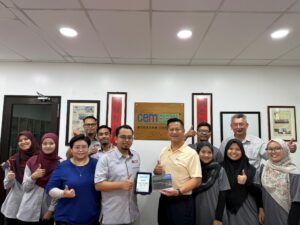
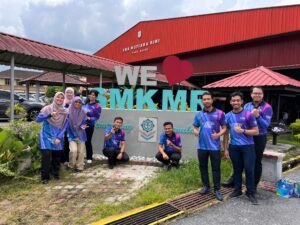
In addition to teaching, I’ve also managed to secure a UTM ER grant, which already active starting September 2024. I have a supportive research team that helps me with idea and problem-solving, which makes the research to keep on progressing. I also believe in bridging the gap between academia and industry, which is why I recently worked on a Letter of Intent (LOI) with an industry partner and invited them to give a sharing sessions form industry with my students. This not only brings real-world relevance to their learning but also helps them see how their studies connect to future careers.
Despite these strengths, there are significant challenges that I face as a new lecturer. As a newcomer to the university and the subjects I teach, there is a steep learning curve. I am continuously learning how to grasp the course material while planning effective and engaging activities for students. The pressure of balancing these responsibilities can sometimes feel overwhelming. Although I put in my best effort, the pressure is high, and at times it feels like I’m juggling too many things at once.
Research also has its own set of challenges. One of the major obstacles I face is the limited availability of lab equipment, which can drive up the cost of experiments and restrict my research’s scope. While I do my best to make use of the resources I have, these limitations can hold me back. Moreover, balancing my time across committee work, teaching, and research is a constant struggle. The lack of uninterrupted time to focus on research is a significant hurdle, and I’ve realized that I need to find a way to protect my time for deep thinking and writing. I find myself bouncing between teaching, research, meetings, and administrative tasks without the mental space needed to synthesize ideas, challenge assumptions, and create original contributions.
These challenges are where self-leadership principles come into play. Self-regulation and goal-setting will help me balance my time more effectively, allowing me to focus on both research and teaching while managing my administrative responsibilities.
Looking Ahead: My Ten-Year Vision
In ten years, I envision myself as a recognized scholar and academic leader in my field. I want to build a solid reputation not only through publications but also by contributing meaningfully to both academia and industry. My goal is to lead a research group at UTM that becomes a hub for innovation and attracts postgraduate students and collaborators. I want my work to make a significant impact locally, regionally, and globally
Looking ahead, I see myself in ten years as a recognized academician in my field, yet closer to scholar. I want to build a solid reputation not only through publications but also by contributing meaningfully to both academia and industry, including enhancing collaboration locally and globally.
Roadmap to Success
To reach this vision, I need a clear roadmap for my personal and professional development. This roadmap is shaped by self-leadership principles that will guide me in achieving both short-term goals and long-term aspirations.
1. Setting Goals
I will set specific annual and long-term goals to guide my work. For example, by year 3, I aim to have published at least nine papers in WOS indexed journals. By year 5, I hope to secure a major research grant and establish collaborations with industry partners. These goals will help me prioritize my responsibilities, especially balancing teaching, research, and committee work.
2. Self-Reflects
I will regularly assess my teaching methods to ensure that I am meeting my students’ needs and improving my approach. This will also be crucial in refining my research focus. I will make sure to reflect on my progress and adjust my methods as needed, making changes based on feedback from students and colleagues or teams.
3. Self-Regulates
Managing my time will be critical. I will create a weekly schedule that prioritizes research and writing, ensuring that I protect uninterrupted blocks of time for these tasks. This will allow me to focus on deep, uninterrupted thinking, which is necessary for developing and building my scholarly idea or thought.
4. Self-Motivation
Staying motivated throughout the ups and downs of an academic career is essential. My motivation comes from my passion for teaching and my desire to contribute new knowledge. To keep myself motivated, I will celebrate small victories along the way, whether it’s successfully delivering a lecture or overcoming a research challenge and lean on my supportive circle of colleagues to stay resilient.
Conclusion
In conclusion, my journey as a junior lecturer at UTM is just beginning, and while the road ahead will be challenging, it is also full of opportunity. Through self-leadership, I will navigate these challenges and turn them into opportunities for growth. By setting clear goals, reflecting on my progress, managing my time effectively, and staying motivated, I can become the scholar and academic leader I aspire to be. This is not just about starting a career; it’s about actively shaping my path and making meaningful contributions to my students, my university, and my field. Through these principles of self-leadership, I am confident that I will achieve my goals and make a lasting impact.
