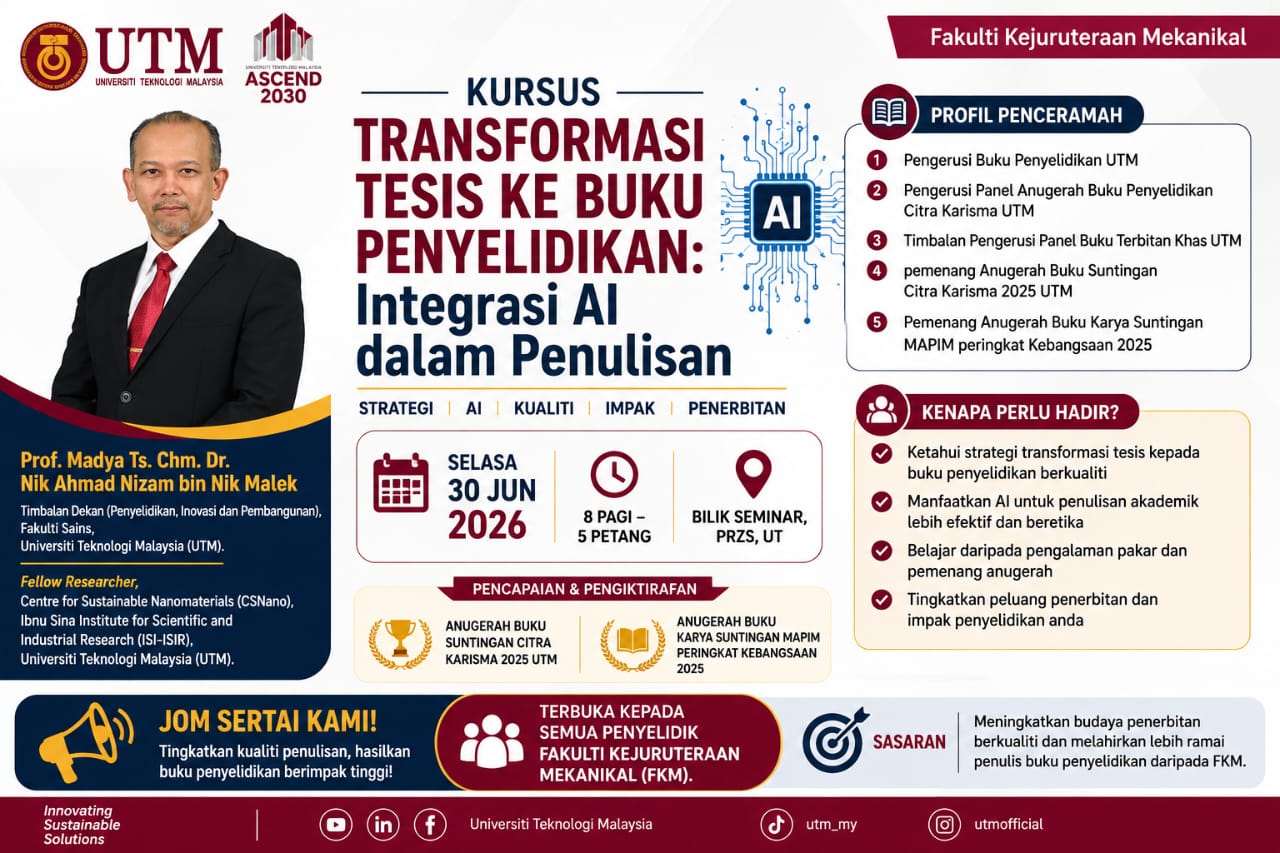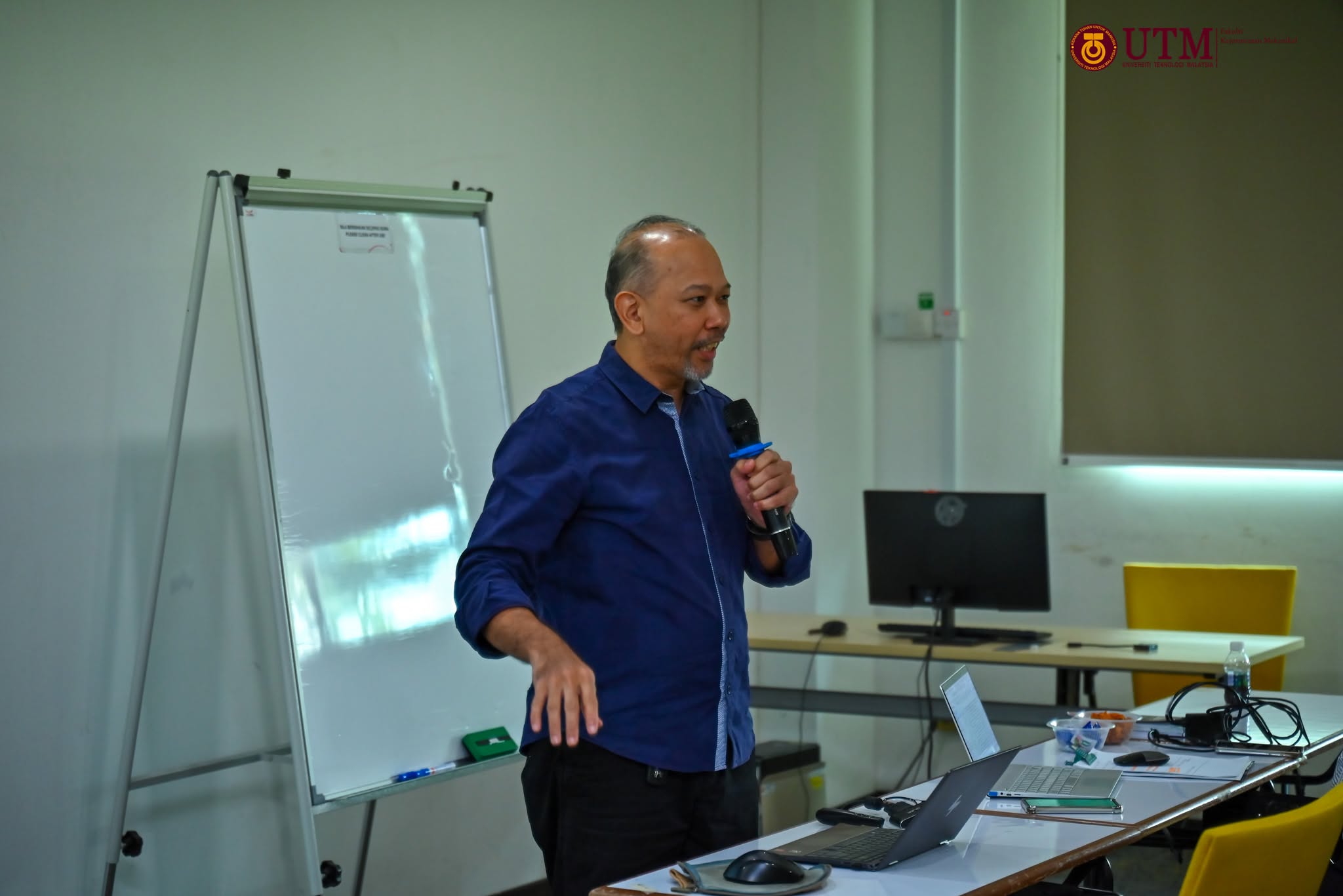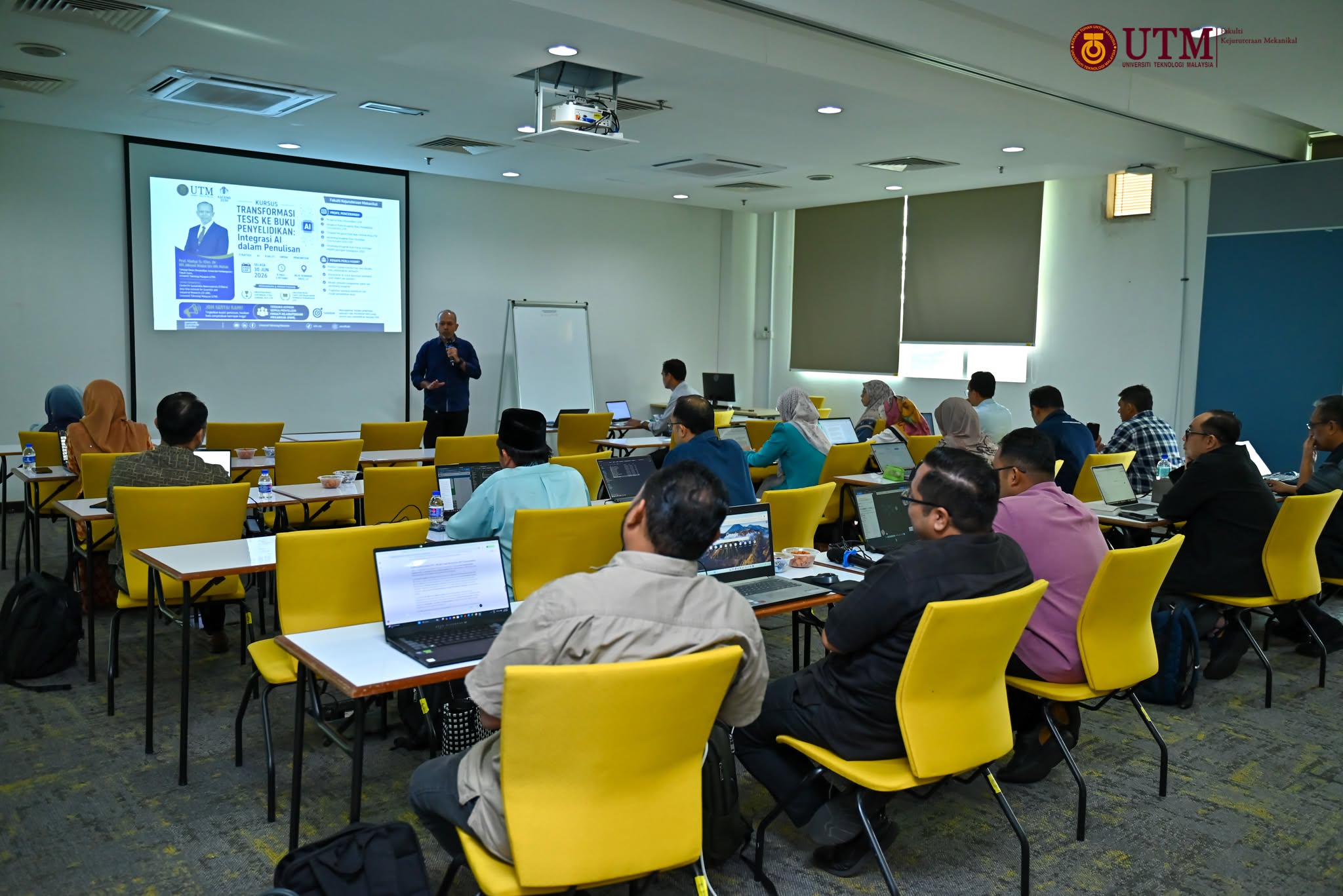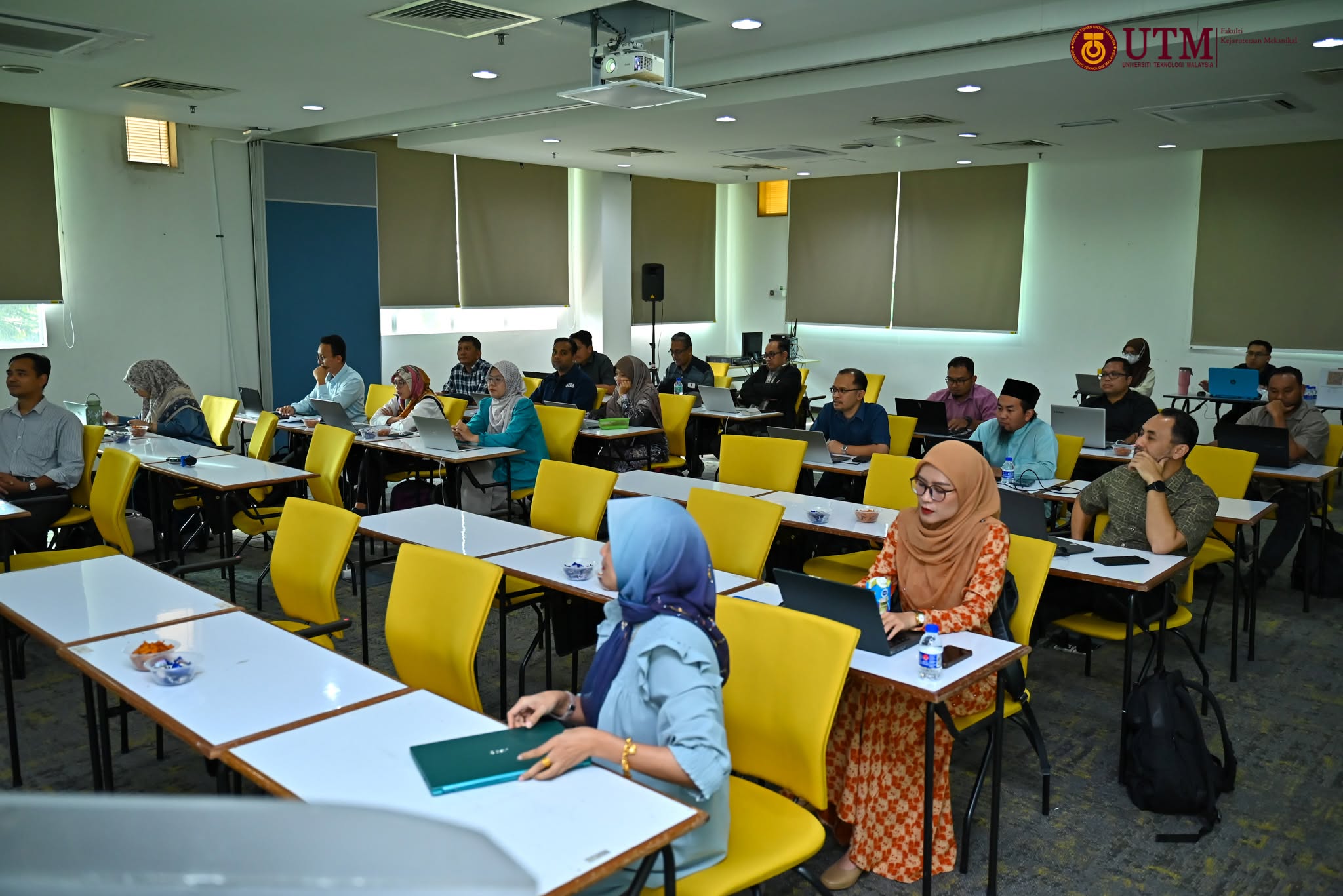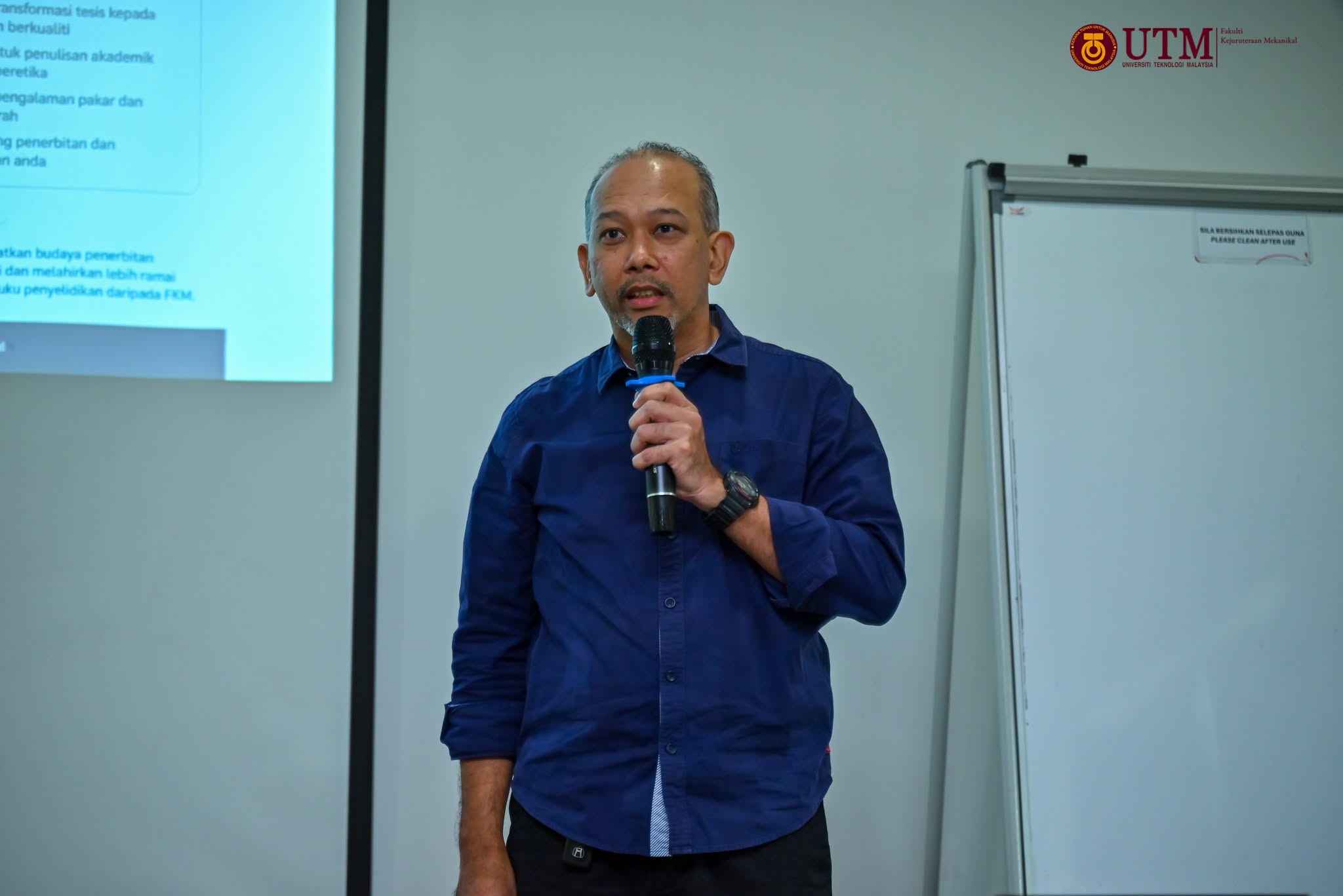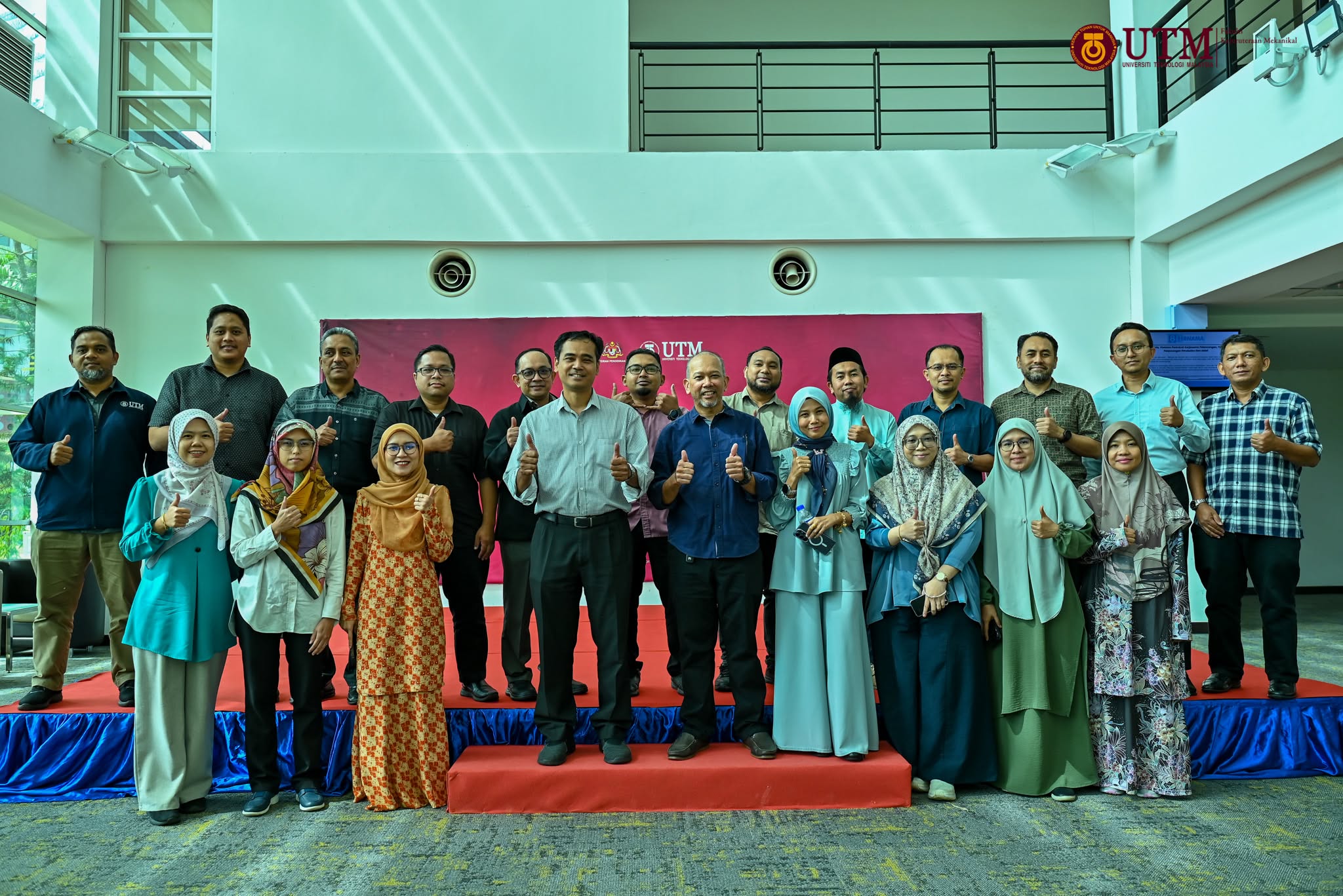

This article is adapted from the course “Transformasi Tesis ke Buku Penyelidikan: Integrasi AI dalam Penulisan” delivered by Assoc. Prof. Ts. ChM. Dr. Nik Ahmad Nizam Nik Malek, Deputy Dean (Research, Innovation and Development), Faculty of Science, Universiti Teknologi Malaysia (UTM), during the Research Book Writing Course organized by the Faculty of Mechanical Engineering, UTM, on 30 June 2026. The course explored practical strategies for converting postgraduate theses into publishable research books while demonstrating how artificial intelligence (AI) can be ethically and effectively integrated throughout the writing, editing, and publication process.
Introduction
A doctoral thesis represents years of rigorous scientific investigation and serves as evidence that a researcher has successfully contributed new knowledge to a particular field. However, despite containing valuable findings, many theses remain underutilized after graduation. Transforming a thesis into a research book provides an opportunity to extend the impact of the research, making it accessible to academics, professionals, students, policymakers, and industry practitioners.
Unlike a thesis, which is primarily written for examiners, a research book is intended for a wider audience. It presents knowledge through a coherent narrative, critical discussion, and practical insights rather than following the conventional thesis structure. Consequently, transforming a thesis into a research book requires substantial restructuring, rewriting, and refinement instead of merely changing the document format.
Understanding the Difference Between a Thesis and a Research Book
One of the most common misconceptions among researchers is that a research book is simply a published version of a thesis. In reality, the objectives of the two documents are fundamentally different.
A thesis is designed to demonstrate the originality of research and satisfy academic examination requirements. It typically follows a fixed structure consisting of an introduction, literature review, methodology, results, and discussion. In contrast, a research book is organised around a central theme or storyline that guides readers through the subject in a logical and engaging manner.
Instead of presenting information chapter by chapter according to the research process, a research book synthesises evidence from multiple studies, integrates broader perspectives, and provides critical interpretation that enhances readers’ understanding of the topic. This transformation enables the research to have greater educational, scientific, and societal impact.
Planning the Transformation
The first stage in developing a research book is identifying the intended outcome. Authors should determine the target audience, the scope of the book, and the key messages they wish to communicate. From these objectives, a new title and an appropriate table of contents can be developed that reflect the overall narrative rather than the original thesis chapters.
Researchers are encouraged to refer to the publication guidelines provided by Penerbit UTM Press, ensuring that the manuscript complies with institutional requirements regarding structure, formatting, and scholarly quality. Early planning also allows authors to identify additional literature, update references, and incorporate recent developments that may have emerged after completion of the thesis.
Artificial Intelligence as a Writing Companion
Artificial intelligence has rapidly emerged as a valuable tool for academic writing. Rather than replacing scholarly expertise, AI functions as an intelligent assistant that enhances productivity while allowing researchers to maintain full intellectual ownership of their work.
During the course, several practical applications of AI were demonstrated throughout the research book preparation process. AI can assist researchers in generating preliminary book titles, proposing chapter structures, expanding concise paragraphs into more comprehensive academic discussions, and improving the overall readability and coherence of manuscripts.
Beyond text generation, AI can also enhance figures, convert tables into descriptive narratives, generate publication-quality illustrations from textual descriptions, extract information from images, standardise reference formatting according to APA style, and identify grammatical or structural inconsistencies throughout an entire manuscript. These capabilities significantly reduce the time required for technical editing while allowing authors to focus on scientific interpretation and critical analysis.
Maintaining Academic Integrity When Using AI
While AI offers considerable advantages, its use must always comply with principles of academic integrity. Researchers remain fully responsible for the accuracy, originality, and scientific validity of every statement included in their books.
AI-generated content should therefore be treated as a draft requiring careful verification rather than as a final product. Authors should critically evaluate all generated text, confirm factual accuracy, verify citations, and ensure that interpretations accurately represent the underlying scientific evidence. Human expertise, critical thinking, and scholarly judgement remain indispensable throughout the writing process.
Ethical AI usage enhances efficiency without compromising research integrity, allowing authors to produce higher-quality publications while preserving academic standards.
Producing a High-Quality Research Book
A successful research book extends beyond scientific content alone. It should present information in a logical sequence supported by clear figures, consistent formatting, comprehensive references, and engaging visual elements. Additional components such as the preface, synopsis, abstract, author biography, and chapter summaries contribute to the professionalism and accessibility of the publication.
Modern AI tools can assist in preparing these supporting sections while ensuring consistency throughout the manuscript. Nevertheless, careful review by the author remains essential to preserve the authenticity, style, and scholarly voice of the publication.
Beyond Publication: Creating Long-Term Research Impact
Publishing a research book represents more than an academic achievement; it is an important mechanism for knowledge dissemination and research visibility. Research books strengthen institutional reputation, support postgraduate education, facilitate interdisciplinary collaboration, and establish researchers as recognised experts within their respective fields.
By transforming theses into accessible scholarly resources, researchers maximise the value of their work while contributing to the broader scientific community. When combined with responsible AI integration, this approach enables more efficient knowledge translation without compromising quality or academic integrity.
Conclusion
The transformation of a thesis into a research book is a strategic investment in long-term research impact. It requires thoughtful restructuring, critical writing, and an understanding of the needs of a broader readership. Artificial intelligence provides powerful tools that can support this transformation by improving efficiency, enhancing manuscript quality, and streamlining many aspects of the writing process.
Ultimately, however, the strength of a research book lies not in the technology used to produce it, but in the originality of its ideas, the rigour of its scholarship, and the author’s ability to communicate knowledge in ways that inspire future research and innovation. By combining scientific expertise with responsible AI-assisted writing, researchers can produce high-quality publications that extend the influence of their work far beyond the thesis examination room.