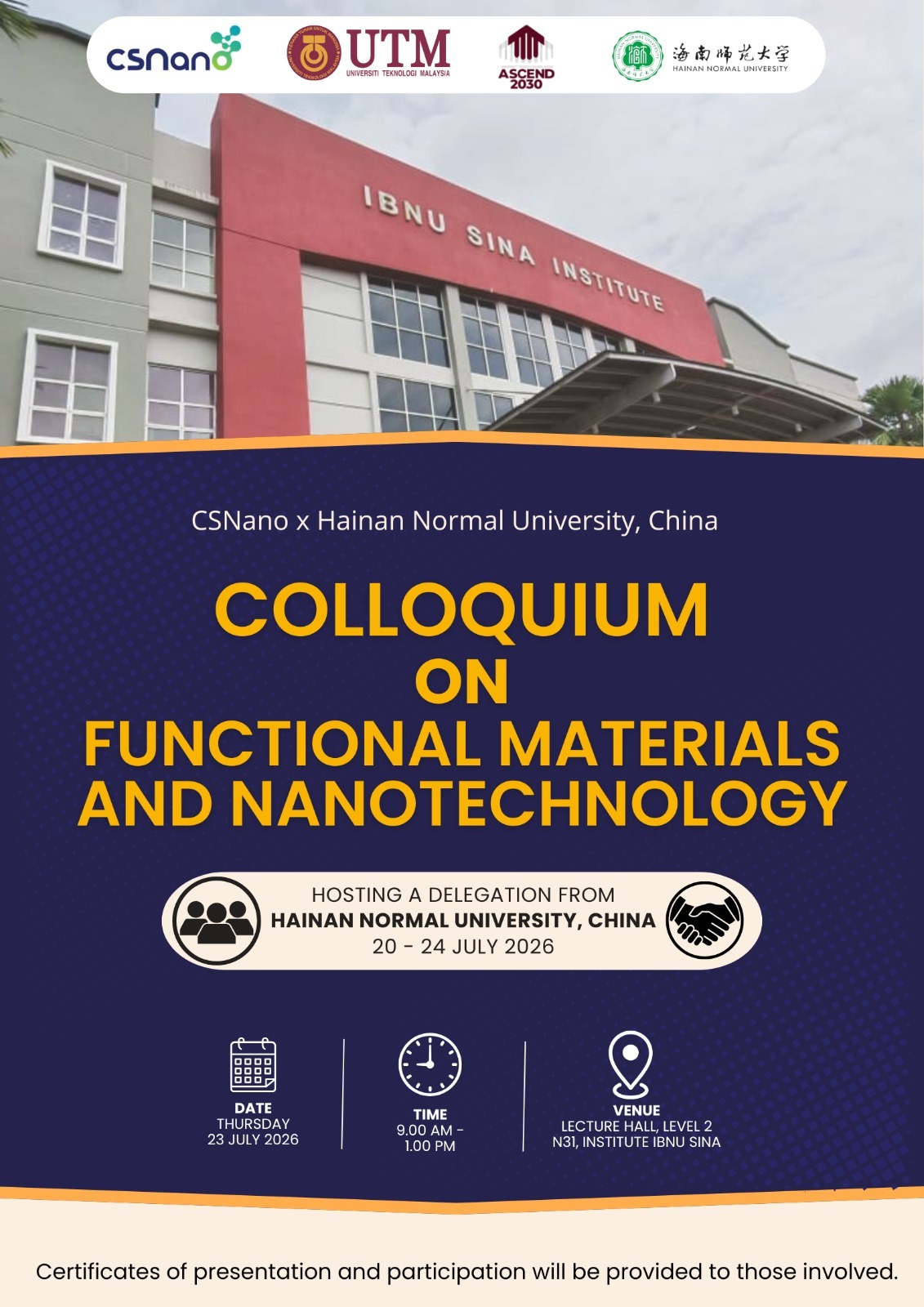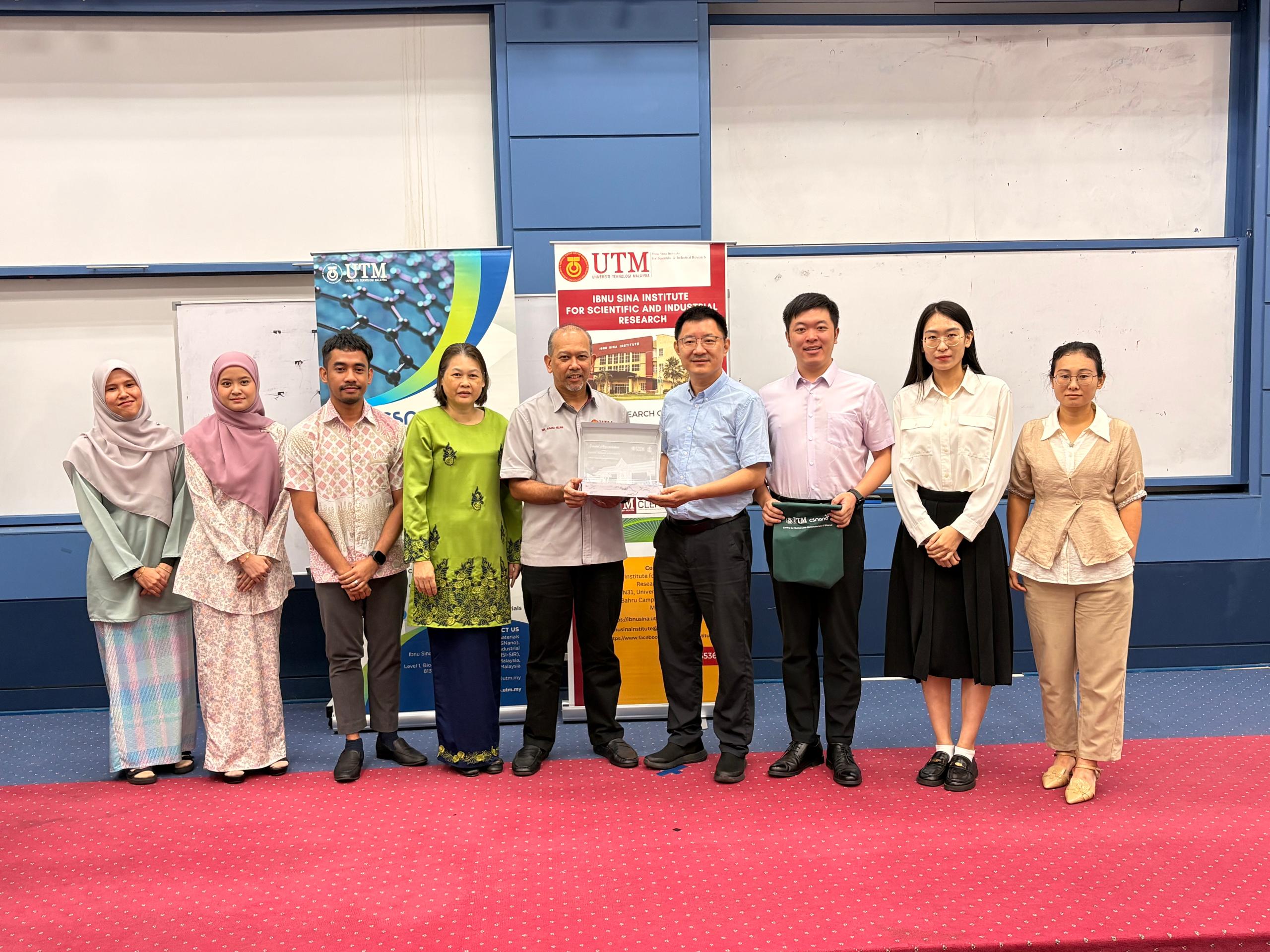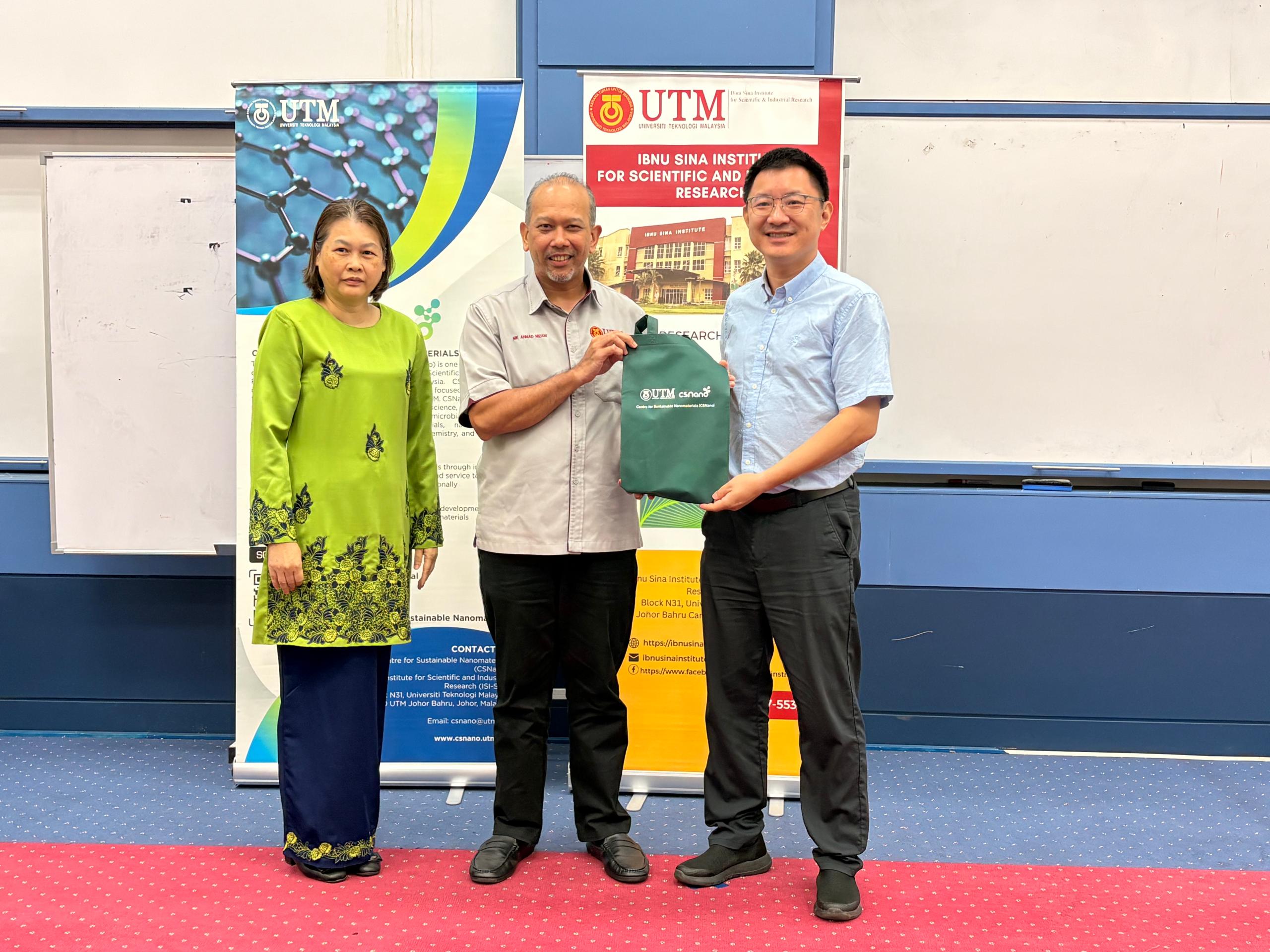
JOHOR BAHRU, 23 July 2026 – The Centre for Sustainable Nanomaterials (CSNano), Universiti Teknologi Malaysia (UTM), successfully organised the Colloquium on Functional Materials and Nanotechnology in collaboration with Hainan Normal University (HNNU), China. The programme was held at the Lecture Hall, Level 2, Block N31, Ibnu Sina Institute, UTM Johor Bahru.
The colloquium provided an international platform for researchers from UTM and HNNU to present their latest findings, exchange scientific knowledge and explore potential collaborations in functional materials, nanotechnology, sensors, sustainable energy, environmental remediation and biomedical applications.
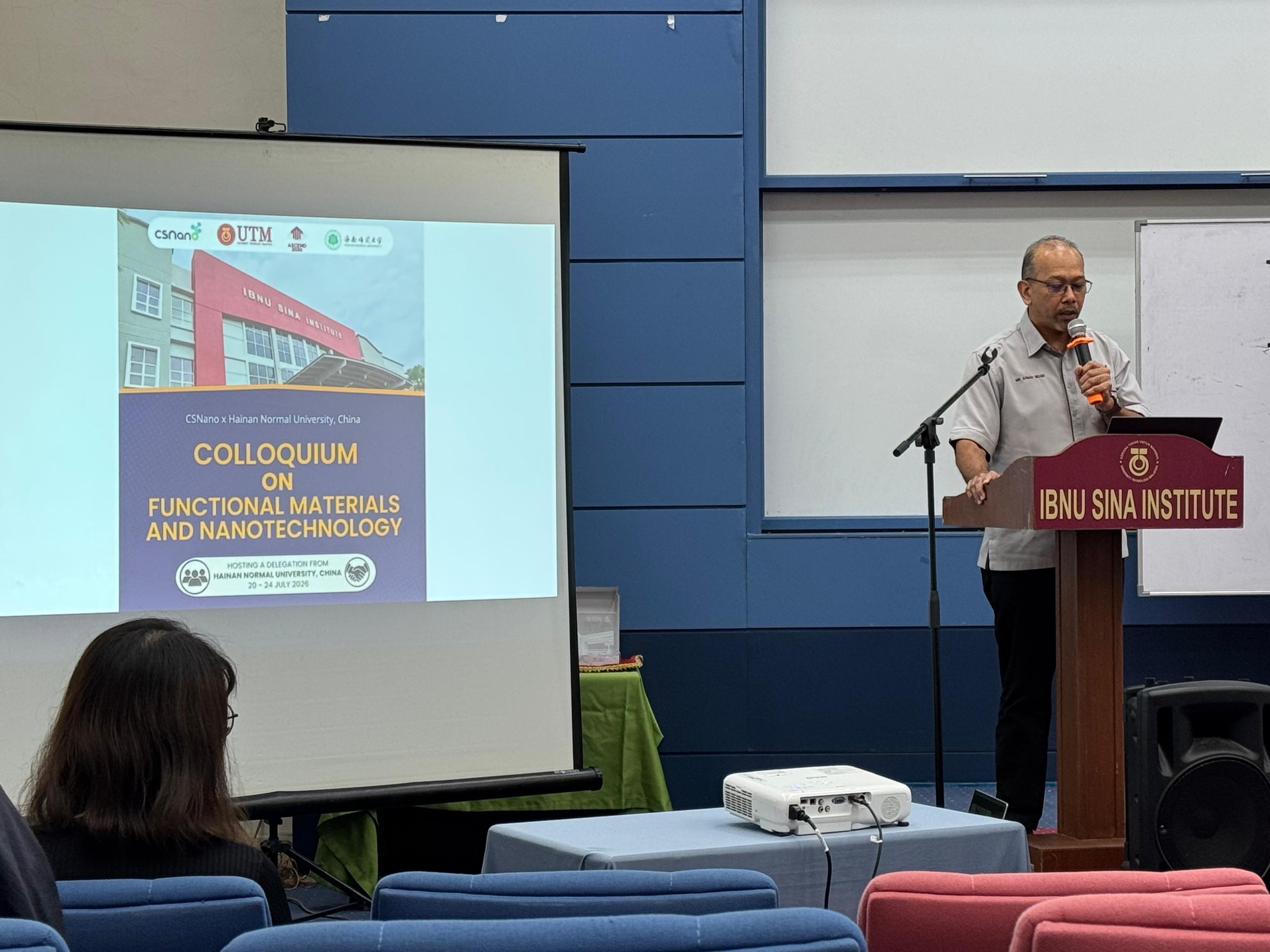
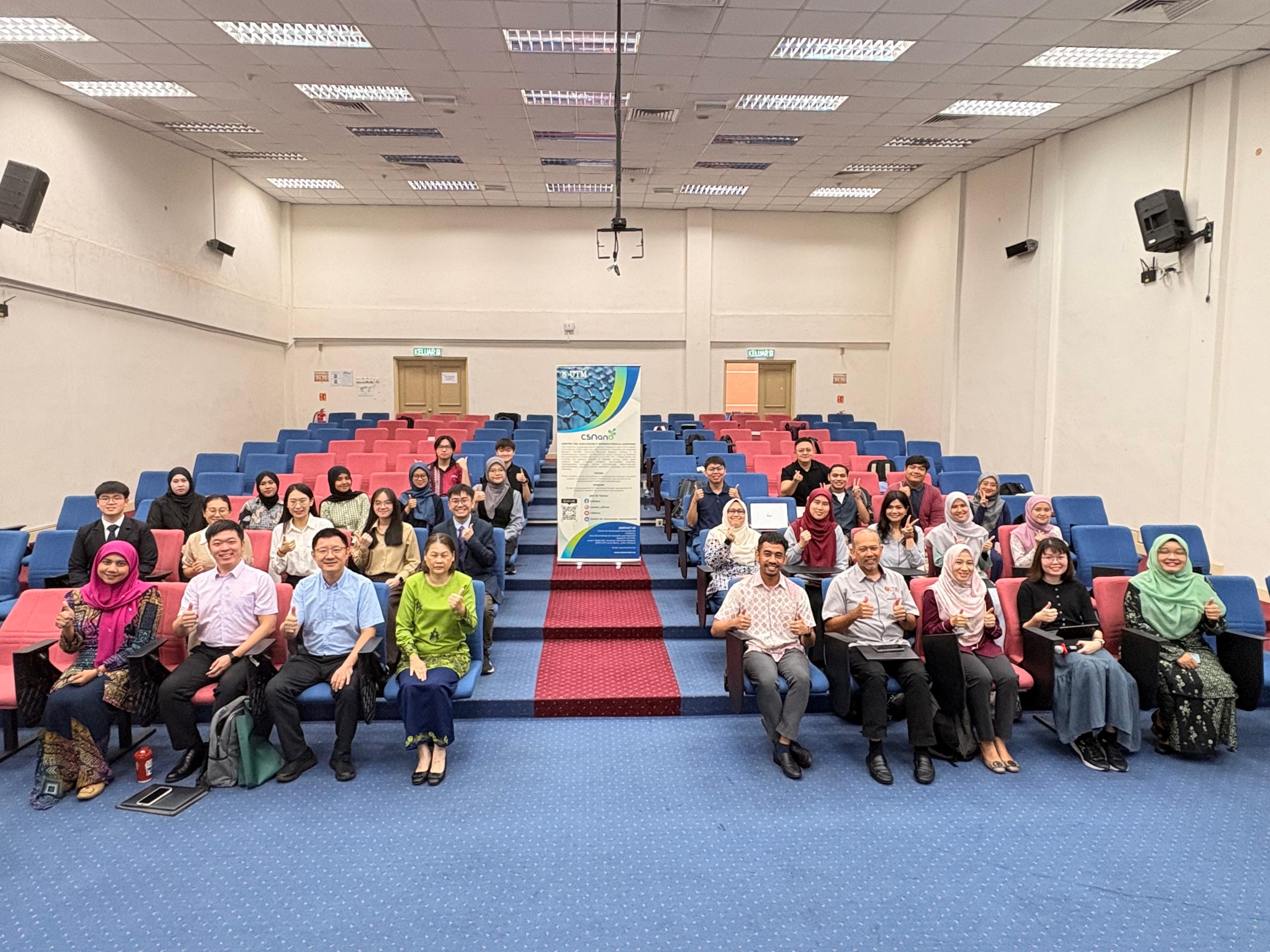
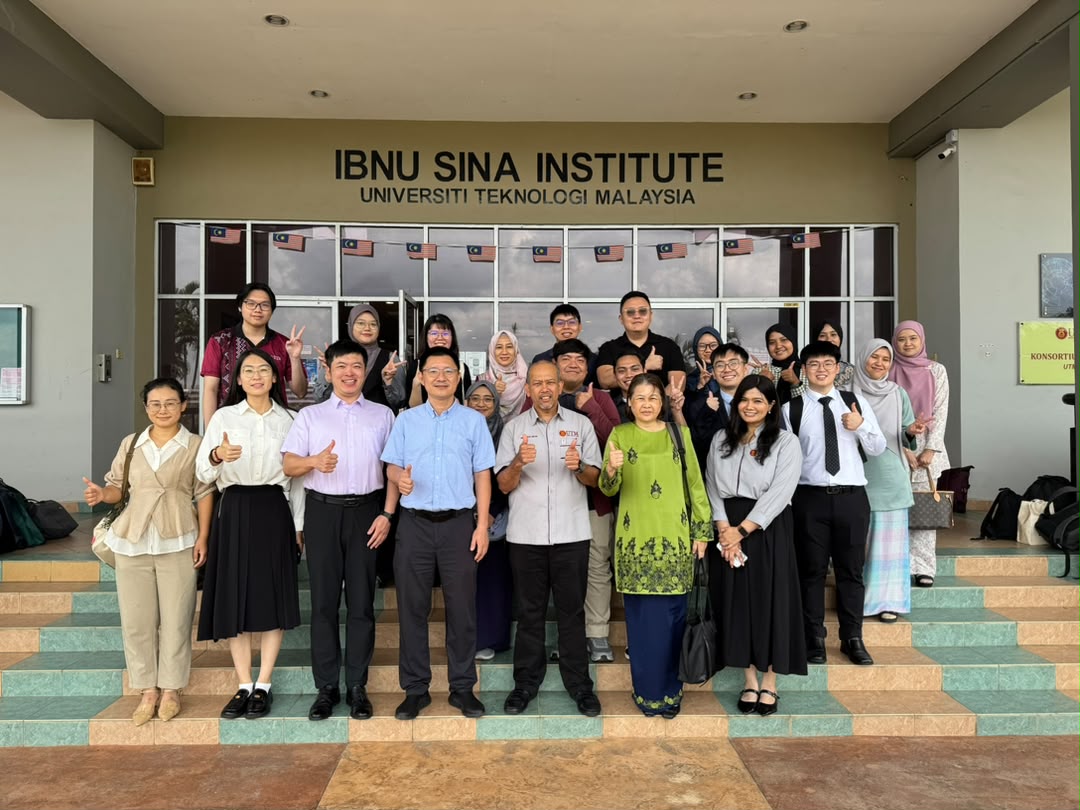
The programme began with a welcoming speech by Assoc. Prof. Dr. Lee Siew Ling, followed by an address from a representative of Hainan Normal University and an official photography session. The scientific programme featured 14 research presentations delivered by academics and researchers from both institutions.
Researchers from Hainan Normal University presented emerging developments in laser-induced graphene electrochemical sensors, metal–organic frameworks for gas sensing, in-situ electrochemical nuclear magnetic resonance technology and molecularly imprinted sensors for selective biotoxin detection.
Among the HNNU speakers, Prof. Dr. Sun Wei presented research on laser-induced graphene composite electrodes for environmental monitoring, food safety and biochemical analysis. Dr. Zhang Dan discussed the design of flexible metal–organic framework-based gas sensors for the selective detection of ammonia and hydrogen sulphide, while Assoc. Prof. Dr. Xiaoping Zhang highlighted advances in in-situ electrochemical nuclear magnetic resonance for studying electrochemical reactions at the molecular scale.
UTM researchers presented studies covering sustainable battery materials, metallic nanostructures, green nanomaterials, photocatalysis, water splitting, molecular simulation, nanoplastic detection and electrochemical sensors.
Dr. Muhammad Amirul Aizat Mohd Abdah presented the development of microwave-pyrolysed rice husk-derived activated carbon as a sustainable anode material for lithium-ion batteries. The study demonstrated the potential of agricultural waste as a renewable precursor for advanced energy-storage materials.
Ts. Dr. Fariza Hanim Suhailin discussed functional metallic thin films and plasmonic nanostructures for sensors and biosensors, including platforms for detecting lead ions, bacterial biomarkers, genetic targets and viral proteins.
Meanwhile, Assoc. Prof. Ts. ChM. Dr. Nik Ahmad Nizam Nik Malek presented “Sustainable Functional Nanomaterials for Biomedical Applications: From Green Synthesis to Advanced Biomaterials.” The presentation highlighted an integrated research platform involving plant-mediated synthesis of silver nanoparticles, physicochemical optimisation, antibacterial and antibiofilm evaluation, and incorporation of the nanoparticles into advanced biomaterials such as chitosan hydrogels.
Other presentations explored Ag/ZnO nanocomposites and carbonised electronic waste for photoelectrochemical water splitting, dual-responsive photocatalysts for bisphenol A degradation, photochromic titania thin films, visible-light-active hierarchical zeolitic photocatalysts and atomic-scale simulations of green-synthesised nanocomposites.
The programme also highlighted computational and analytical approaches for detecting polyethylene and polypropylene nanoplastics, as well as the development of polyionic liquid–carbon quantum dot nanocomposites for electrochemical sensing.
The diversity of the presentations demonstrated the multidisciplinary nature of functional materials and nanotechnology and their importance in addressing challenges related to healthcare, environmental pollution, food safety, clean energy and sustainable development.
The colloquium reinforced the academic relationship between UTM and Hainan Normal University and created opportunities for future joint research, student mobility, knowledge exchange and collaborative publication. It also reflected CSNano and UTM’s commitment to advancing internationally connected research in sustainable and high-impact nanomaterials.