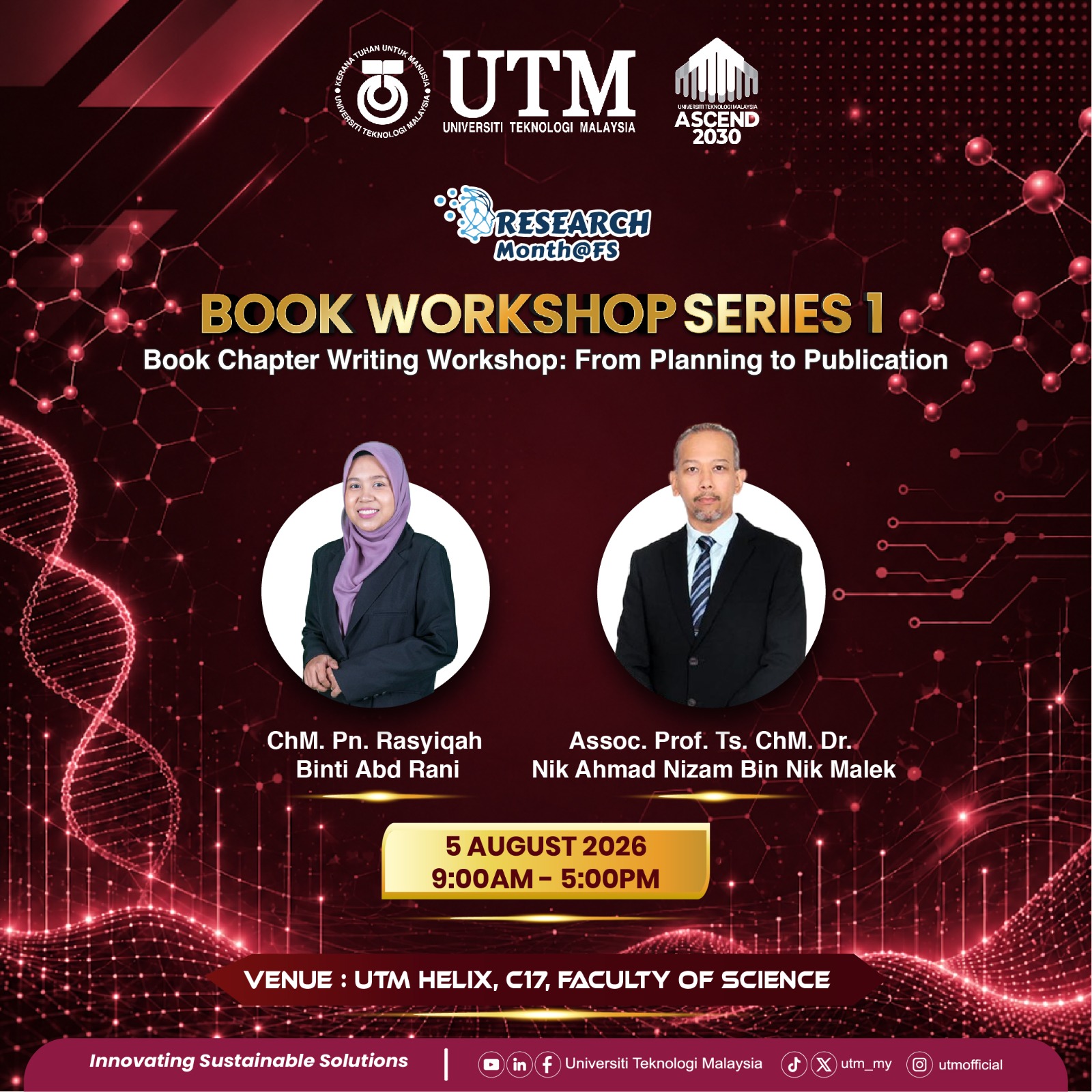
On 5 August 2026, I had the pleasure of facilitating the Book Workshop Series 1: Book Chapter Writing Workshop – From Planning to Publication, organised in conjunction with Research Month@FS 2026 at UTM HELIX, C17, Faculty of Science, Universiti Teknologi Malaysia.
The full-day workshop was conducted together with ChM. Pn. Rasyiqah Binti Abd Rani and aimed to provide academics with practical guidance on preparing high-quality book chapters and managing edited-book publication projects.
From an Idea to a Coherent Edited Book
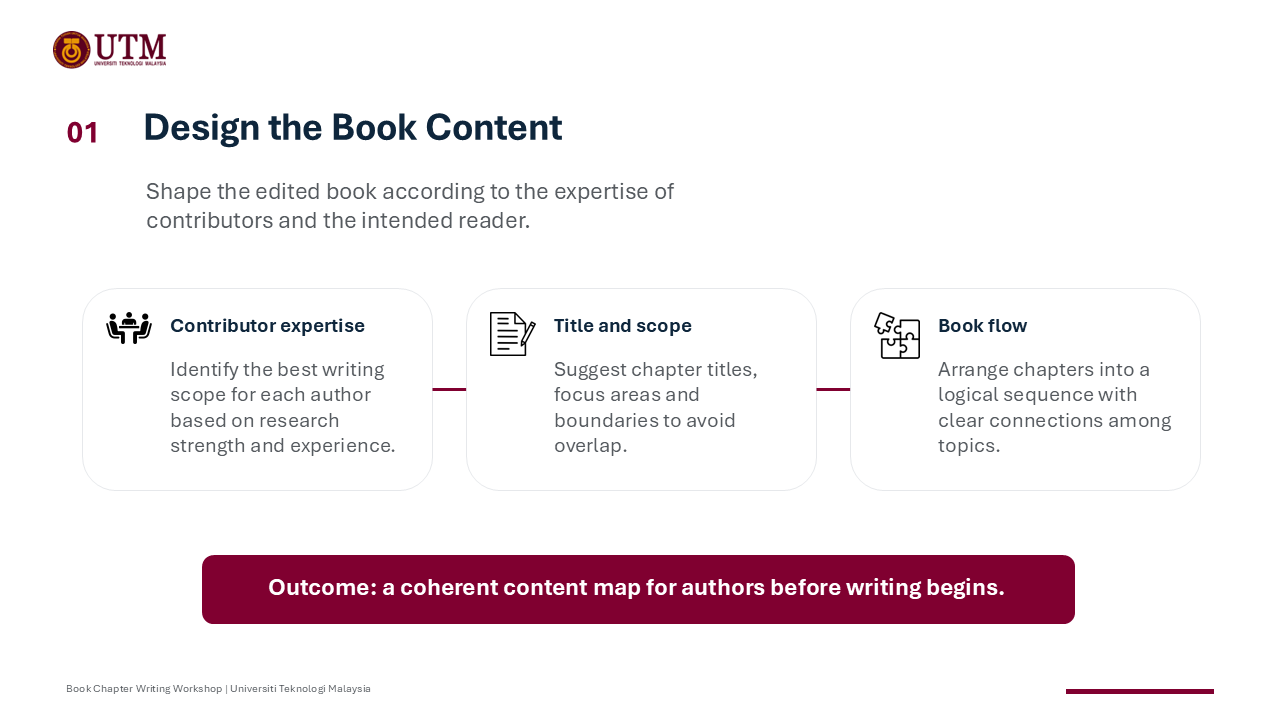
During my session, I shared the important responsibilities of an edited-book editor, beginning with the development of the book’s theme, objectives, intended readership and overall content structure. A successful edited book should not merely be a collection of unrelated chapters. Instead, every chapter must contribute to a unified theme and be arranged in a logical sequence.
Editors must also identify suitable chapter scopes according to the expertise of the contributors, propose appropriate chapter titles and ensure that unnecessary repetition between chapters is avoided. A clear content map should therefore be prepared before the authors begin writing.
Preparing Authors for the Writing Process
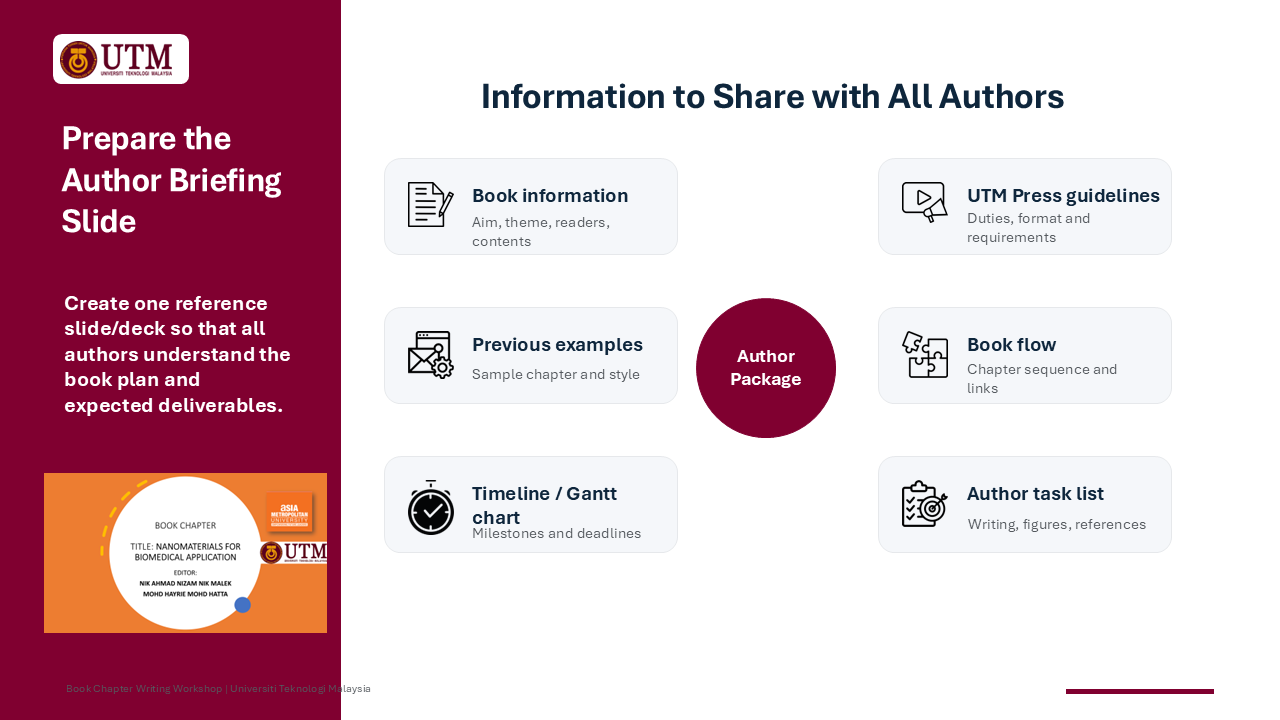
Another important aspect discussed during the workshop was the preparation of a comprehensive author briefing package. Authors should receive clear information regarding:
- the aim, theme and target readers of the book;
- the proposed chapter arrangement;
- publisher guidelines and manuscript templates;
- writing, formatting and referencing requirements;
- submission deadlines and publication milestones; and
- examples of previously published chapters.
A structured briefing helps authors understand their responsibilities and allows the editorial team to maintain consistency throughout the book.
Writing an Engaging Book Chapter
Participants were encouraged to prepare book chapters that are informative, well organised and accessible to their intended readers. Unlike a conventional research article, a book chapter may provide a broader explanation of a topic, integrate information from multiple sources and include relevant examples from the authors’ own research experience.
The use of original tables, photographs, flowcharts and schematic diagrams was strongly encouraged to improve understanding and make the chapter more engaging. Authors were also reminded to follow the prescribed manuscript format, reference style, page requirements and similarity limits. Illustrations should be prepared by the authors or used only with the appropriate permission and acknowledgement.
Monitoring, Reviewing and Finalising the Manuscript
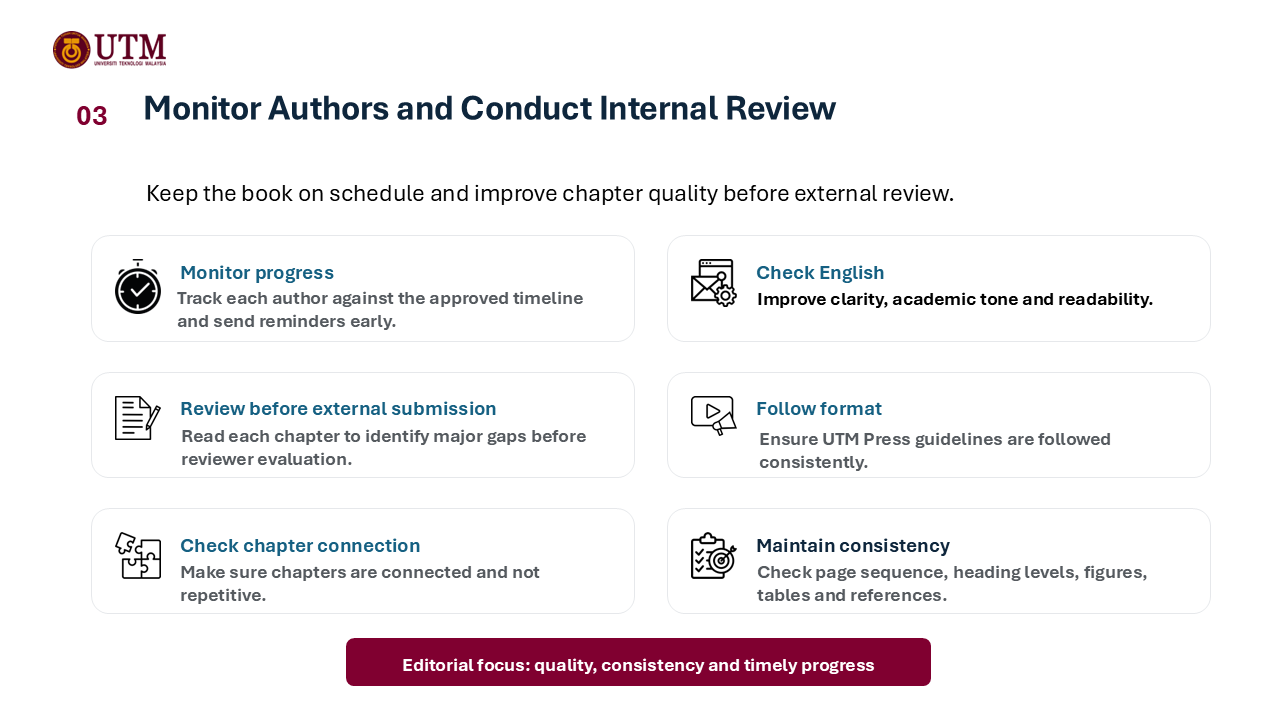
The workshop also highlighted the importance of continuous monitoring and internal review. Editors should track the progress of each chapter, provide timely reminders and review the manuscripts before they are submitted to external reviewers.
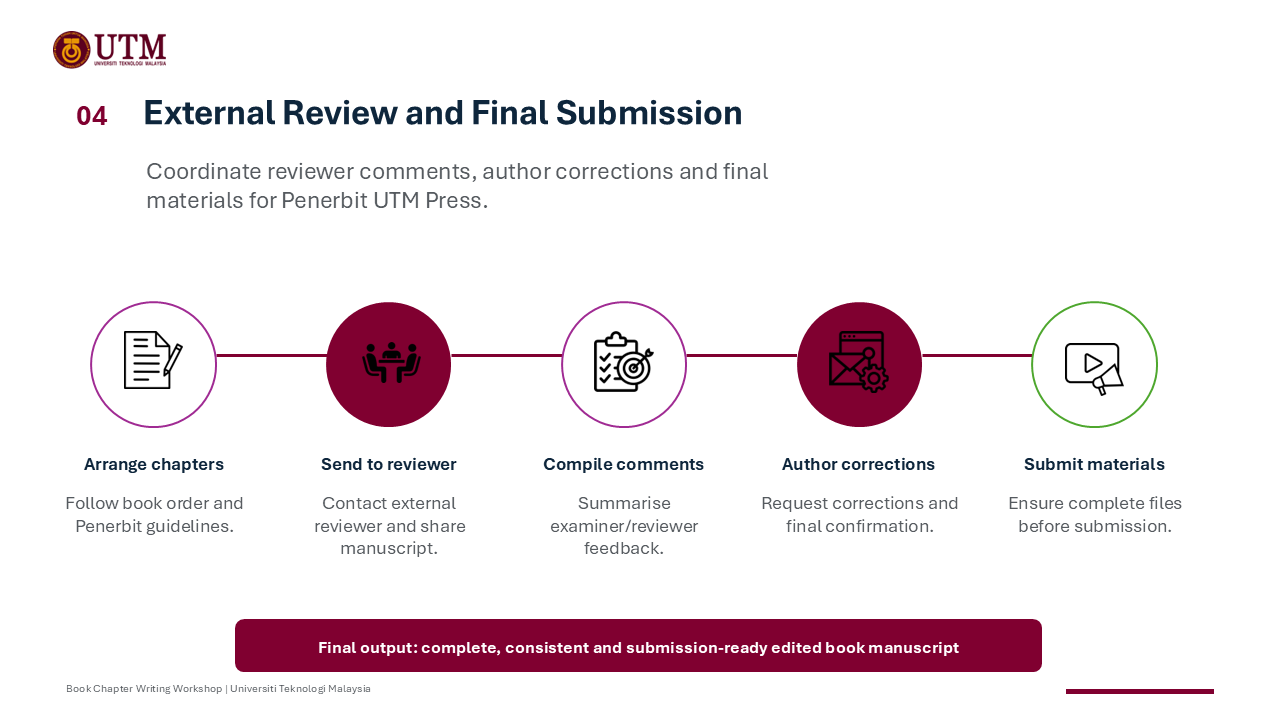
The internal editorial review should examine the clarity of the writing, connections between chapters, accuracy of formatting, consistency of headings, quality of figures and tables, and presentation of references. Following external evaluation, editors must coordinate the authors’ corrections, compile the required documents and ensure that the final manuscript is complete and ready for submission to the publisher.
Sharing Experience from Published Edited Books
As part of the session, I shared examples from my experience as an editor and author of books and book chapters in areas including nanomaterials, biomedical applications, antibacterial agents, applied materials, plant science, water treatment and contaminants of emerging concern.
The development of the edited book Nanomaterials for Biomedical Application was presented as a practical case study. The project demonstrated how editors can coordinate chapter topics, contributors, reviewers, manuscript preparation and publication milestones through a systematic editorial workflow.
The workshop provided a valuable platform for sharing practical strategies that can help academics transform their knowledge and research experience into well-structured scholarly book chapters. Effective planning, clear communication and consistent editorial management remain essential for successfully progressing from an initial book concept to publication.