Artificial intelligence (AI) is rapidly changing the way researchers approach academic writing. From generating ideas and organising literature to refining language, preparing figures and checking manuscripts, AI can support researchers throughout the research and publication process. However, its real value lies not in replacing researchers, but in helping them work more efficiently while maintaining scientific judgement, originality and research integrity.
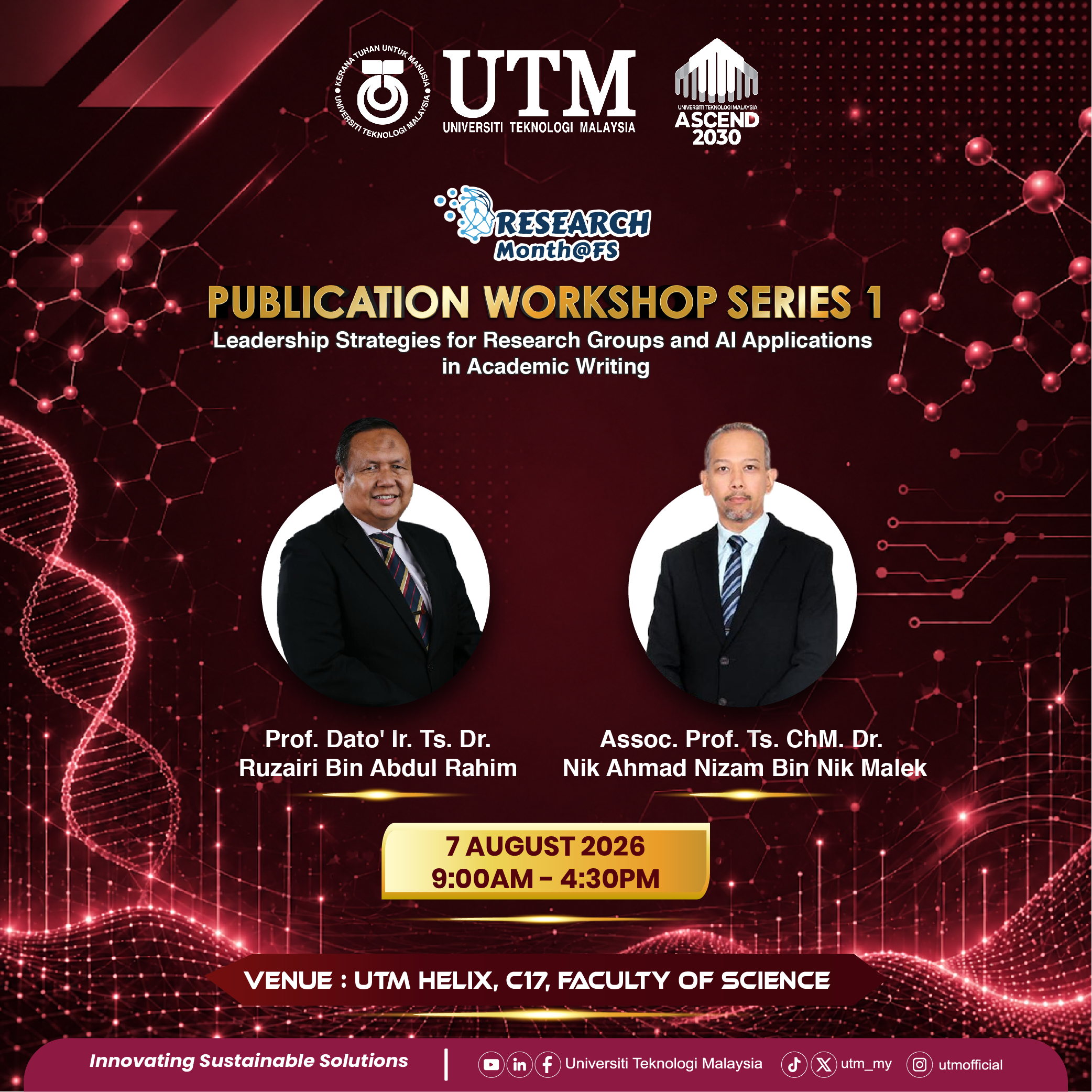
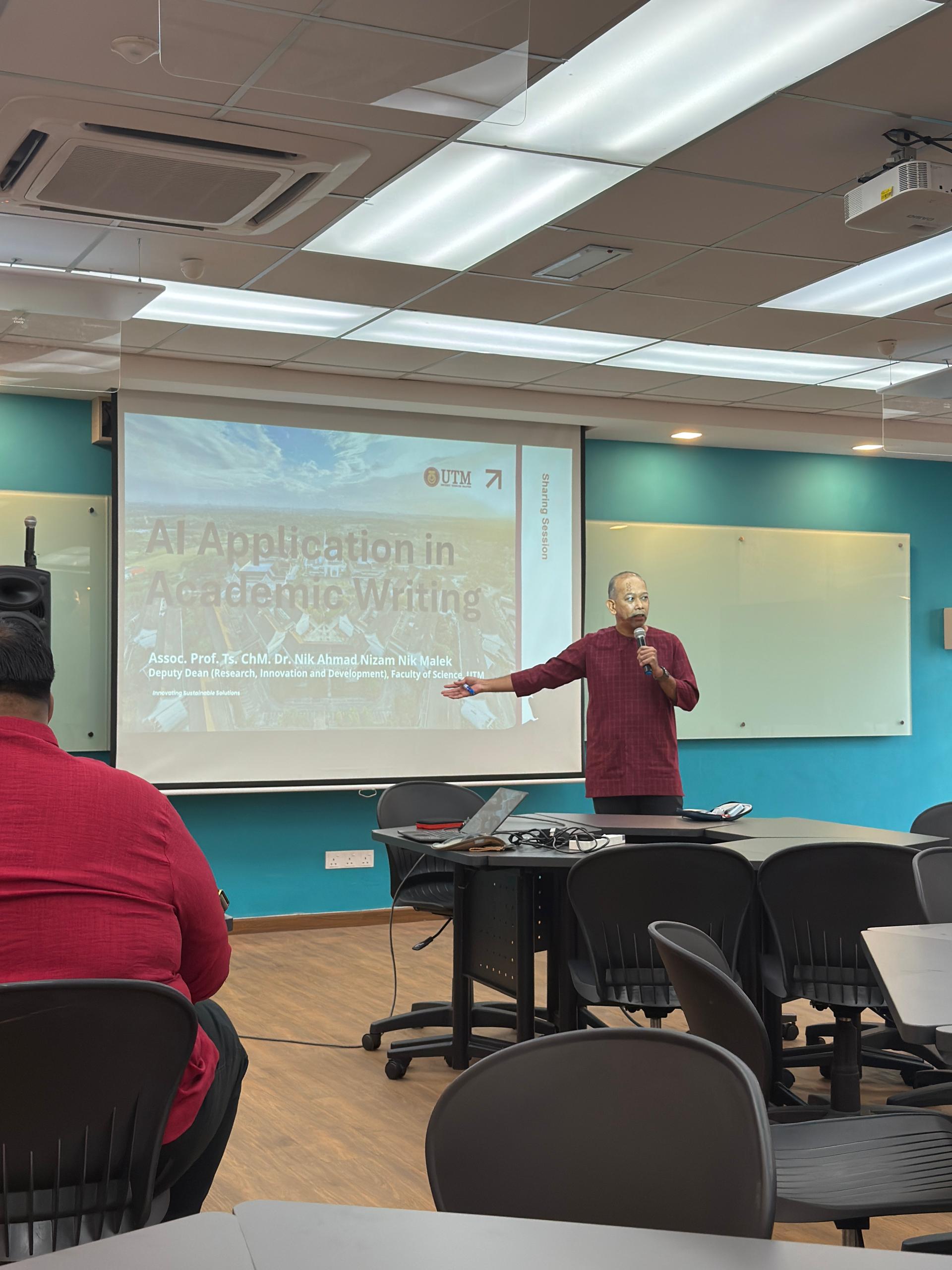
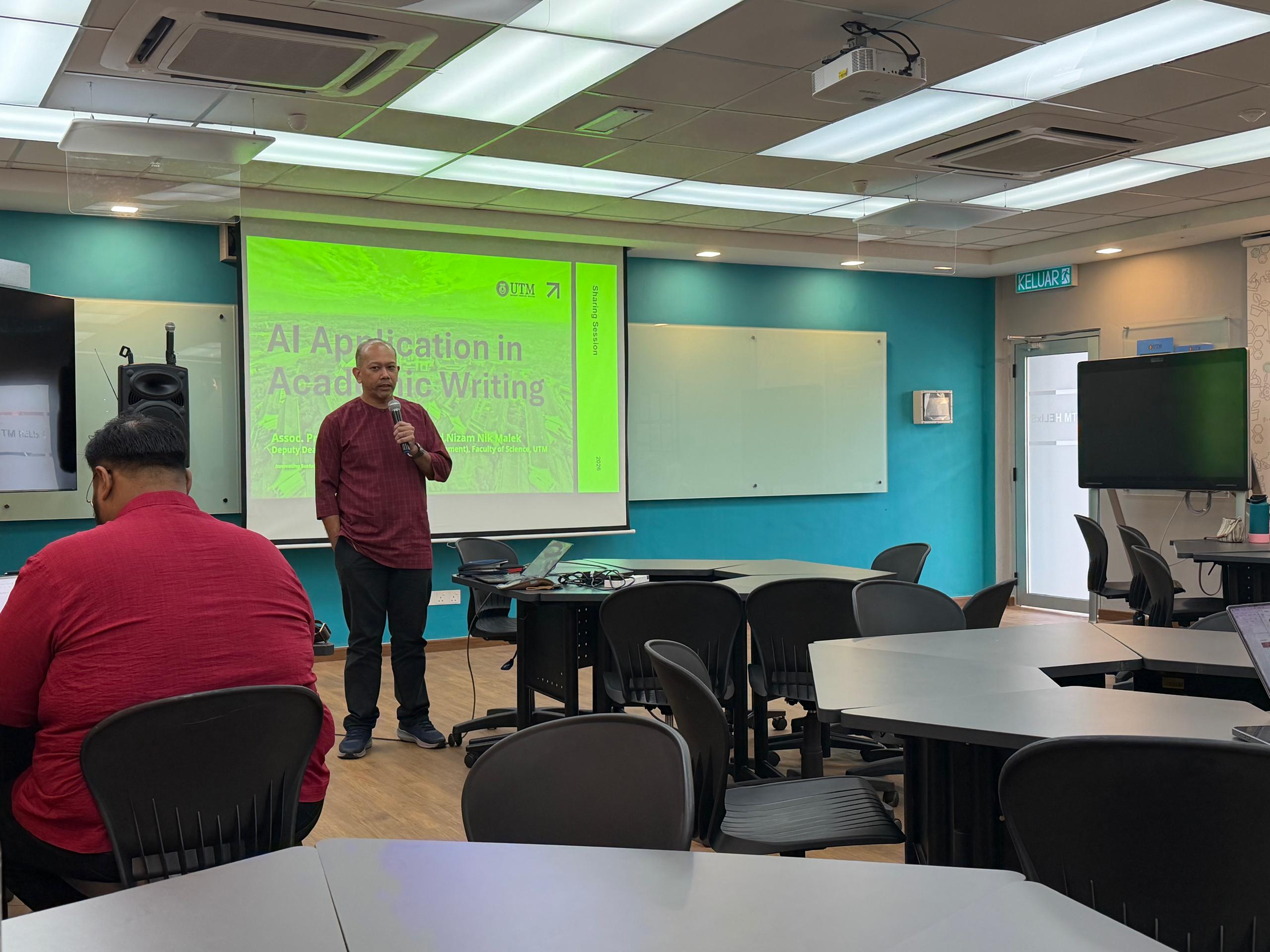
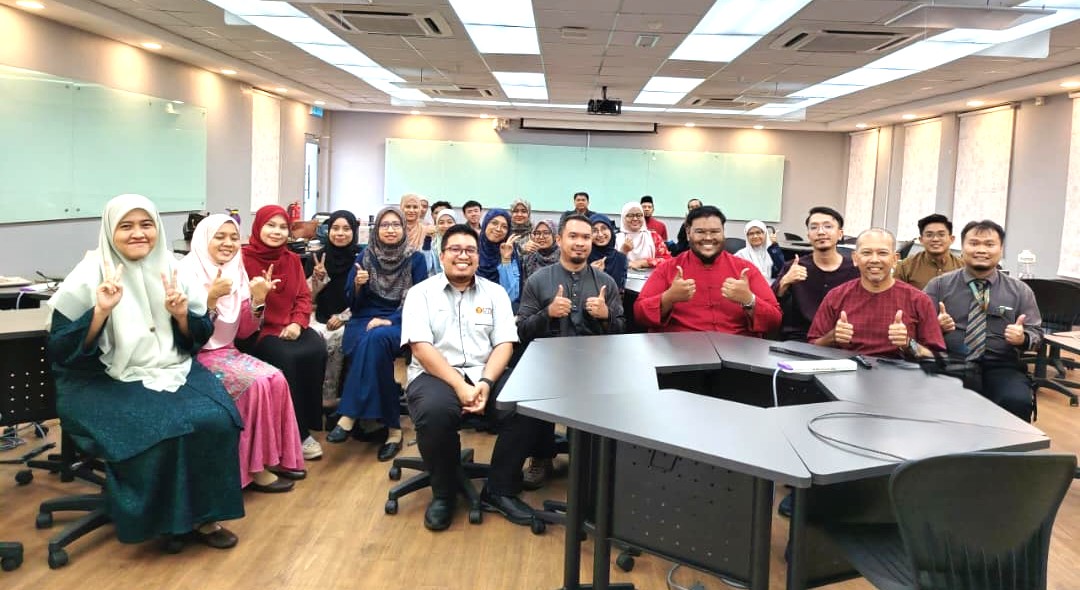
These ideas were highlighted in the sharing session “AI Application in Academic Writing”, presented by Assoc. Prof. Ts. ChM. Dr. Nik Ahmad Nizam Nik Malek, Deputy Dean (Research, Innovation and Development), Faculty of Science, Universiti Teknologi Malaysia (UTM).
Academic Writing Is More Than Journal Publication
One of the important messages of the session is that academic writing should not be viewed only in terms of publishing papers in Q1 or Q2 journals. Researchers can communicate knowledge through a wide range of scholarly outputs, including research and review articles, research books, original books, textbooks, guidelines, modules, conference proceedings, book chapters, magazines and newsletters.
Each form of publication serves a different purpose and audience. A journal article may communicate a focused scientific discovery, while a research book can integrate findings from several studies into a broader and more coherent body of knowledge. Developing different scholarly outputs therefore allows researchers to extend the reach and impact of their expertise.
At the same time, publishing in high-impact journals remains an important part of research development. The presentation emphasises that the value of high-impact publication goes beyond the journal quartile itself. The demanding process encourages rigorous methodology, strong scientific arguments, high-quality data presentation, careful peer review and continuous improvement. It can also strengthen critical thinking, communication, collaboration and research leadership.
Transforming Research into Lasting Knowledge
Academic outputs should also build upon one another. Research projects generate theses, publications, reports and data, which can subsequently be transformed into wider scholarly resources.
An example presented in the session is the transformation of a thesis into a research book. This process requires much more than simply copying or shortening thesis chapters. A thesis is primarily written for examination, whereas a research book should communicate to a broader audience through a coherent narrative, critical interpretation and integrated scholarly insights.
A strong research book therefore follows a storyline. Its chapters should connect logically, guide readers through a research journey and emphasise understanding rather than simply reporting results.
This illustrates a broader principle in academic writing: research findings become more valuable when they are transformed into knowledge that others can understand, use and build upon.
AI as a Research and Writing Assistant
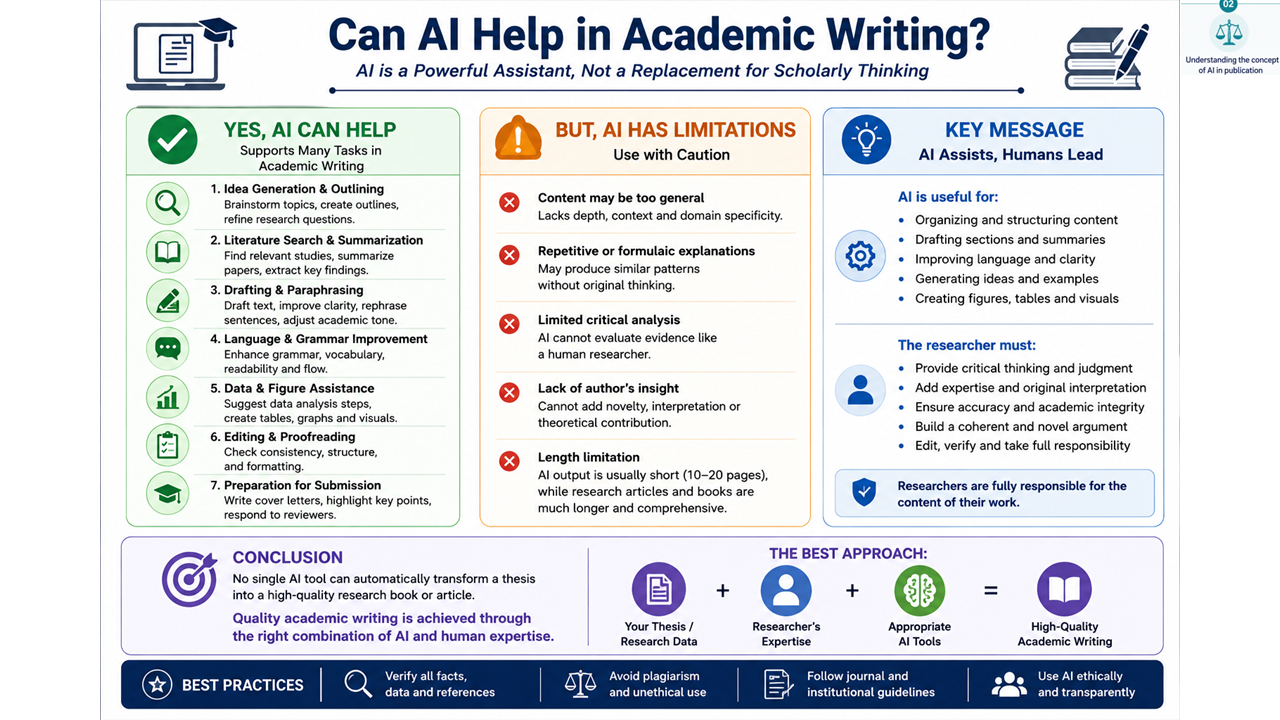
Generative AI provides researchers with a growing collection of tools that can support different stages of academic work. The presentation groups these applications across activities such as general writing and ideation, literature searching and analysis, language enhancement, visual development and research communication.
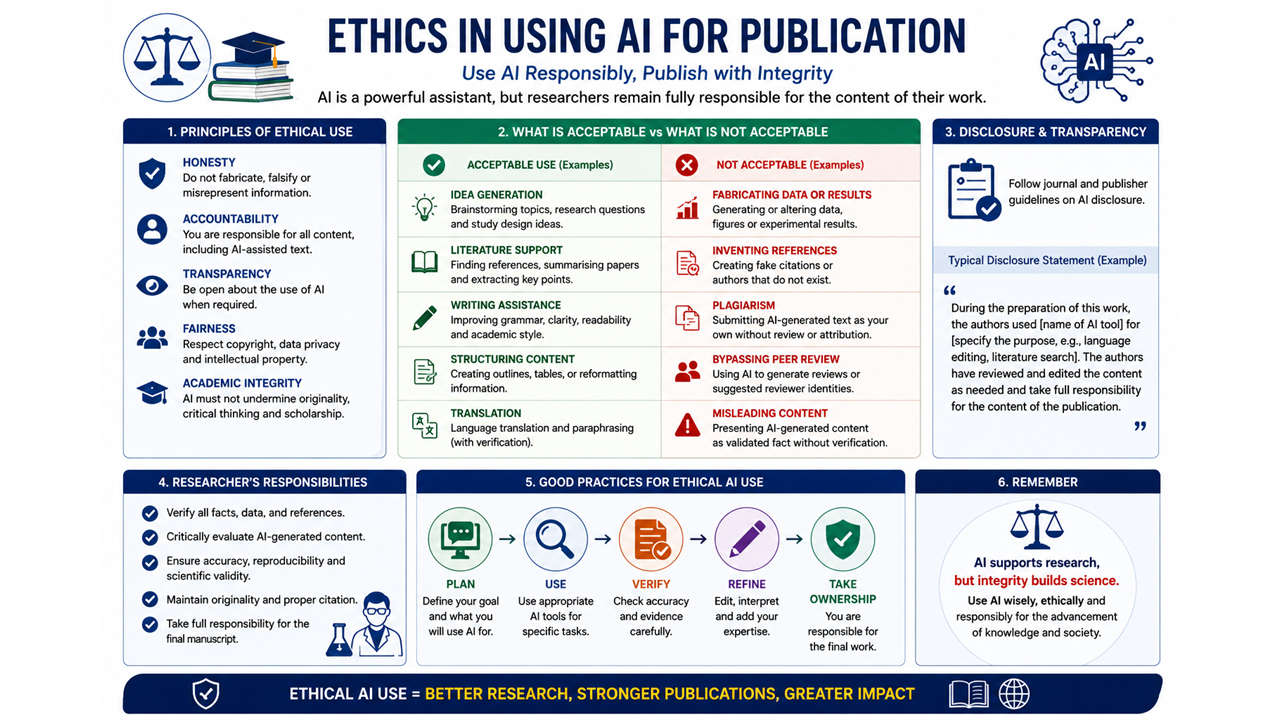
The central message, however, is that AI should assist rather than replace the researcher. The researcher remains responsible for verifying facts, data and references, ensuring originality, avoiding plagiarism, disclosing AI use when required and taking responsibility for the final scholarly output. The presentation therefore places human expertise, critical thinking and integrity at the centre of AI-assisted academic writing.
AI can be especially useful when researchers already possess the scientific knowledge and source materials needed for a manuscript. Instead of asking AI to create unsupported scientific content, researchers can provide their own thesis, publications, reports, datasets or book chapters and use AI to help organise and communicate that information more effectively.
Practical Applications of AI in Academic Writing
The hands-on component of the session demonstrated several practical ways in which tools such as ChatGPT can support research writing. These include rewriting and expanding existing text, improving figures, converting tables into explanatory text, transforming text into visual concepts, interpreting images or sketches, standardising reference formats and reviewing entire chapters for problems involving content, spelling, wording, flow and citation consistency.
AI can also help researchers work directly from their own source materials. For example, researchers may upload relevant documents and ask the system to analyse the sources, propose an appropriate research-book title or develop content based specifically on the provided evidence.
The presentation further demonstrates how AI can help convert scientific information between different formats. A complex table can be transformed into a coherent narrative; technical text can be translated into an infographic concept; and a scientific sketch can be interpreted and developed into clearer explanatory content. Such capabilities are particularly useful when preparing books, review articles, teaching materials and presentations.
AI can also support the more technical components of book production. For example, the slides demonstrate its potential to identify important terms for an index, organise main entries and subentries, generate cross-references and standardise terminology throughout a book.
Improving Academic Language Without Losing Scientific Meaning
Language-enhancement tools can assist researchers in improving grammar, sentence structure, readability and academic tone. The session includes practical examples using Grammarly within Microsoft Word to refine research-book material originating from a thesis and to make text more academic or professional.
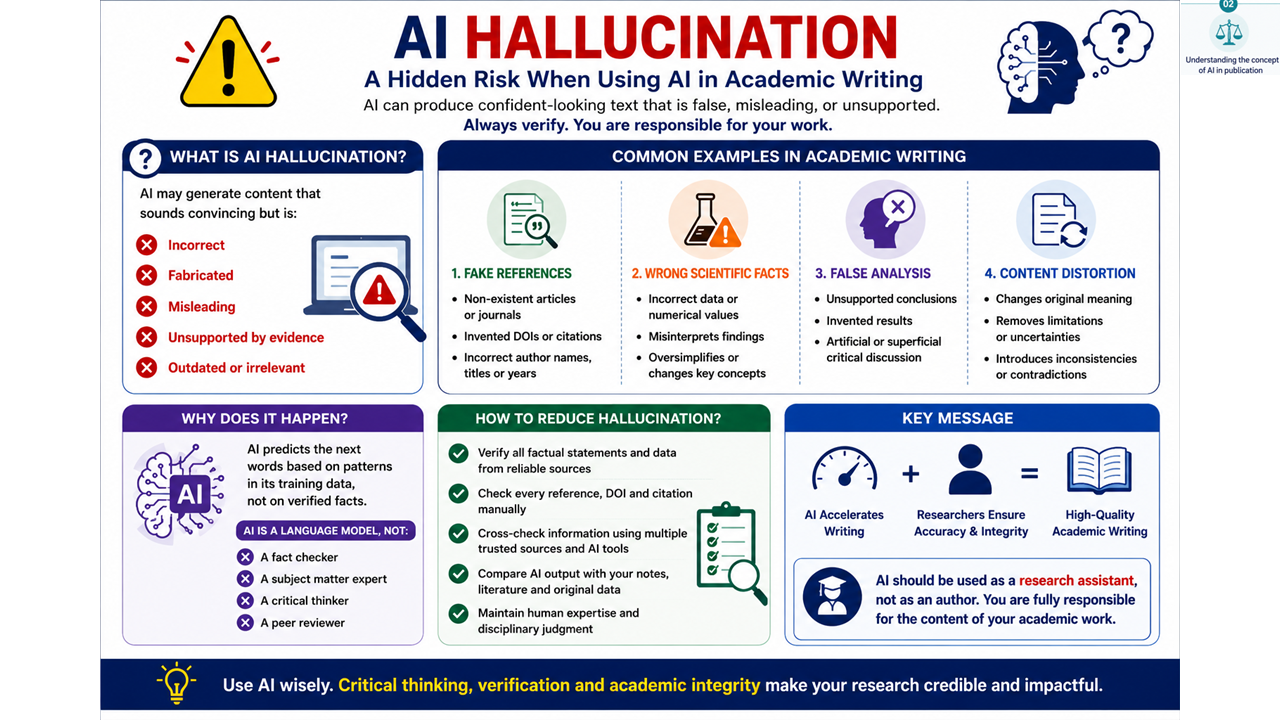
Nevertheless, language improvement must not alter the intended scientific meaning. Every AI-generated revision should therefore be reviewed by the author, especially when the text involves technical terminology, numerical data, scientific interpretation or conclusions.
The best workflow is not simply generate and accept, but rather:
Draft → AI-assisted refinement → researcher verification → revision → final scholarly judgement.
Better Prompts Produce Better Academic Outputs
Effective use of generative AI also depends strongly on how researchers communicate their requirements. The presentation emphasises that better prompts generally lead to better outputs. A useful prompt should provide the AI with an appropriate role, sufficient context and constraints, a clearly specified output format and opportunities for iterative refinement rather than accepting the first response immediately.
For academic writing, this means that a request such as “improve this paragraph” can be strengthened by specifying the purpose of the paragraph, target audience, academic field, required writing style, information that must be retained and whether the AI is allowed to add new information.
Providing trusted sources is equally important. When researchers instruct AI to write based on supplied sources, the resulting text can remain more closely connected to the actual research evidence rather than depending on unsupported generated information.
From Manuscript Draft to Submission-Ready Publication
AI can also support the later stages of publication. Examples in the presentation demonstrate how manuscript drafts, journal templates and submission requirements can be considered together when preparing a manuscript for a particular journal.
This can include checking structural requirements, organising sections, reviewing references, identifying missing information and adapting manuscripts to publisher specifications. However, submission-ready does not mean “AI-ready”; it means the researcher has verified that the manuscript is scientifically accurate, appropriately written and compliant with the target journal requirements.
AI therefore functions most effectively as part of a larger scholarly workflow rather than as an independent author.
AI + Human Expertise for Better Research
The future of academic writing is unlikely to be characterised simply by humans writing without AI or AI writing instead of humans. A more productive model is the combination of AI capabilities with human expertise.
AI can accelerate repetitive tasks, help researchers explore alternative ways of presenting ideas, improve communication and support the transformation of research into different scholarly formats. Researchers, however, provide the scientific questions, experimental evidence, disciplinary expertise, critical interpretation and ethical responsibility.
The goal is therefore not merely to use more AI, but to use it purposefully, critically and responsibly.
Ultimately, the strongest principle emerging from the session can be expressed simply:
AI assists. Researchers think, verify and decide.
When combined with strong scientific foundations, responsible AI application can contribute to better writing, stronger research and greater academic impact.