Resilience, Reflection and Resolve: A Journey of Self-Leadership
When I look back at my path in academia, I realize that self-leadership has been the quiet compass guiding me. I did not always see it clearly, but in moments of challenge and growth, the principles revealed themselves.
The first principle is self-awareness. My journey has been a series of adaptations and this awareness keeps me grounded. My strength comes not from convenience but from resilience. I know where I come from and I understand the struggles of adapting to new environments. I have navigated my professional life through various roles and institutions, from my work experiences at MSU Kuala Terengganu, Kolej Antarabangsa Yayasan Melaka, UiTM Melaka Kampus Alor Gajah and now at Universiti Teknologi Malaysia. I also have prior experience in diverse industries, including manufacturing, agriculture and entertainment. This awareness allows me to recognize my own teaching style, my research strengths and even my blind spots, all of which are shaped by these varied experiences.
The second principle I hold on to is self-regulation. Life in academia often feels like a juggling act with course design, research, supervision and administrative duties all competing for attention. At times it can be overwhelming. I remember one particular task that tested me deeply: mapping Course Learning Outcomes (CLOs) to Programme Learning Outcomes (PLOs). At first it felt like an impossible puzzle and I caught myself growing frustrated. Instead of letting that frustration take over, I chose to pause, breathe and approach it differently. Slowly I began to see the bigger picture and the purpose behind the process. What once felt like a headache turned into an unexpected lesson, giving me a clearer and more strategic understanding of curriculum design. Looking back, I realise that self-regulation not only helped me get through that challenge but also reshaped how I face future tasks with less dread and with more control and intention.
The third principle I hold on to is self-motivation. I do not wait for external validation to keep moving forward. My drive often comes from small victories and these victories are what sustain me through the long and sometimes lonely journey of academia. I still remember the moment one of my students, who had struggled for weeks to deliver a presentation, finally stood in front of the class with confidence. Watching her growth reminded me that the hours spent guiding and encouraging her were worth it. In the same way, the quiet satisfaction of submitting a research paper after countless revisions, or even the relief of finally figuring out how to navigate a complicated system like preparing research grants proposal at RADIS or MyGrants, gives me the fuel I need. These small wins, though often invisible to others, are the sparks that keep me going, especially when results are delayed, or recognition does not come immediately.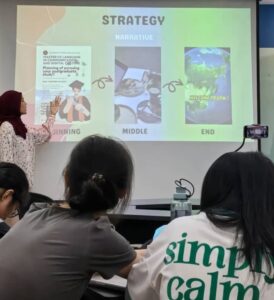
Another principle is self-efficacy, the belief that I can figure things out. This does not mean I know everything; it means I trust myself to learn, to adapt and to seek help when necessary. For instance, when I was struggling to align my research instruments with ethical requirements, I reached out to a senior colleague for feedback. Instead of seeing this as a sign of weakness, I viewed it as part of my confidence in problem-solving. The same applies to moments when I asked my mentor, Dr. Aida A.Rahman, for guidance or when I invited colleagues to cross-check my work before submission. These experiences reminded me that seeking help is not a surrender, but a strategy. It has strengthened my adaptability and given me the courage to move past obstacles rather than being trapped by them.
I also carry self-reflection as a constant companion. Reflection, for me, is not just about looking back but about reshaping my path. After one semester where student feedback highlighted that my instructions were sometimes unclear, I spent time reviewing how I communicated tasks in class. That reflection led me to adopt simpler language, clearer rubrics and more visual aids and the following semester I saw students engage with the material more confidently. Reflection also comes alive in the way I write about my academic journey. Through social media posts and personal notes, I revisit my struggles and breakthroughs, which allows me to see patterns and growth that I would otherwise overlook. Reflection ensures that I do not just pass through academia as a routine but continue to grow through it.
Why does this matter for my career? Because academia is not only about expertise. It is about endurance, adaptability and the ability to find meaning in the process. Self-leadership allows me to manage myself before I manage tasks, projects, or even students. It makes me more resilient when facing systemic frustrations such as delayed approvals, more resourceful when navigating institutional expectations and more purposeful in charting the next steps of my career. For me, self-leadership is the art of steering my own ship even when the waves are high. The sea of academia is not always calm, but with self-motivation, self-efficacy and self-reflection as my compass, I know I can keep moving forward.
Embracing Strengths, Confronting Challenges: My Journey as a Lecturer
When I step into the classroom, I am reminded of why I chose this path. Teaching, for me, is not simply about transferring knowledge but about building connections. One of my greatest strengths lies in creating spaces where students feel seen, heard, and encouraged to participate. I find deep fulfilment in sparking curiosity, guiding them to think critically, and urging them to speak with confidence. I remember a student who was always reluctant to share her views. With encouragement and small steps, she eventually gained the courage to express herself. By the end of the semester, she was presenting her ideas with clarity and conviction. Moments like these remind me that my role is not only to deliver content but also to inspire.
Beyond teaching, my natural curiosity fuels my work in research and innovation. I am especially drawn to questions in organizational and intercultural communication, particularly during times of crisis. During the pandemic, I observed how communication breakdowns disrupted both organizations and individuals. Rather than being discouraged, I leaned into that curiosity and asked questions about resilience, preparedness, and the role of human connection in moments of uncertainty. This curiosity now anchors my research grant on building crisis communication capabilities among UTM students, a project that aims to strengthen their readiness for the challenges of the workplace and ensure their long-term career sustainability.
Another strength that sustains me is my openness to collaboration. Academia grows stronger through shared effort, and I value the exchanges I have with colleagues, mentor and students. These collaborations happen in many ways, sometimes in formal research projects and sometimes in simple conversations after class or at seminars. One of my most meaningful projects began from such an informal exchange with a colleague. That discussion eventually turned into a co-authored paper that deepened both our teaching and research. This collaborative spirit also shapes my current research grant. The project brings together perspectives from communication scholars, industry practitioners, and student voices. By working collaboratively, we are not only generating knowledge but also co-creating practical strategies and training that equip students to navigate crises in their future workplaces. For me, collaboration is not only about partnership but about recognising that knowledge grows best in community and that meaningful impact emerges when ideas are nurtured collectively.
I am also aware of my shortcomings. Balancing the many roles I carry as lecturer, researcher, supervisor, and committee member is not always easy. Time often feels limited, and I sometimes find myself pulled in too many directions. I am learning, little by little, that balance is not about doing everything at once but about knowing when to pause, prioritize, and breathe. In the past, I accepted every task that came my way, only to realise that my focus and energy were scattered. Now I remind myself that it is equally important to choose wisely where I put my effort.
Another challenge I continue to face is developing my scholarly voice. The ideas and the passion are present but shaping them into writing that carries impact within the academic community is still a journey. I often go through many rounds of revision, questioning structure and clarity. Yet with each draft, I notice improvement. It takes patience and persistence to keep refining my voice, and I remind myself that growth in this area cannot be rushed.
Despite these challenges, I hold on to the belief that strengths and shortcomings are two sides of the same coin. My strengths give me confidence, while my challenges keep me grounded and eager to grow. Together, they shape my journey in academia as a path not of perfection but of progress.
Perhaps that is what truly defines a lecturer: not the absence of flaws, but the willingness to keep learning, adapting, and moving forward alongside the very students we hope to inspire.
Envisioning Myself in the Next Ten Years
When I think about the next decade of my academic journey, I do not only see myself as a lecturer standing in front of a class. I imagine myself growing into a scholar and academic leader whose work leaves an imprint both within and beyond the university walls.
In the next ten years, I want to build credibility and recognition by producing scholarship that is not only rigorous, but also meaningful. My research will not be confined to journals; it will speak to real-world issues in organizational and intercultural communication, especially in times of crisis. I aspire to be known not just as someone who publishes, but as someone whose work sparks conversations, influences practice and shapes policy at local, regional and even international levels.
Equally important is how I envision leadership in academia. To me, leadership is not about titles, but about enabling others to grow. I hope to mentor younger colleagues and students, guiding them to see their own potential as scholars. I think of a student I once supervised, who initially struggled to organise her ideas and express them clearly in writing. Draft after draft, she doubted her ability to produce academic work of quality. Through guidance and persistence, she slowly gained confidence in structuring arguments, refining her analysis, and polishing her writing. By the end of the project, she produced a research paper that not only demonstrated clarity but also revealed her growth as a young scholar. Experiences like this remind me that leadership in academia is about opening doors for others and walking alongside them until they are ready to take the lead themselves.
I also want to create networks that connect people across disciplines and borders, because knowledge gains its power when shared widely. Collaboration has always been one of my strengths. In fact, one of my most meaningful projects began as an informal discussion with a colleague and later grew into a co-authored paper. Moving forward, I want to expand this collaborative spirit through research grants, particularly in projects such as building crisis communication capabilities among UTM students for their career sustainability. For me, collaboration is not only about partnership but also about recognising that knowledge grows best in community.
To move toward this future, I know I must lean deeply into self-leadership principles.
Goal setting will be my map. I plan to set clear milestones for research, teaching innovations and community engagement, while also leaving space for flexibility as opportunities emerge. These goals will keep me focused on long-term impact rather than short-term recognition.
- Self-reflection will be my compass. In the rush of academic life, it is easy to keep moving without pausing to ask if I am making the impact I hoped for. Reflection will help me recalibrate, ensuring that my work aligns with my values and the needs of the communities I serve.
- Self-regulation will be my anchor. As responsibilities grow heavier, I will need the discipline to balance ambition with sustainability. Managing time, energy and focus will be essential if I am to lead without burning out.
- Self-motivation will be my fuel. Recognition may take years to build and setbacks are inevitable, but I intend to keep my sense of purpose alive. Every student inspired, every collaboration forged, every question answered will remind me why I chose this path.
In embracing these principles, I believe I can overcome my weaknesses such as the tendency to stretch myself too thin or to hesitate in voicing my scholarly identity. At the same time, I will sustain my strengths such as curiosity, collaboration and the ability to connect meaningfully with others.
Ten years from now, I see myself not only as a scholar who has published widely, but as an academic leader who has nurtured people, built bridges and made communication scholarship matter in society. My journey will not be about arriving at perfection, but about continually refining myself one goal, one reflection, one step at a time. For me, academia is less about titles and more about making knowledge meaningful for students, for communities, for the world.
