Years ago, Americans were reluctant to praise their kids’ intelligence.
Like many people around the world, Americans believed that fawning over children would make them arrogant or narcissistic.
But then something happened. American educators were seduced by the Self Esteem movement. They started promoting the idea that kids need flattery to succeed. Want your child to achieve? Tell him he is bright.
Decades later, the idea is still entrenched in the popular culture. Consider Blue’s Clues, the preschool show that ends each episode with a cheerleading session for kids:
“Hey, you know what? You’re really smart!“
It’s very well-intentioned. But it’s also wrong-headed.
Because it turns out that certain kinds of praise can backfire. In particular, telling kids they are smart can make them act dumb. And here is the evidence.
When you praise kids for their ability, it makes them focus on looking good—not on learning
Kids praised for their intelligence want to keep proving themselves by doing well.
This might sound good, but it’s actually counter-productive.
In a landmark series of experiments on American 5th graders, researchers Claudia Mueller and Carol Dweck found that kids behaved very differently depending on the kinds of praise they received.
Kids who were praised for their intelligence tended to avoid challenges. Instead, they preferred easy tasks. They were also more interested in their competitive standing–how they measured up relative to others–than they were in learning how to improve their future performance.
By contrast, kids who were praised for their effort showed the opposite trend. They preferred tasks that were challenging– tasks they would learn from. And kids praised for effort were more interested in learning new strategies for success than they were in finding out how other children had performed.
Kids differed in other respects, too. Compared to kids praised for their effort, kids who were accustomed to being praised for their ability were
more likely to give up after a failure
more likely to perform poorly after a failure, and
more likely to misrepresent how well they did on a task.
And that’s not all. Kids praised for their intelligence were more likely to view their failures as evidence of low intelligence.
When you praise kids for their intelligence, they learn to view their failures as evidence of stupidity
In the experiments by Mueller and Dweck, kids were given moderately difficult problems to solve. When each kid was finished, he was told “Wow, you did really well on these problems. You got….a really high score” (Mueller and Dweck 2002).
In addition, each kid received one of three treatments. He was either
praised for his intelligence (“You must be smart at these problems”)
praised for his effort (“You must have worked hard at these problems”), or
given no additional feedback (the control condition)
Next, kids were given a second set of problems—this time, very difficult ones—and kids were asked to explain why they performed poorly.
The kids who had been praised for their intelligence on previous tasks attributed more of their failure to a lack of intelligence.
But kids praised for their effort responded the same way as controls did—attributing their failure to a lack of effort (Meuller and Dweck 2002).
In other words, telling kids they are smart can make kids LESS likely to view themselves as intelligent.
By praising kids for being smart, we teach them that their performance is a definitive test of intelligence. Kids might enjoy the initial praise, but when they encounter difficult challenges later—as they must—the praise backfires.
Young children thrive on praise, but even they do better when you emphasize effort over ability
Some research suggests that praising intelligence can enhance the motivation of preschoolers (Henderlong 2000).
However, praising intelligence is NOT as effective as praising a child’s effort and choice of strategies (Henderlong 2000).
In one study, preschoolers were presented with two puzzles to solve and then given one of three types of feedback:
“Person” praise that emphasized intelligence (“You are a really good problem-solver!”)
“Process” praise that emphasized effort and strategies (“You’re finding really good ways to do this!”)
Neutral feedback (“You finished both puzzles.”)
Next, kids were given a much tougher puzzle and they experienced failure.
When the preschoolers were offered a similar puzzle weeks later, those kids who had been praised showed more motivation than kids who had received only neutral feedback.
But the kids who had received “process” praise showed more motivation than the kids who had gotten “person praise” (Henderlong 2000).
Another experiment yielded similar results (Cimpian et al 2007). In this study, preschoolers watched a puppet show in which the protagonist drew a picture and was praised by a teacher.
Some preschoolers saw the protagonist receive generic praise about his ability (“You are a good drawer”).
Other preschoolers saw the protagonist receive praise only for that specific drawing (“You did a good job drawing”).
Then the protagonist made a mistake that the teacher commented on. How did the kids feel about the show?
The kids who’d watched the protagonist receive generic praise (“You are a good drawer”) were more upset about the subsequent mistakes. When asked if they would like to draw themselves, these kids answered no.
By contrast, the kids who had been exposed to the specific praise (“You did a good job drawing”) were more likely to show an interest in drawing.
So what’s the bottom line?
The right way to praise
Telling kids they are smart can be counterproductive, but that doesn’t mean we shouldn’t praise our kids. As mentioned above, even the “wrong” kind of praise can be more motivating than no praise at all. And it’s likely that the right sort of praise — process praise — gives kids an advantage.
In a study tracking American children from infancy to grade school, Elizabeth Gunderson and colleagues (2013) found that the higher the proportion of process praise kids got during early childhood, the more likely kids were to endorse “can do” attitudes when they were in the second or third grade.
What’s important, then, is to emphasize praise that makes kids feel resilient. The problem with telling kids that they are smart or talented is that kids become frightened of failure. They’ve been labeled and they don’t want to do anything to lose that label.
Moreover, kids praised for intelligence tend to believe that intelligence is something innate and unchangeable (Mueller and Dweck 1998). As a result, these kids are rendered helpless by failure. If you fail, you must not be smart. End of story.
If we keep these principles in mind, it becomes clear what kids of praise are the most helpful. Instead of telling your child she is smart or talented, try these alternatives.
Praise your child for her strategies (e.g., “You found a really good way to do it”)
Praise your child for specific work (e.g., “You did a great job with those math problems”)
Praise your child for his persistence or effort (e.g., “I can see you’ve been practicing” and “Your hard work has really paid off”)
There are other pitfalls to avoid. For instance, even praise for effort can backfire under certain conditions. For more information, see this article on the most effective ways to praise kids.
And what about the flip side of praise — criticism?
Criticism can be just as tricky as praise to get right. Perhaps it’s even trickier because criticism is intrinsically negative.
If you’d like to learn more about the many ways that praise can affect performance, I recommend professor Carol Dweck’s classic book, Mindset: The New Psychology of Success.
References: Praise and intelligence
Cimpian A, Arce H-M C, Markham EM and Dweck CS. 2007. Subtle linguistic cues affect children’s motivation. Psychological Science: 18(4): 314-316.
Gunderson EA, Gripshover SJ, Romero C, Dweck CS, Goldin-Meadow S, and Levine SC. 2013. Parent praise to 1-3 year-olds predicts children’s motivational frameworks 5 years later. Child Development.
Henderlong J and Lepper MR. 2002. The effects of praise on children’s intrinsic motivation: A review and synthesis. Psychological Bulletin 128(5): 774-795.
Mueller CM and Dweck CS. 1998. Praise for intelligence can undermine children’s motivation and performance. Journal for Personality and Social Psychology 75(1): 33-52
Some experience sharing on 3MT. From my own experience entering 3MT Competition at the university level in 2016 as well as others sharing from the internet. Hope it will be useful for everyone
Before the day:
SCRIPT
1. Have a killer story
This is probably THE most important thing you can possibly do. Everyone loves a good story, so ensure your presentation has one, include a beginning, middle and end. Ensure your last sentence focuses on the take home message. This not only makes it easy for the audience to follow, but a good story is also memorable.
How to do? Write your own story/3mt script yourself. Separate by section beginning/middle/end and write sentences separately with numbering list. Make sure your script fit on 1 sheet of papers. I find it easy to manage rather than you have a call card etc. But after all it depends on you.
Why: Easy to memorise/recall the number and what topics/sentences. Easy to plan your body language/expression/movement on stage/easy to track your timing.
During practise-I put time remark when I arrive at certain sentences. So, when minutes 2:55 seconds arrive I already at my last sentence and said my last word at minutes 2:59.
2. Create analogy that is relatable to the audience
A good analogy helps. Your research will likely span several complex research areas. The real key to this is explaining them in a relatable way. make sure your analogy is something that everyone will be able to identify with, otherwise it’ll just end up complicating the matter further. Keep it simple
3. Check out other people’s stories
One of the most useful things I find, is looking at what other people have done before me. For the 3MT competition especially, it’s unlikely you’ve ever done anything like this before. Looking at how other people tackled the problem can be very helpful.
4. Tailor your talk to your audience (“an intelligent but non-specialised audience”)
Don’t introduce yourself, don’t acknowledge your lab members or funding bodies and don’t show data! Your audience for this presentation wants to know the bigger picture. Explain what you’re doing, but leave out the detail. (More like telling your abstract but without technical information).
5. Start your talk by introducing why this topic would be of interest to audience
make it relevant to your audience, so that they will be bothered to listen in the first place.
SLIDES
6. Carefully think about what you should include on your PowerPoint slide.
Only include things that are relevant and ensure that any images you use are of good quality (don’t use images with watermarks – they are copyright protected). Don’t overcrowd your slide as this looks unprofessional and confusing, and avoid distractions like flashing lights or super brightly coloured backgrounds. Follow design guideline, colour scheme, focal point, etc.
BODY LANGUAGE/APPEARANCE
7. physical appearance does matter
but only so far as to ensure that you don’t wear anything distracting, otherwise people will focus on that instead of your talk. Choose your best and suitable outfit. Don’t overdo it and yet don’t look pale and boring. Stand by- ladies bring blazer because you might need to put in the head mic controller/battery in the pocket of your blazer. If not, you have to hold it, so it will limit your movement later.
8. Body language is important.
Plan your movement and facial expression according to your script. Be aware of the perimeter set by the organiser. Normally they marked where you should stand and limit you can move. Keep in mind if your hands are flailing around, as this can distract your audience. Don’t stand behind the safety of your lectern staring into the computer, praying for the three minutes to pass! Get out and about, engage with your audience, look each of them in the eye (but don’t stare at just one person the whole talk – this is a pet hate of mine!). And smile! –That is why you need to rehearse in front of the mirror.
9. Speak in an engaging manner.
If you don’t sound like you’re interested in the topic, why would we be? Most people aren’t very confident when they do public speaking, but you need to get over yourself and fake it until you make it! It’s only 3 minutes of your life!
10. Include Humour
Humour can go down well in a presentation, and it can help make your story more memorable. However, be prepared for all outcomes. If your joke goes well allow a few seconds before continuing to let the laughter sink in. Equally be prepared for the audience to find things funny that you didn’t expect. And if your joke unfortunately does fall flat, have a back-up plan or brush past it onto the next part of your presentation. Even humour also you need to practise, but don’t too fake.
11. Practice, practice, practice
Practice by yourself, in front of the mirror as well as of other people, and especially people who do not know what your research is about. Practise in front of mirror to know how does your facial expression and movement looks like in front of people. Test few expressions until you find the one that suits well and appropriate for the audience. Rehearse the pronunciation of your speech too. Practise on timing setting too to make sure you cover everything in 3 minutes. Pick a practice partner, you can give each other advice. Multiple people in your research group entering? Great, dedicate a group meeting to presentation feedback. For this, you can never practice enough. Also record you practise video or audio. So, you can recheck and analyse yourself what should you do to improve the presentation.
On the day:
12. Find your happy place (soul solitude)
Before your big moment, do something that relaxes you. Don’t go in stressed. Go for a run, eat lots of chocolate, just do something you enjoy. Come early and get familiar with the environment/ competition event. If possible have on quick test on set or you can just visualize how you will perform later. Be familiar with the equipment, especially if they are using collar mic. So, make sure you are ready and standby with your own items/gadgets to make you feel comfortable
13. Smile, be happy and sincere
A smile goes a long way, the audience will immediately click with you, and it will help you yourself feel more confident. Show enthusiasm for your research topic, the audience will feed off it and enjoy the whole experience a lot more. Even if the judges show their serious face, don’t bother and just smile. Find other nice, concern faces for some eye contacts. Eye contacts should be too long. Just a quick one throughout the area and repeat it again.
14. Don’t run over time, but don’t rush!!
The three-minute time limit is very strict. Do not go over, even by a second. However, that doesn’t mean you should talk at a million miles an hour to get every tiny possible detail of your research project in. The audience just won’t follow. Instead, have a good story and tell it in good time. Plan some buffer time into your presentation, so that if you do stumble you know there are a few seconds of leeway. Remember you have practice and timing the presentation, so you know you already in safe hand.
15. Never give up
There can only be one winner, and if it wasn’t you this time, that doesn’t mean your presentation wasn’t awesome. Heck, just having the guts to stand up there and try it is something on its own. If it wasn’t your day then don’t worry, there will always be other opportunities. The only way to improve presentation skills is to do more presentations. Your confidence and experience you gain from 3MT will be very useful in a future presentation.
16. But most importantly: Have fun!
Sure, the 3MT can be both stressful and nerve-wracking, but it is also a lot of fun! It is a great way to meet other researchers across the Uni, see what they’re up to, and share your own research. Enjoy the experience as much as possible and take every opportunity it throws your way
The Ranking Web or Webometrics is the largest academic ranking of Higher Education Institutions. Since 2004 and every six months an independent, objective, free, open scientific exercise is performed by the Cybermetrics Lab (Spanish National Research Council, CSIC) for the providing reliable, multidimensional, updated and useful information about the performance of universities from all over the world based on their web presence and impact.
History
The Cybermetrics Lab has been developing quantitative studies on the academic web since the mid-nineties. A first indicator was presented during the EASST/4S conference in Bielefeld (1996) and the collection of web data from European universities started in 1999 supported by the EU funded project EICSTES. These efforts are a follow-up of our scientometric research started in 1994 that has been presented in the conferences of the International Society for Scientometrics and Informetrics (ISSI, 1995-2011) and the International Conferences on Science and Technology Indicators (STI-ENID, 1996-2012) and published in high impact journals (Journal of Informetrics, Journal of the American Society for Information Science and Technology, Scientometrics, Journal of Information Science, Information Processing & Management, Research Evaluation and others). In 1997 we started the edition of an all-electronic open access peer-reviewed journal, Cybermetrics, devoted to the publication of webometrics-related papers.
In 2003 after the publication of the Shanghai Jiatong University breakthrough ranking, the Academic Ranking of World Universities(ARWU), we decided to adopt the main innovations proposed by Liu and his team. The ranking will be built from publicly available web data, combining the variables into a composite indicator, and with a true global coverage. The first edition was published in 2004, it appears twice per year since 2006 and after 2008 the portal also includes webometrics rankings for research centers, hospitals, repositories and business schools.
Objectives and motivation
The original aim of the Ranking is to promote academic web presence, supporting the Open Access initiatives for increasing significantly the transfer of scientific and cultural knowledge generated by the universities to the whole Society. In order to achieve this objective, the publication of rankings is one of the most powerful and successful tools for starting and consolidating the processes of change in the academia, increasing the scholars’ commitment and setting up badly needed long term strategies
The objective is not to evaluate websites, their design or usability or the popularity of their contents according to the number of visits or visitors. Web indicators are considered as proxies in the correct, comprehensive, deep evaluation of the university global performance, taking into account its activities and outputs and their relevance and impact.
At the end a reliable rank is only possible if the web presence is a trustworthy mirror of the university. In the second decade of the 21stcentury the Web is key for the future of all the university missions, as it is already the most important scholarly communication tool, the future channel for the off-campus distance learning, the open forum for the community engagement and the universal showcase for attracting talent, funding and resources.
Philosophy and justification
Webometrics only publish a unique Ranking of Universities in every edition. The combination of indicators is the result of a careful investigation and it is not open to individual choosing by users without enough knowledge or expertise in this field. Other publishers provide series of very different rankings using exactly the same data in different fashions that is completely useless and very confusing.
Webometrics is a ranking of all the universities of the world, not only a few hundred institutions from the developed world. Of course, “World-class” universities usually are not small or very specialized institutions.
Webometrics is continuously researching for improving the ranking, changing or evolving the indicators and the weighting model to provide a better classification. It is a shame that a few rankings maintain stability between editions without correcting errors or tuning up indicators.
Rankings backed by a for-profit company exploiting rank-related business or with strong political links reflected in individual ranks should be checked with care.
Research only (bibliometrics) based rankings are biased against technologies, computer science, social sciences and humanities, disciplines that usually amounts for more than half of the scholars and students in a standard comprehensive university. Webometrics also measure, in an indirect way, other missions like teaching or the so-called third mission, considering not only the scientific impact of the university activities, but also the economic relevance of the technology transfer to industry, the community engagement (social, cultural, environmental roles) and even the political influence.
Webometrics uses link analysis for quality evaluation as it is a far more powerful tool than citation analysis or global surveys. In the first case, bibliometrics only counts formal recognition between peers, while links not only includes bibliographic citations but also third parties involvement with university activities. Surveys are not a suitable tool for World Rankings as there is not even a single individual with a deep (several semesters per institution), multi-institutional (several dozen), multidisciplinary (hard sciences, biomedicine, social sciences, technologies) experience in a representative sample (different continents) of universities worldwide.
Research output is also key topic for Webometrics, but including not only formal (e-journals, repositories) publications but also informal scholarly communication. Web publication is cheaper, maintaining the high standards of quality of peer review processes. It could also reach much larger potential audiences, offering access to scientific knowledge to researchers and institutions located in developing countries and also to third parties (economic, industrial, political or cultural stakeholders) in their local community.
We intend to motivate both institutions and scholars to have a web presence that reflect accurately their activities. If the web performance of an institution is below the expected position according to their academic excellence, university authorities should reconsider their web policy, promoting substantial increases of the volume and quality of their electronic publications.
Candidate students should use additional criteria if they are trying to choose university. Webometrics ranking correlates well with quality of education provided and academic prestige, but other non-academic variables need to be taken into account.
Composite indicators and Web Impact Factor
Probably one of the major contributions of the Shanghai Ranking was to introduce a composite indicator, combining with a weighting system a series of indicators. Traditional bibliometric indexes are built on ratios like the Garfield’s Journal Impact Factor that based on variables following power law distributions is useless for describing large and complex scenarios. The Ingwersen proposal in 1997 for a similarly designed Web Impact Factor (WIF) using a links/webpages (L/W) ratio is equally doomed by the mathematical artifacts that generates.
Following the Shanghai model we developed an indicator transforming the ratio L/W into the following formula aL+bW, where L & W should be normalized in advance and a & b are weights adding 100%. We strongly discouraged the use of WIF due to its severe shortcomings. The composite indicator can be designed with different sets of variables and weightings according to the developer’s needs and models.
Design and Weighting of Indicators
Webometrics uses an “a-priori” scientific model for building the composite indicator. Other rankings choose arbitrary weights for strongly dependent variables and even combine raw values with ratios. None of them follow a logical ratio between activity related and impact related variables, i.e. each group representing 50% of the total weighting. Referring to the individual variables, some of them have values larger than zero for only a few universities and others segregate universities according to differences so small that they are even lower than their error rates.
Prior to combination the values should be normalized, but the practice of using percentages is mostly incorrect due to the power law distribution of the data.
Webometrics log-normalize the variables before combining according to a ratio 1:1 between activity/presence and visibility/impact groups of indicators.
Advantages and shortcomings
Coverage. Webometrics is the largest ranking by number of HEIs analyzed, but there is no classification of the different institutional types, so research-intensive universities are listed together with community colleges or theological seminaries. However the rank segregates all of them so it is not difficult to build sub-rankings for those interested.
University missions. The direct measurement of teaching mission is virtually unfeasible and those evaluations based on surveys (subjective), ratios of students/scholars (data unreliable and results not segregating) or employment results (with many variables involved other than quality of teaching) should be avoided. Webometrics rank indirectly this mission using web presence as an indicator of the commitment of the scholars with their students. It is not perfect but the future of this mission is clearly in the web arena and any institution or individual not realizing that is losing ground very fast.
Big numbers. Quality of the data does not only depend of the source used, but also of the numbers involved. For example, the number of universities with more than one Nobel Prize is probably lower than 200 (including all of those granted since 1900) that makes very difficult to rank them correctly. The same applies to citation data, the most powerful bibliometric tool that is providing figures in the order of thousands and tens of thousands. The link data offer far larger big number, usually two or even three orders of magnitude larger. Certainly the web indicators are noisier but statistically they are better suited for uncovering patterns and discriminating larger number of institutions.
Size-dependent. There is no debate about this issue: The most popular rankings, including Webometrics, are size dependent, although size does not refer to number of scholars or students (Harvard or especially MIT are not large in that sense) but probably to resources (current funding, past funding reflected in buildings, laboratories or libraries). But this criticism is not correct as really none of the rankings are really measuring efficiency but global performance. The economic wealth of the nations can be measured in terms of GDP (USA, China, Japan) or in terms of GDP per capita (Luxembourg, Emirates, Norway), both indicators are correct but their objectives are completely different.
Bad naming practices. University managers are still fighting for convincing their authors to assign the correct affiliations in the scientific publications. Situation is not far better in the Web with several hundred institutions having more than one central webdomain, preserving active old domains, using alternative domains for international (English) contents or sharing domains with third parties. Even among those universities with only one domain, many of them change the domain frequently, sometimes without any apparent good reason for doing that. A strange relatively common situation is when those changes are for transferring a national top level domain to an “.edu” domain (that usually refers to a USA university!) even when the country has a clearly defined academic subdomain (edu.pl, edu.ua, ac.kr). These changes and, especially the preservation along the time of several domains, penalizes very severely in Webometrics ranking. But of course it is also a very misleading practice that decreases the web visibility of the universities. Probably it has not so strong effect on local populations, but it is really confusing for the global audiences.
Fake and non-accredited universities. We try to do the best for not including fake institutions, checking especially online, international and foreign branches if they have independent web domain or subdomain. Any suggestion on these issues is greatly welcomed.
– Aguillo, I. F.; Granadino, B.; Ortega, J. L.; Prieto, J. A. (2006). Scientific research activity and communication measured with cybermetric indicators. Journal of the American Society for the Information Science and Technology, 57(10): 1296 – 1302.
– Wouters, P.; Reddy, C. & Aguillo, I. F. (2006). On the visibility of information on the Web: an exploratory experimental approach. Research Evaluation, 15(2):107-115.
– Ortega, J L; Aguillo, I.F.; Prieto, JA. (2006). Longitudinal Study of Contents and Elements in the Scientific Web environment. Journal of Information Science, 32(4):344-351.
– Kretschmer, H. & Aguillo, I. F. (2005).New indicators for gender studies in Web networks. Information Processing & Management, 41 (6): 1481-1494.
– Aguillo, I. F.; Granadino, B.; Ortega, J.L. & Prieto, J.A. (2005). What the Internet says about Science. The Scientist, 19(14):10, Jul. 18, 2005.
– Kretschmer, H. & Aguillo, I. F. (2004). Visibility of collaboration on the Web. Scientometrics, 61(3): 405-426.
Being part of UTM DNA, it is a must for us the academician to produce a quality and top-notch publication. UTM as a Research University (RU) must ensure that we as team comply with MyRA II. Hence, one of the criteria is to publish your work in Q1 or Q2 Journal. SCIMAGO is the most useful website to check the ranking of the journal. Click for SCIMAGO here and don’t forget to bookmark it.♦
This is solely my own personal experience in pursuing PhD and does not represent any organisation or other related parties.
From PTM to PhD Candidates and…finally a PhD Holder
10 KEYS TO SUCCESS
1. Family Support
Before embarks on a PhD journey, ensure that your family supports you.
Means:
You already figured out how to handle and operate your family while you are doing PhD
Get the blessing & permission from your spouse, mother, father
Inform your kids and siblings
My tips:
Avoid informing the big family member (except the one that you can trust & feel comfortable with) as the more people know that you pursuing the Ph.D., more stress you will feel especially when they asking when are you going to finish.
Do not state ‘I’m on study LEAVE.Saya tengah CUTI belajar’. The word LEAVE and CUTI have a bigger impact than study/belajar and end up people think that you are available 24/7/365 and you will be the one who runs the errands etc…yeah..because you’re on LEAVE right?
2. Passionate Area of Focus
Pick a topic that you like and bearable …for at least 4 years
Means:
Ideally, before you start applying for PhD or be a PhD student, you should have a topic in mind (NOT A FINAL TITLE, BUT JUST A TOPIC) so from there, your supervisor can guide to the next direction and shape your IT OPERATIONAL thinking into an academic THEORETICAL thinking
My Tips:
You should start read/get involved/do own research of your own interest when you are still working in the organization.
This will provide you with a tremendous advantage when you are doing the PhD later, the people you involved in the IT project earlier, the professional certification that you gain while working, the ‘networking’ that you have established will be very useful in your study later. TRUST ME!
3. Change of Mindset
Have a clear intention why you study. Be mentally prepared to become the student again. And this time MATURED STUDENT
Means:
You must set your mind that you are now in knowledge seeking journey. Every money spend is for you to study, not to relax.
If you are a boss in your workplace, now you have no post at all. You are at the lowest rank in the university. Be humble and keep your job grade, age, distinction elsewhere
Change your way of thinking too. Most of the PTM think for solving a project and visualize a running prototype as the end product of PhD. Not necessarily in PhD. You must be able to think deeper than that. Something abstract and sometimes the product is not tangible at all. But it is still worth a PhD because you have acquired a new knowledge in that area.
My Tips:
Do you PhD because you want to seek the knowledge of Allah (‘Kerana Tuhan Untuk Manusia’). If you intend to further study just because you want to break free from a day job and have a long leave, please forget about it. Your study journey won’t be blessed and as smooth as you expect. Trust me!
Meet and seek advice from PTM that has been and is in this Ph.D. journey. Ask what is their Ph.D. all about and what is the end result and the contribution/significant of the research. Then you will have a clear expectation of PhD
Make as many friends as you can during your university years. This includes your Ph.D. friends from your faculty or other faculties too.
Also get to know and be nice to all the academician and admin staff in your faculty. Your life in University will be merrier and easier by knowing them.
4. Time
Be very selfish of your time. Every second is precious, do not wait until you are ready.
Means:
Make sure in the first semester you study you have the Gantt chart of whole Ph.D. process (at least in general). Make sure you put it somewhere that you can see it every day. Make a habit to schedule everything in google calendar/ical etc. Not just your Ph.D. study, but also your spouse’s important events/outstation, your kids’ activities, your family activities (be selective and only the important one). So you must plan ahead how can you achieve the Ph.D. deadline without abandoning your family.
My Tips:
I make my Gantt Chart as my notebook wallpaper and consistently update it. I sync my google calendar with my husband so he knows all my study activities
Be selective in time you spend. Choose only those benefits to your study and family. Some habits/hobby need to cut off
Limit your ‘co-curricular activities’…concentrate more on curricular=PhD Study
As a wife, mother, daughter, sister, do plan your family matters wisely.
If you do not have maid or helper, don’t expect to keep your house clean and sleek as those good old days. For these three years of Ph.D: Do cook simple meal (save lots of your time in preparation and shopping), only throw a feast on special occasion, clean house as usual but no need to be too squeaky clean, opt for minimalist solution (attire, food, handbag, shoes, make up) Its really rescue you from lots of hassle.
5. Stress Management
Please manage and alert the symptom of stress. If you feel so, seek help. Again do NOT start a PhD if you’re not in stable mode (e.g mental, health, money, family).
Means:
PhD is like a roller coaster ride. Sometimes you feel happy, sometimes stress, sad, angry, mad, frustrated. So you must have strong mental and physical to face it. Take care of your health and your emotion. It is not worthy to get sick or fight in the family just because of the PhD problem (sometimes you not even notice it).
My Tips:
Go for vacation. With family members, with kids, with friends or just re-honeymoon again and again. Then you will come back with a fresh mind. My case, every semester I presented my paper in conference overseas, and it also an excuse for a holiday too
Find a hobby that can calm you but not taking too much of your precious time. I enjoy my stress-free time watching movies. (Only one movie at a time. Pick only the best movie)-Avoid following the drama series (you can get carried away with that and take most of your precious time)
Pray a lot. Pray hard, Pray consistently, Pray on time
Recite Quran everyday-Solat Taubat, Solat Hajat, Solat Dhuha
Do lots of good deeds and be generous. You always feel calm
Always believe there is always light at the end of the tunnel
6. Self-Discipline
You must have strict self-discipline in doing PhD
Means:
In the first year, motivation will drive your Ph.D. progress
But in the second, third year and so on…only self-discipline will ensure you make a progress in PhD
My Tips:
Always keep a log book. Write everything related to your Ph.D. Ideally just a book (hardcover). Start with semester 1 and so on. Keep the book and always refer to it. Your discussion, your accomplishment, your idea, others idea, to do list.
Plan your Ph.D. work (the details) once a week…and stick to it.
Have a dedicated workspace/corner/study area for your Ph.D. work
7. Technological Readiness
Master all research tools, a research database of your university and other research sites
Means:
Please have good skills with:
MS Words (headings, table of content/navigation/drawing figure etc)
Bibliography apps: Endnote/Mendeley
Graphical apps (if needed): Visio etc
MS Powerpoint: good design in slides, tips, and tricks while handling the slide during a presentation
Atlast.ti/Nvivo: Tools for qualitative analysis and fast track of writing the literature review (I go for Atlas.ti because it is cheaper)
SPSS, SEM AMOS/PLS: tools for quantitative analysis…depending on which analysis you adopt in the research
FB DSG, google scholar, research gate, linkedin, academia
All databases subscribed by your university-must know how to use it. (Ask the librarian for demo)
My Tips:
PTM has the advantage of ‘celik IT’, so it is better to explore the apps on your own and there is a lot of online guide over the internet.
Attend and pay for training at a higher level or advanced class only. Unless it is free, do attend it even though it is basic and make sure to ask lots of questions.
8. Love of Reading and Writing
PhD require lots of reading and writing
Means:
You MUST LOVE READING and WRITING.
Read articles in your own area (your area domain/your area specialization/your PhD is solving)
Read articles on research methodology (overall paradigm, strategies, methods (QUAL & QUAN)à the data collectionàthe data analysis)
Read articles related to the chosen theories (theories and the origin of the theory)
Read other theses too (in your area and other areas that related to your study)
Make sure by end of sem 2, you have master the foundation of your area.
Make sure by sem 3, you have the knowledge of all the main research method and how to conduct it and who are the Gurus of that method.
Start writing early, Chapter 1,2,3 at least. Don’t worry and feel frustrated because the content will always be changed. But! Do not scrap the old version of the writing because you might want to use it again in the future.
My Tips:
I organize my articles according to the theme and area. Always rename your articles file. Use Mendeley auto rename facility. Do not do it manually as Mendeley can rename as many files as possible according to keys selected. (Author_year_title.pdf)
I put a target on how many articles I must complete in a week/day. At least 5 a day/ 35 a week/ 140 a month
I summarise the related articles in a matrix table (just using MS words and draw the table/or can use MS Excel)
I save my writing file as thesis_yymmdd.docx (thesis_20170125) and so on
Don’t be afraid and hesitate to write a paper. Start as early as Sem 1 or 2 if possible and make sure you present it in a conference and get it published.
9. Ability to Handle Criticism
Be open and be ready to accept critics
Means:
Critics are good. It means people are interested in your work. They only critics your work, not you as a person. So do not feel down or sad too much. Accept the critics. Filter and select only the one that is applicable to your study and try to employ it in your research
My Tips:
I am really looking forward to getting the critics. Both good critics or bad critics are valuable to me.
Moreover, my area of research is new in Malaysia and my supervisor also does not have much knowledge in it. So I have meet many experts, get their view, attend and present in many conference and have a fruitful discussion with so many people.
Be humble and opens to critiques. The opinions are really worthy for your study and you always gain more skill in communication.
Plus, it makes you become mentally stronger than ever. Advantage, you also can handle viva superbly.
10. Compatibility with Supervisor(s) and university
Get to know your supervisor and university inside out.
Means:
Do a comparison and study each university, faculties, and supervisors in your area of interest. Check the study mode, rules and regulation, area, facilities, environment, expertise…and choose the one that suit your area and your life at best.
My Tips:
Please choose a university that has a suit you best. The location (either you want to be in the city or away from others), the distance from your home (as long within the same state OR maximum normal driving time (one way ) is not more than 1 hour, it is consider OK), check the uni regulations (thesis language), the convocation, the rules to submit the thesis (journals and the ranks etc).
If possible get to know your potential supervisor, have a discussion and select the one that you can suit best. Also, pray hard May Allah to provide you with the best SV for you.
SV is your Guru and boss, always understand and respect your SV. Keberkatan dan doa restu guru amat penting dlm menuntut ilmu. Jangan sakiti hati guru. Sentiasa jaga air muka guru.
If you have some other opinions which is against your supervisor view, do listen to what SV said first, then you explain and justify yours. And keep on discussing until both are clarified.
Do not hold any grunge against your SV. If you are sincere in a study, insha allah Allah will ease the way.


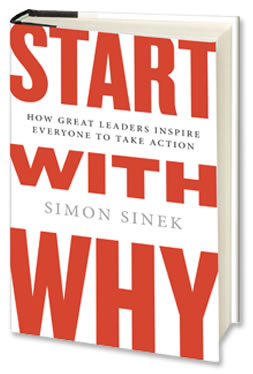 Start with Why: How Great Leaders Inspire Everyone to Take Action
 Good to Great: Why Some Companies Make the Leap…And Others Don’t
 A World of Three Zeros: The New Economics of Zero Poverty, Zero Unemployment, and Zero Net Carbon Emissions
 Popular: The Power of Likability in a Status-Obsessed World
 Declutter Your Mind: How to Stop Worrying, Relieve Anxiety, and Eliminate Negative Thinking
 The Leadership Code: Five Rules to Lead
Recent Comments