
Advance Your Engineering Career with a Master’s or Ph.D. at FKE UTM

Build Specialist Expertise, Research Capability & Career Momentum
A Master’s or Ph.D. at the Faculty of Electrical Engineering (FKE), Universiti Teknologi Malaysia (UTM), equips engineering graduates to move beyond general technical practice into high-impact specialist and research-led roles. Through focused work in automation, embedded systems, AI, PLC, FPGA/ASIC, LLD, and Petri Nets, students strengthen the advanced design, analysis, experimentation, and problem-solving capabilities sought by Malaysia’s growing E&E sector. Under Dr. Zulfakar Aspar’s guidance, postgraduate study can help translate technical interests into practical research with clear industry relevance—supporting stronger long-term employability, faster progression toward leadership, and opportunities in multinational technology and semiconductor hubs.

Malaysia E&E Salary Outlook: Higher Qualifications, Higher Potential
In Malaysia’s electrical and electronic industry, advanced qualifications can create a meaningful early-career advantage. Graduates specialising in ASIC/FPGA design, embedded systems, automation, IC verification, and related R&D fields may earn approximately 20% to 40% more at entry level than bachelor’s graduates, while building a faster route toward Lead Specialist and R&D Manager positions. Typical monthly targets are around RM5,500 for a Bachelor’s degree, RM6,500 for a Master’s degree, and RM8,500 for a Ph.D.; MNCs and semiconductor design centres in Penang, Selangor, and Kulim may offer even more competitive packages for in-demand expertise.
Bachelor’s: RM5,000–RM6,000
Master’s: RM6,000–RM7,000
Ph.D.: RM8,000–RM9,500
Estimated Starting Monthly Salaries in Malaysia
Bachelor’s Degree
Estimated range
RM5,000–RM6,000
Typical target
RM5,500
Strong foundation for entry-level E&E roles
Master’s Degree
Estimated range
RM6,000–RM7,000
Typical target
RM6,500
Greater access to specialist engineering pathways
Ph.D.
Estimated range
RM8,000–RM9,500
Typical target
RM8,500
Positioned for advanced R&D and technical leadership roles
Postgraduate Advantage
Salary uplift
20%–40% higher starting potential
Specialist domains
ASIC/FPGA, embedded systems and automation
Career outcome
Career Progression
Early opportunities
Lead Specialist pathways
Long-term direction
R&D Manager potential
Value delivered
Technology Hub Access
Employer landscape
Multinational technology companies
High-value work
Advanced product development and research
Professional benefit
Research Relevance
Applied focus
Industry-aligned technical research
Core capability
Deep specialist knowledge
Graduate outcome
Study Planning
Recommended next step
Discuss your goals with Dr. Zulfakar Aspar
Planning focus
Research direction, proposal and funding readiness
Purpose
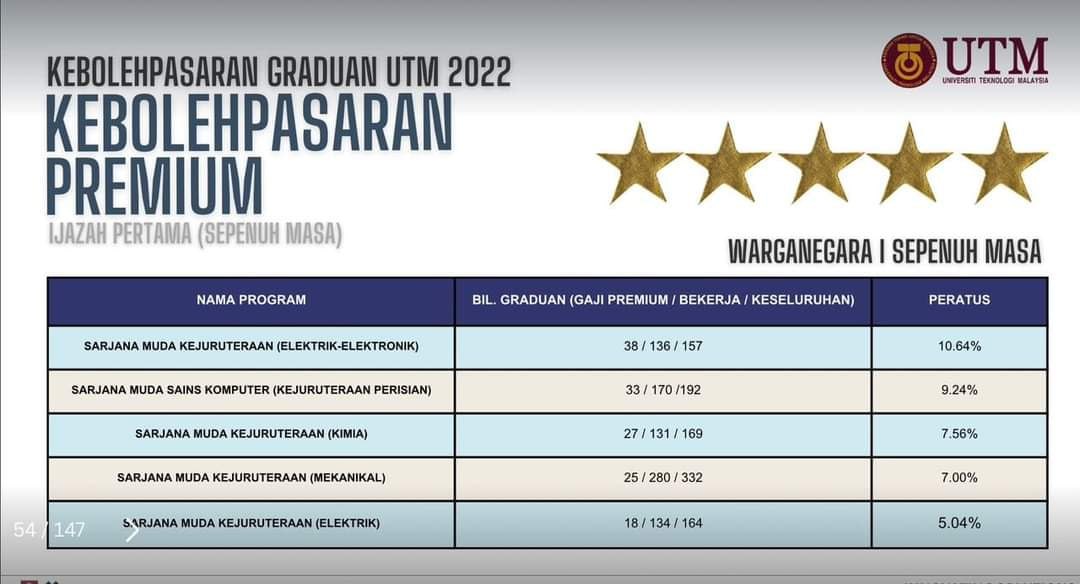
Premium salary from UTM survey 2022.
Premium work means starting salary RM4,000 or more. In 2022, IC design in semiconductor industry starting salary was RM5,000 to RM5,500. 3 of all my final year project students got Sing$ 5,000, 4,500 and 4,000 in Singpore!
What Shapes IC Design Salaries in Malaysia
Company Type
MNCs and specialist semiconductor design centres—including Intel, AMD, Synopsys, SkyeChip and Oppstar—may offer salaries at the upper end of the market, plus performance bonuses and stock options.
Role Specialisation
Niche expertise in analog/RF IC design, physical design and advanced UVM verification can command stronger entry-level premiums than broader embedded engineering roles.
Location
Semiconductor hubs in Penang, Selangor and Kulim offer competitive packages designed to attract and retain specialised IC design talent.
Postgraduate Research Pathways
Build Specialist Expertise for High-Value Technology Careers
Discuss Your Goals
Meet with Dr. Zulfakar Aspar to review your academic background, career ambitions, technical interests and the most suitable Master’s or Ph.D. pathway.
Define a Research Direction
Shape a focused, practical topic that connects your interests with industry-relevant challenges and measurable research outcomes.
Automation Research
Develop intelligent automation solutions that strengthen capabilities for modern manufacturing, control and multinational technology environments.
Embedded Systems Development
Advance from system architecture to implementation through research in responsive, reliable and application-driven embedded technologies.
AI and Intelligent Systems
Explore AI-enabled engineering research that supports smarter decisions, adaptive processes and next-generation technical products.
PLC and Industrial Control
Investigate PLC-based control, industrial integration and practical automation methods for digitally connected operations.
FPGA/ASIC and LLD
Build deep digital design expertise in FPGA/ASIC development and low-level design for specialised semiconductor and hardware engineering roles.
Petri Nets and System Modelling
Apply Petri Nets to model, analyse and improve concurrent, event-driven and complex automated systems with research rigour.
What Postgraduate Learners Say
★★★★★
My Master’s work gave me the confidence to discuss FPGA architecture and verification with industry engineers. The research discipline, technical feedback and professional connections at FKE UTM strengthened my path towards a specialist role.
Master’s Graduate, Embedded & FPGA Systems
★★★★★
Working on an applied automation project helped me turn classroom knowledge into measurable outcomes. I learned how to scope a problem, collaborate across disciplines and present results in a way that matters to R&D teams.
Postgraduate Researcher, Automation & AI
★★★★★
A Ph.D. is more than a qualification—it builds technical authority. The experience of leading a focused research programme in control and embedded systems prepared me for greater responsibility and long-term progression towards R&D leadership.
Ph.D. Candidate, Intelligent Control Systems
Don't drift your carrier. Plan your future!
The younger you further study, the more useful the qualification for your future!
Contact Dr. Zulfakar Aspar to review your academic background, career ambitions, technical interests and the most suitable Master’s or Ph.D. direction.
1. Discuss Your Goals
Contact Dr. Zulfakar Aspar to review your academic background, career ambitions, technical interests and the most suitable Master’s or Ph.D. direction.
2. Define Your Research Direction
Shape a focused, practical topic in automation, embedded systems, AI, PLC, FPGA/ASIC, LLD or Petri Nets that aligns with real technical and industry needs.
3. Prepare Funding & Proposal
Develop a strong research proposal and prepare grant, sponsorship or financial-assistance applications with guidance on scope, collaboration and expected outcomes.
4. Begin With a Clear Roadmap
Move forward with a structured study plan that connects your research milestones to stronger technical capability, industry relevance and career progression.
Frequently Asked Questions
Explore postgraduate pathways, research opportunities, funding considerations and career prospects in Malaysia’s fast-growing electrical and electronic sector.
Who can apply for a Master’s or Ph.D. at FKE UTM?
Which research areas are suitable under Dr. Zulfakar Aspar?
What salary advantage can a postgraduate qualification offer in Malaysia’s E&E sector?
What funding options can support my postgraduate study?
Can my research involve industry collaboration?
How long do Master’s and Ph.D. studies usually take?
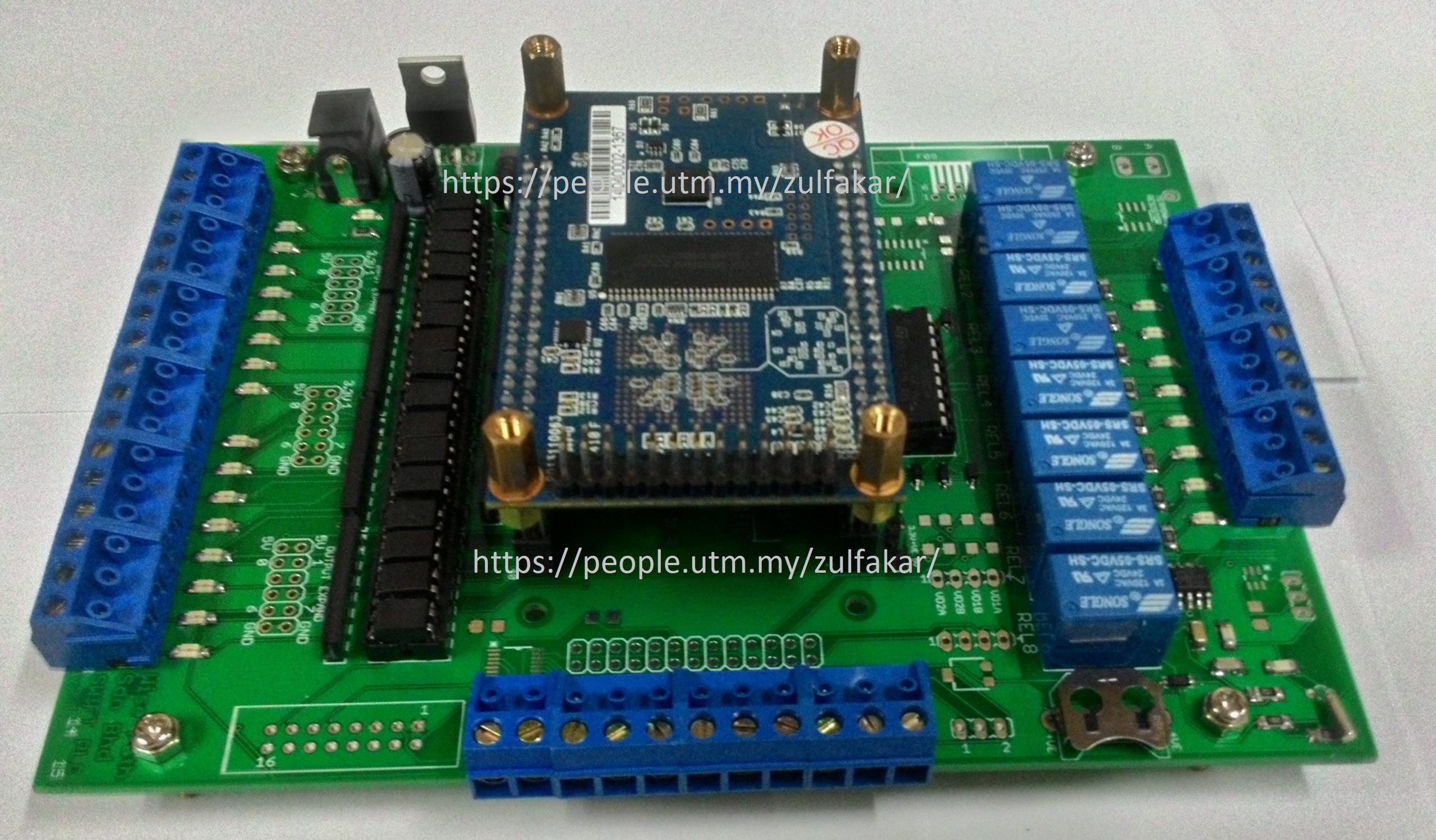
My CGPA is too low to work in IC Design Semiconductor industry
Semiconductor is vast. If you are not qualify to work in IC design, you can work in IC fabrication, IC packaging, IC Testing or even machinery automation, control and robotics. All of them have a very high premium salary.
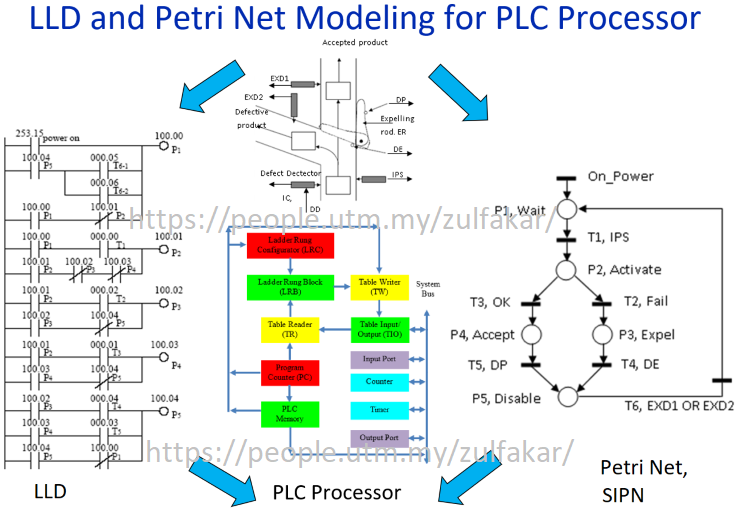
Benefits to be an expert in PLC, LLD and Petri Net
This is a field where a high CGPA is not necessary. But your skills matter a lot. You should study PLC, and LLD for industry automation, control and robotics. To go higher further, you should study Petri Net modelling. The most advance knowledge in this field is PLC on FPGA.
Plan Your Master’s or Ph.D. Journey at FKE UTM
Connect with Dr. Zulfakar Aspar to discuss your academic goals, refine a practical research direction, and prepare a strong proposal with funding, sponsorship, or financial-assistance options for your postgraduate study.

Further study inquiries:
Master, PhD, short courses on PLC, LLD, Petri Net, FPGA, IC Design, microcontroller, C language programming, assembly language programming, IoT programming, SCADA etc.:
Send your inquiry!
