One thing I enjoy about using educational technology is discovering new ways to bring students into the learning experience. Sometimes, a small change in how an activity is played can make an online lesson feel a little different.
Last week, I tried the new CO-OP map in ZEP Quiz during my online English class. We were working on adverbs of frequency, and I wanted to see how this new map would work with my students.
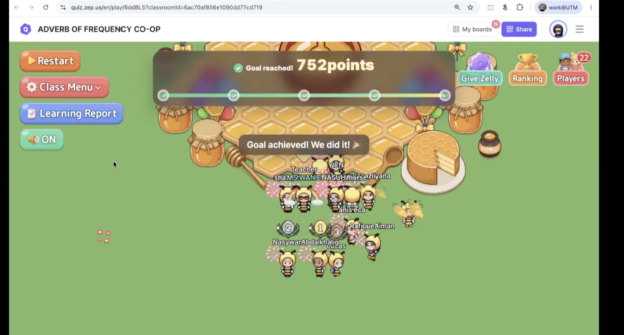
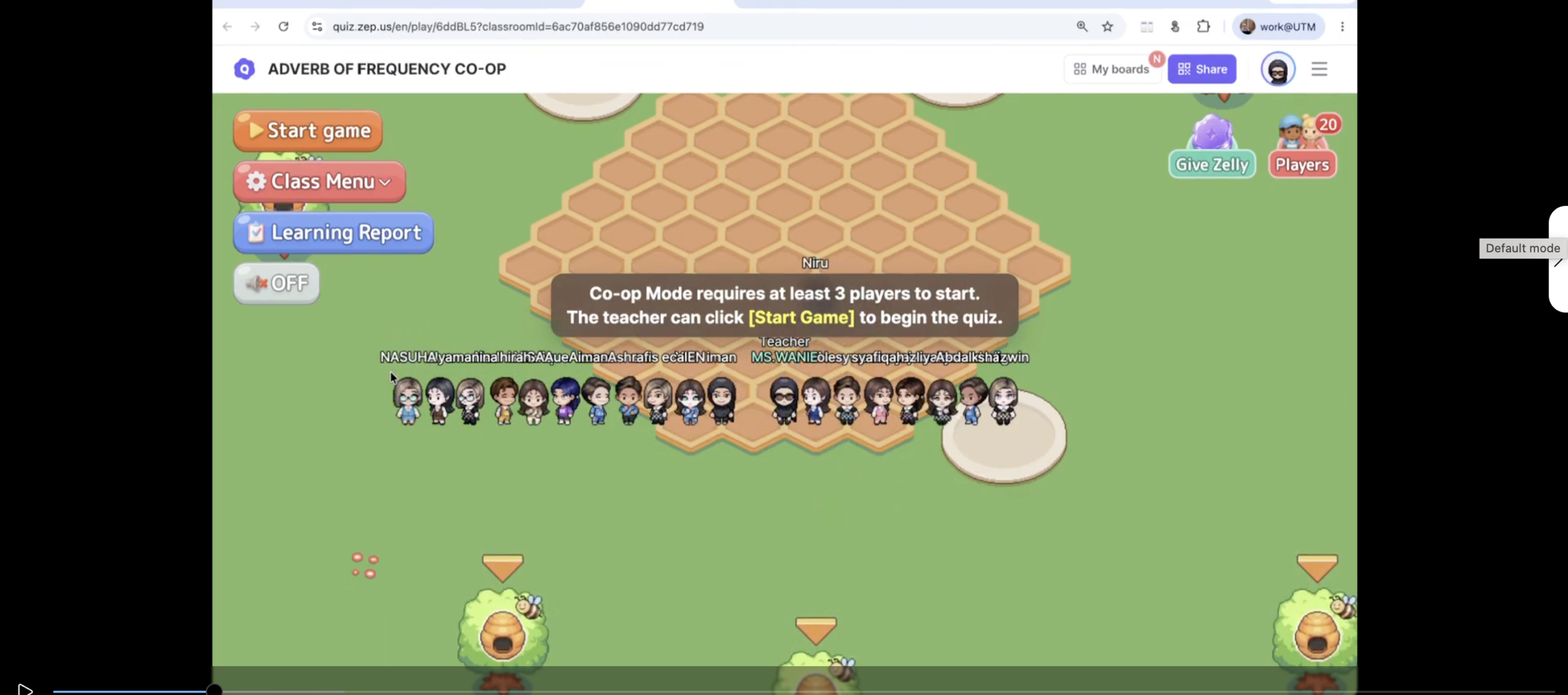
Our class gathered on the CO-OP map, ready for an English quiz on adverbs of frequency.
Learning Together, Not Just Playing Together
What made this session interesting was the collaborative element. Instead of focusing only on individual performance, students could participate in a shared experience and collect points together.
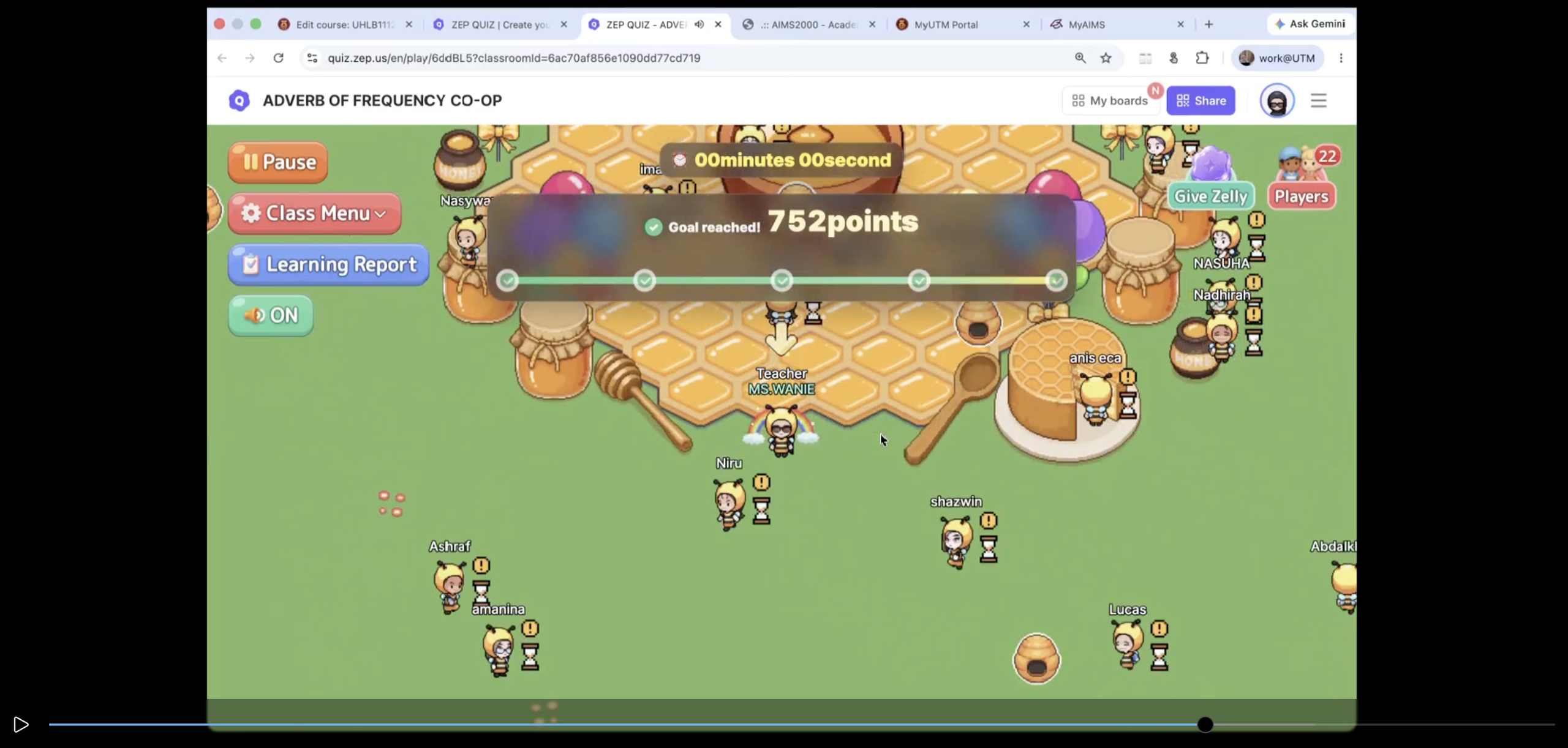
The students had fun exploring the map and working towards the common goal. By the end of the session, we had reached 752 points!
Team effort paid off! The class reached the shared goal of 752 points.
For me, this was a nice reminder that online learning does not always have to feel like a series of slides, explanations and individual quiz attempts. A shared game environment can give students another way to participate and experience a lesson together.
The Game Is the Tool, Not the Goal
Of course, having fun is only part of the picture. As an English lecturer, I still need to make sure that the activity supports the language content I am teaching.
In this session, the quiz focused on adverbs of frequency. The CO-OP map provided a different environment for students to take part in the activity, while the language focus remained at the centre of the lesson.
I also see value in trying out new features in real classroom settings rather than judging them based on their appearance alone. What matters is how students respond, how the activity fits the lesson, and whether it serves a clear learning purpose.
Would I Use It Again?
I enjoyed seeing my students participate in the CO-OP map during our online class. Their enthusiasm made the session enjoyable, and the shared points added a collaborative element to the quiz experience.
Would I use it again? I would certainly consider it for lessons where a collaborative game experience fits the learning objective.
After all, technology does not automatically make a lesson effective. It is how we use it that matters.
For now, the CO-OP map has earned a place on my list of ZEP Quiz features worth exploring further. And yes, collecting points together was a fun bonus!
I did not plan to enter many competitions this year.
It started with a problem in my writing classes
Academic report writing can be challenging for students. Sometimes, it is not the big writing tasks that cause the most difficulty. It is the smaller skills that students need to put everything together.
Things like academic tone, cohesive devices, hedging, sentence construction, citations and organisation can easily become overwhelming when students are asked to apply them in a full report.
I also noticed another challenge. With generative AI becoming increasingly accessible, it can be tempting for students to rely on generated text instead of actually working through the writing process themselves.
So I started thinking about how I could give my students more opportunities to practise these smaller writing skills in a way that felt less intimidating.
So I started playing around with ZEP Quiz
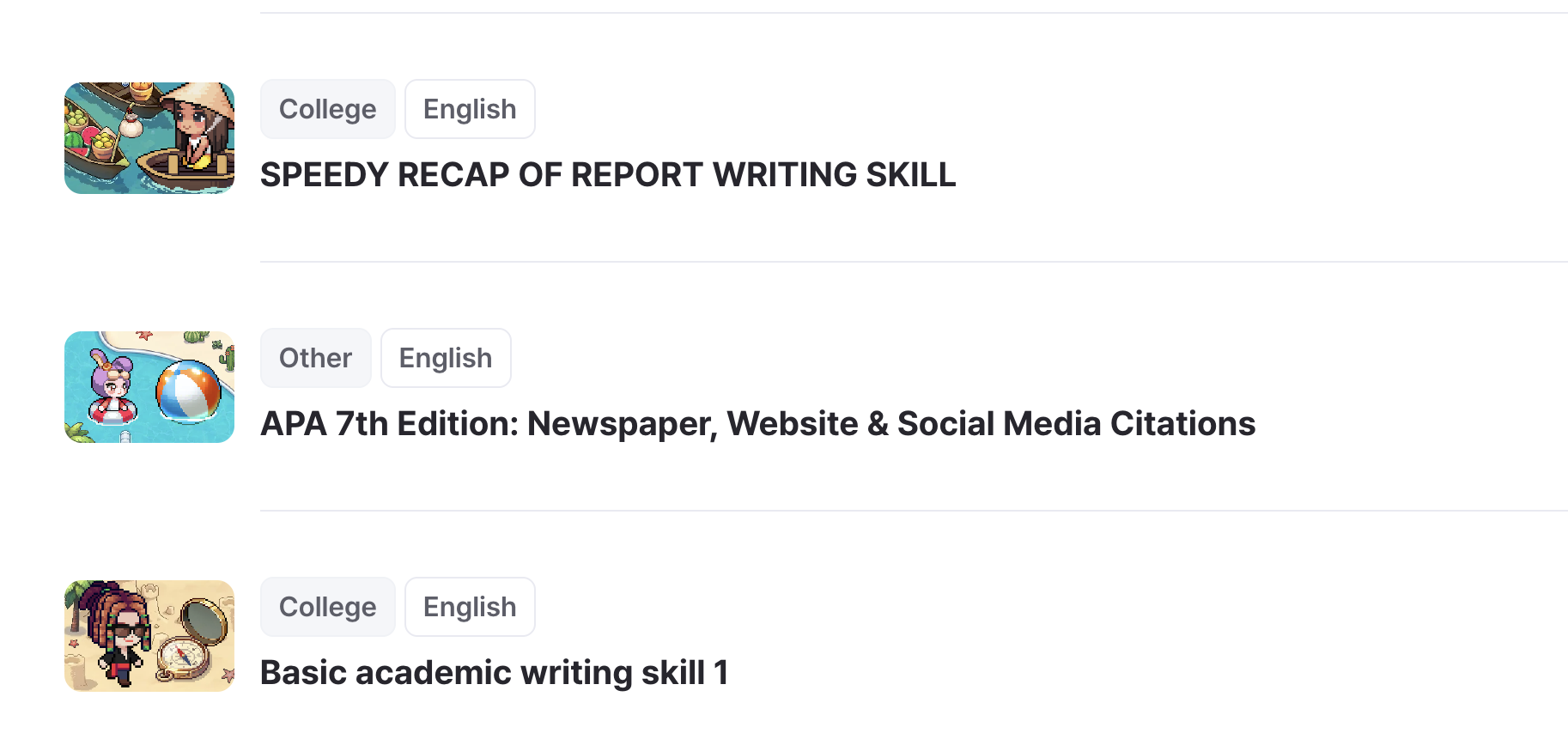
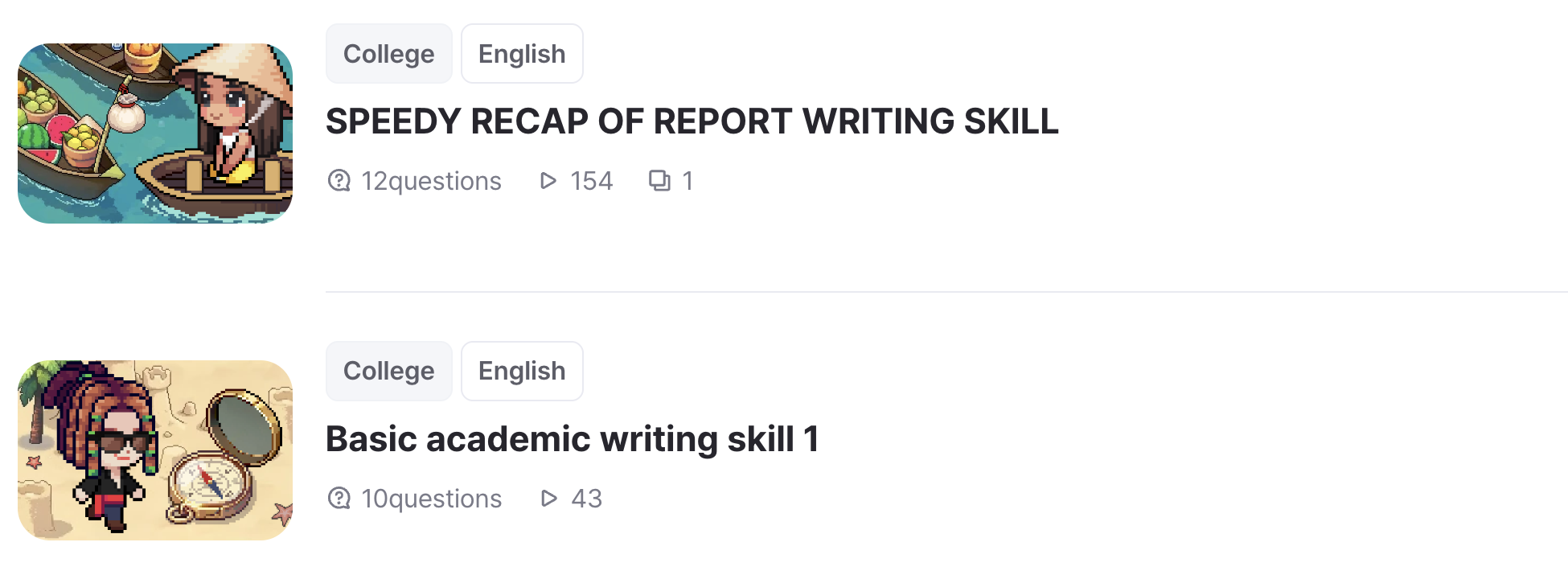
I have been using ZEP Quiz in different ways in my teaching, but for this particular project, I wanted to see whether I could use it to reinforce academic writing micro-skills.
Instead of giving students another set of static exercises, I created a gamified activity where they could practise skills such as hedging, cohesion, academic tone, sentence construction and citations through different types of questions.
The idea was quite simple.
Let them practise. Let them make mistakes. Let them try again.
The activity was designed in three stages. First, students received guided input during class. Then, they moved into the ZEP Quiz activity for asynchronous practice. Finally, they completed a reflection using ZEP Whiteboard after finishing the quiz.
And that third part became particularly important to me.
The game was not the end
One thing I have learned from using gamification is that the game itself should not be the learning objective.
I did not want my students to simply finish the quiz, look at their scores and leave.
I wanted to know what they thought about the experience too.
So, after the quiz, they reflected on how the digital environment affected their confidence and experience when working on the writing activities.
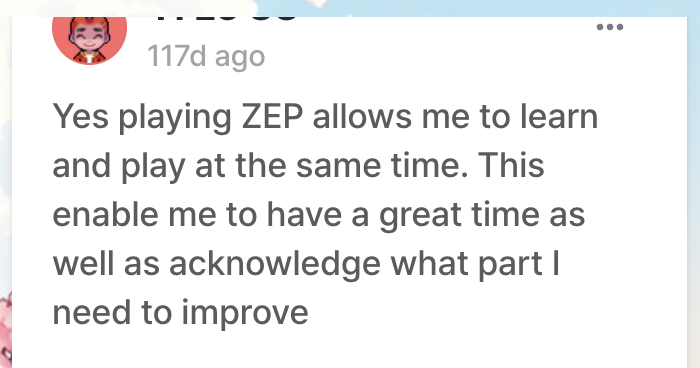
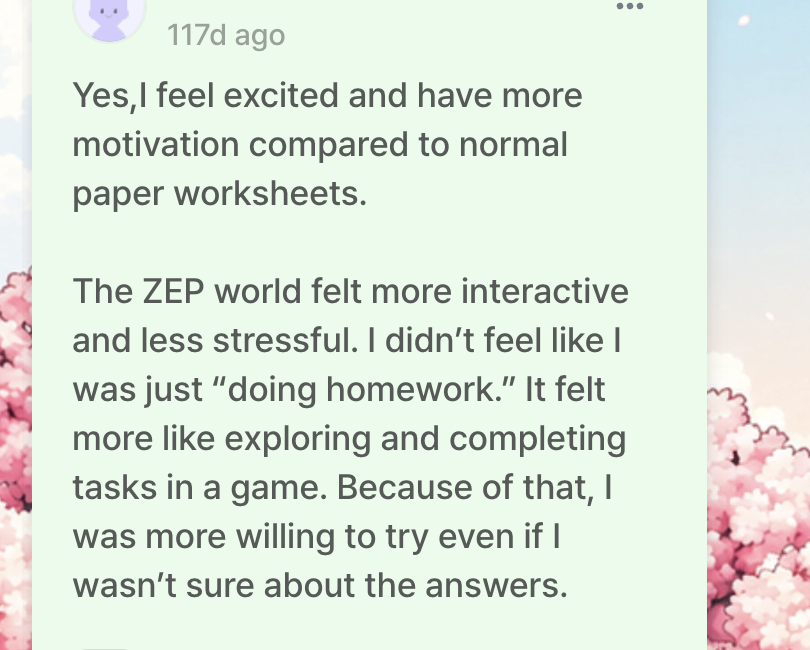
Some of their responses were particularly interesting. Students described the activities as feeling less like a test and more approachable than traditional paper exercises. Others mentioned the instant feedback and scoreboard as motivating them to think more carefully about their answers.
That was probably one of my favourite parts of the project.
The quiz showed me what they were doing.
The reflection gave me a glimpse into how they were experiencing the learning.
From classroom experiment to innovation project
I think this is one of the things I enjoy most about teaching.
Sometimes, we start with a small idea without knowing where it will lead.
I was not sitting there thinking, “Today, I am going to create an award-winning innovation.”
I was simply trying to solve a classroom problem.
I experimented with the activity, looked at how students responded and thought about how I could make the learning experience more meaningful.
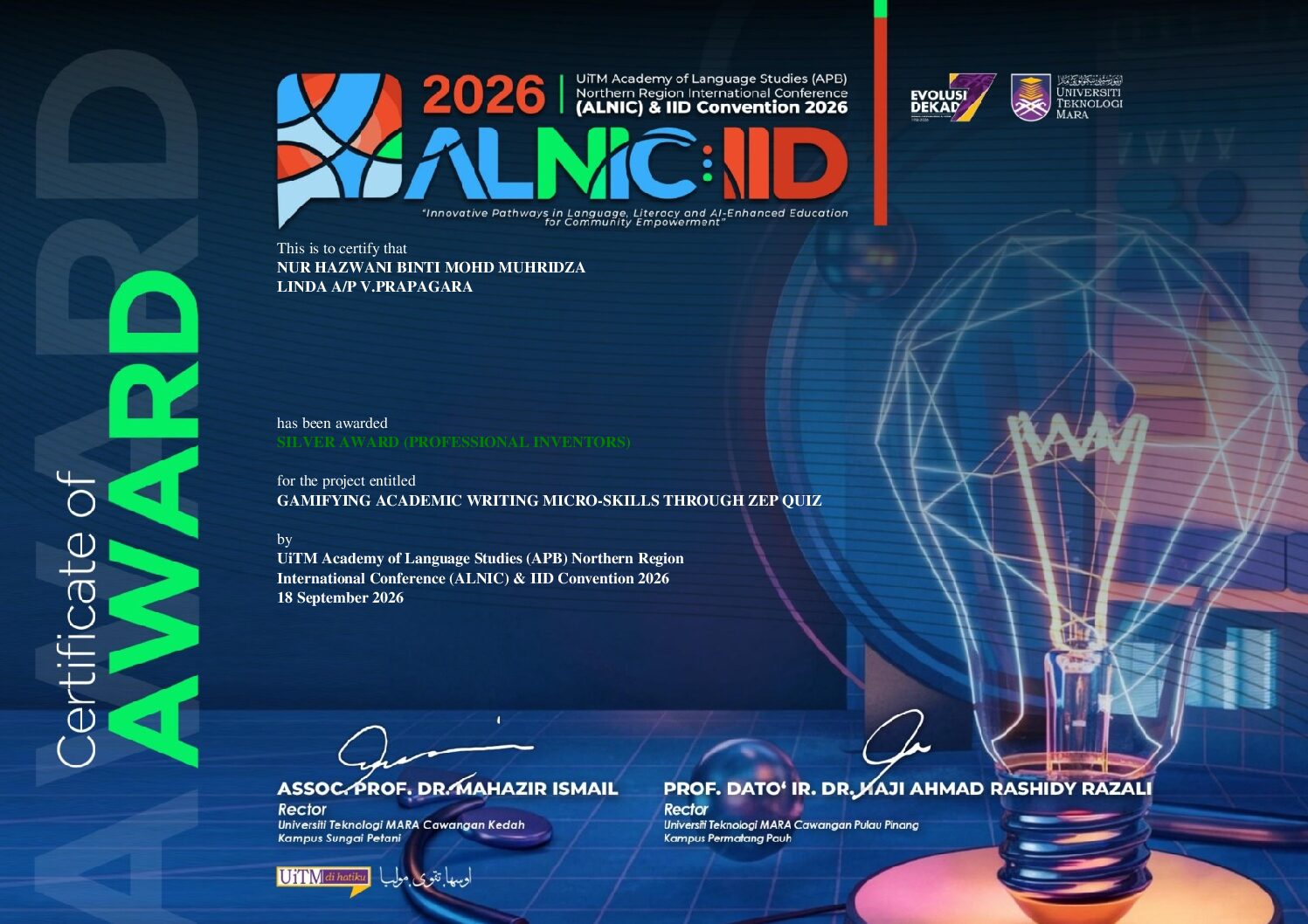
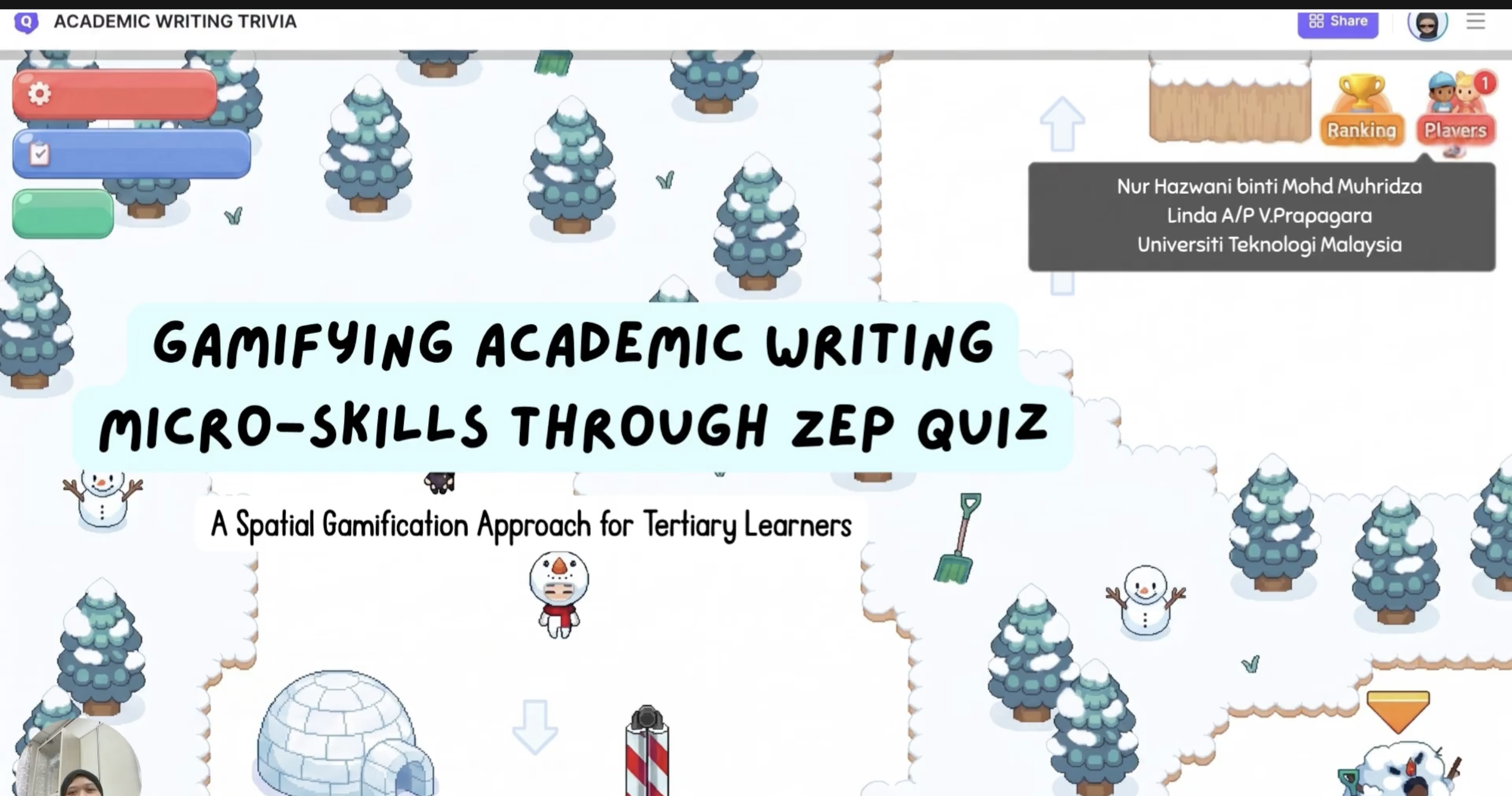
Eventually, that classroom experiment developed into a teaching innovation project titled “Gamifying Academic Writing Micro-Skills through ZEP Quiz.”
And then I decided to submit it to ALNIC & IID Convention 2026, organised by UiTM Academy of Language Studies.
And then came the Silver 🥈
As I mentioned earlier, this was actually the only competition I joined in 2026.
So when I found out that the project received a Silver Award, I was genuinely happy.
Of course, getting an award is nice.
But what made it even more meaningful was having the support of my team member, Puan Linda a/p V.Prapagara. A big thank you to her for being such a great support in making this project a success!
It was not an idea created just for a competition.
It started with my students.
It started with a teaching problem.
And it grew from there.
What I took away from the experience
This experience reminded me that innovation does not always have to begin with something huge.
Sometimes, it starts with a teacher asking:
“What if I tried this differently?”
For me, ZEP Quiz was not about putting a game into a lesson just to make it more exciting.
It was about finding a different way for students to practise, participate and reflect.
And I think that is where technology becomes interesting in education.
The tool itself is only one part of the equation. What we do with it matters more.
I also learned that classroom experiments are worth documenting.
That little activity you tried because you were curious?
The one you tweaked three times?
The one that made you think, “Hmm, this actually worked”?
Write it down.
Reflect on it.
Maybe share it.
You never really know where it might lead.
For me, this year, it led to my one and only competition entry.