
@ Universitas Islam Indonesia, Yogyakarta
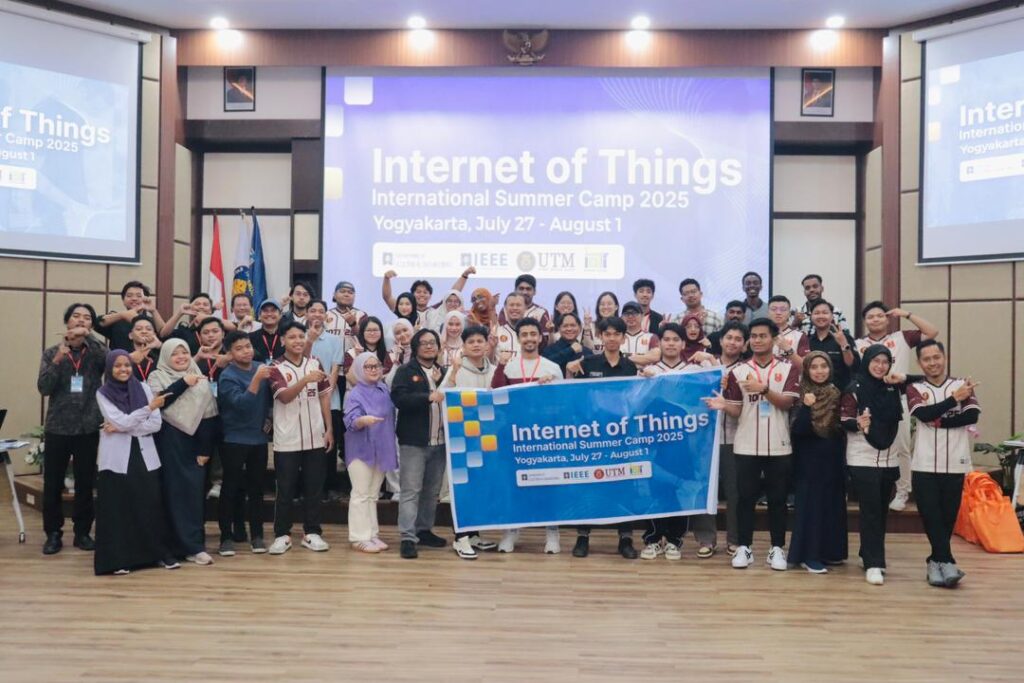
The Internet of Things (IoT) International Summer Camp 2025 was successfully conducted at the FTI UII Auditorium, Yogyakarta, bringing together participants from various countries for an intensive and immersive learning experience. The program was designed to enhance participants’ technical competencies in IoT while fostering innovation, critical thinking, and cross-cultural collaboration through hands-on activities and project-based learning.
The program opened with high enthusiasm as participants were introduced to the fundamental concepts of the Internet of Things and the ESP32 microcontroller. The sessions combined theoretical foundations with practical application, allowing participants to immediately engage in group-based activities. Hands-on workshops included programming using TinkerKit and TinkerIoT, sensor data acquisition, actuator control, and the implementation of IoT communication via HTTP APIs. Ice-breaking activities and early project discussions played a crucial role in strengthening teamwork, encouraging intercultural interaction, and establishing a collaborative learning environment.
The program then progressed to a strong focus on innovation and problem-solving through the application of the Design Thinking methodology. Activities began with a reflection session, followed by an introduction to design thinking principles and interview techniques. Participants engaged in empathy-building exercises and conducted interviews with real users to identify authentic problems and user needs. Subsequent sessions emphasized defining problem statements, brainstorming creative solutions, and developing structured proposals. Each group presented its ideas and received constructive feedback from facilitators and peers, further enhancing critical thinking and a user-centered approach to technology development.
The next phase of the camp introduced participants to Databases and Artificial Intelligence (AI) as essential components of modern IoT systems. After a reflection session, participants explored database fundamentals and learned how to connect data sources using Google Forms. They also developed their own HTTP APIs to manage data flow between systems. Later sessions included hands-on exploration of Teachable Machine, enabling participants to build interactive AI models and integrate AI-based decision-making into IoT control systems. Project preparation activities were conducted to refine ideas in preparation for final presentations.
The concluding phase of the program highlighted creativity and innovation through project completion and presentation. Participants focused on developing functional prototypes and producing video presentations that showcased solutions developed throughout the camp. Each group presented its project in front of peers and facilitators, demonstrating technical proficiency, creativity, teamwork, and problem relevance. The program concluded with a strong sense of achievement and appreciation for the cross-cultural collaboration fostered during the camp.
In conclusion, the Internet of Things International Summer Camp 2025 successfully achieved its objectives by equipping participants with practical skills in IoT, AI, and design thinking while promoting global collaboration and innovation. The program provided a meaningful platform for experiential learning and left a lasting impact on participants, preparing them for future challenges in technology-driven environments.

Recent Comments