Category Archives: Uncategorized

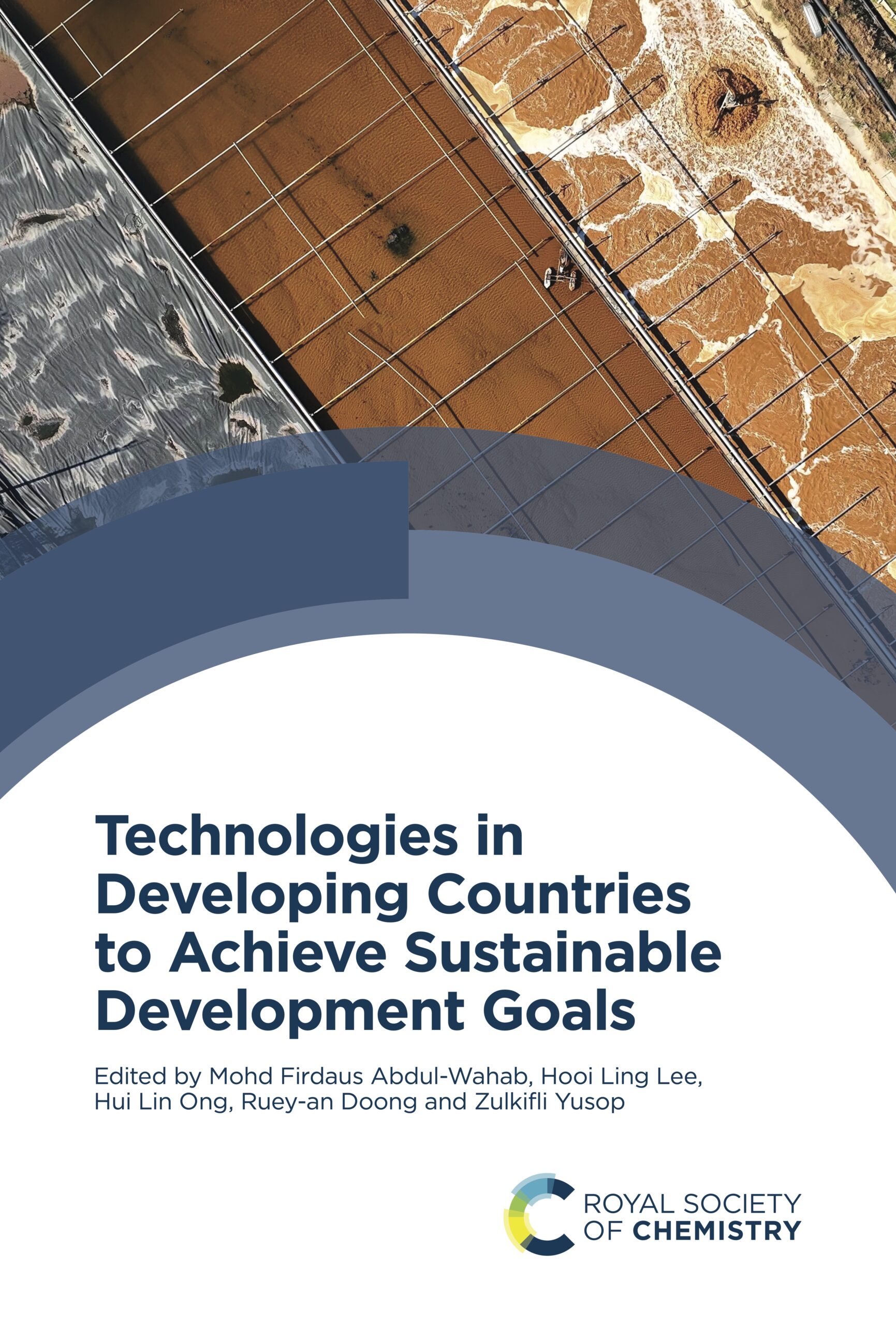
“Abdul-Wahab et al. (2026). Technologies in Developing Countries to Achieve Sustainable Development Goals” Is Finally Published!

Our edited book, focusing on the technologies and socioeconomy of clean water and sustainable energy in the developing countries in Asia is finally published! This book features authors from Malaysia, Indonesia, India, and Nepal, all with their unique perspectives on the sustainability-related issues in their respective countries. All the co-editors and authors are gratefully-acknowledged for their time and contributions to this publication.

Preface
Water and energy are fundamental for human prosperity and economic development, yet access to these resources remains a challenge for many developing countries in Asia. Rapid urbanisation, population growth, and climate change further exert immense pressure on already depleted water and energy resources, creating an urgent need for innovative solutions. This book explores advances in clean water and sustainable energy, offering insights into the latest advanced research across Asia. The chapters of this book bring together multiple discussions on upcoming and promising technologies, case studies, and policy developments, by authors from several countries in Asia with diverse socioeconomic development statuses. From renewable energy adoption in Malaysia, to water governance strategies in mountainous Nepal, each chapter highlights the potential of integrated and multi-faceted approaches to tackle complex developmental challenges. The book is also intended to encourage collaboration across multiple disciplines like science, engineering, policy, economics, and community engagement. With contributions from the leading experts in their fields, the chapters provide a balanced perspective, blending technical depth with real world case studies. As you go through the chapters in this book, we invite you to reflect on the importance of well-balanced development and the safeguarding of planetary health for achieving a sustainable and well-developed Asia.
Mohd Firdaus Abdul-Wahab, Hooi Ling Lee, Hui Lin Ong, Ruey-an Doong, and Zulkifli Yusop

Read the chapters here (subscription required).
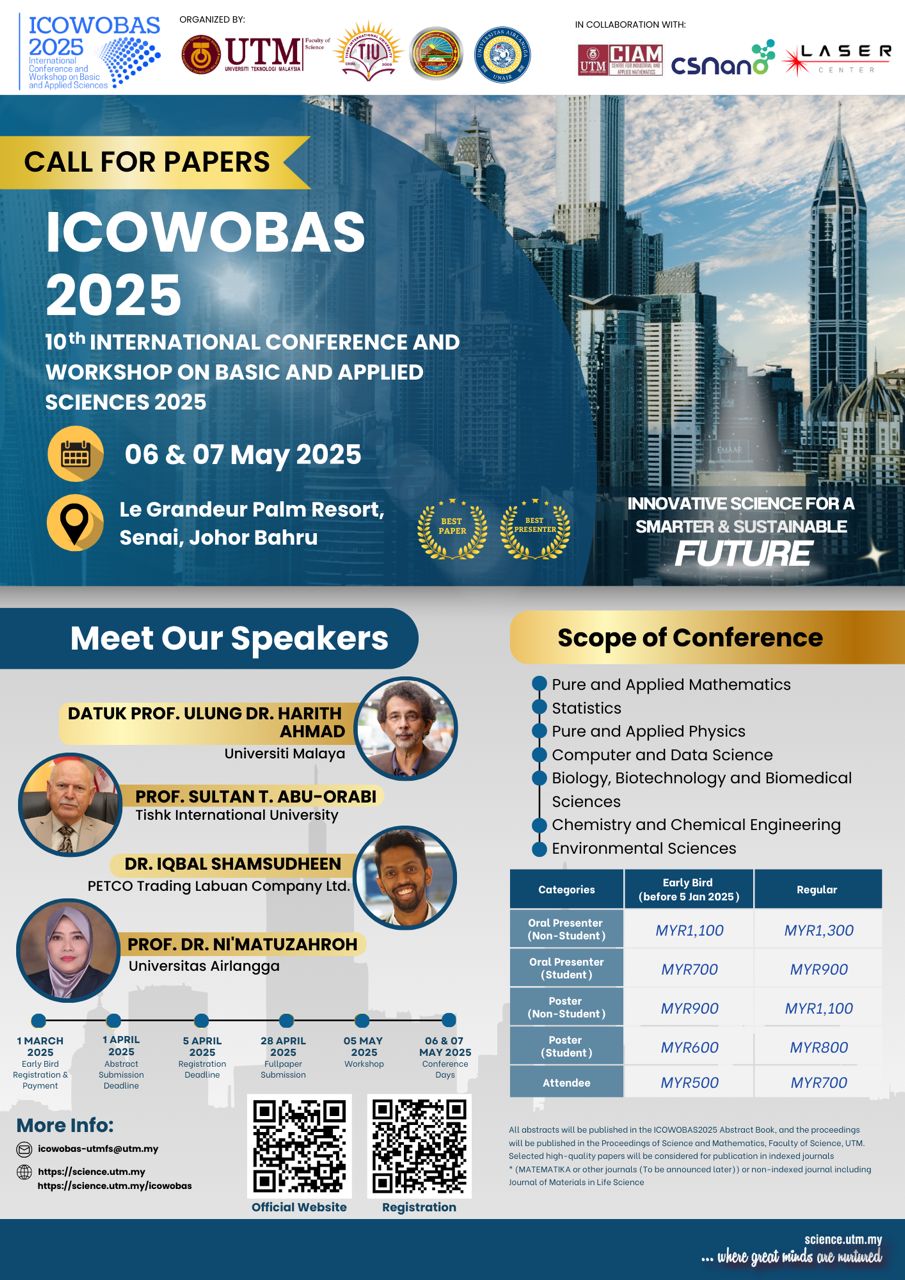
Invitation: International Conference and Workshop on Basic and Applied Sciences (ICOWOBAS) 2025

Calling all UTM Faculty of Science alumni, researchers, and collaborators working in Biosciences, Chemistry, Physics & Mathematical Sciences!
Reconnect, collaborate, and inspire at ICOWOBAS 2025. ICOWOBAS is the flagship conference of the Faculty of Science UTM.

When: 6 & 7 May 2025
Where: Le Grandeur Palm Resort, Senai, Johor Bahru
Theme: “Innovative Science for a Smarter & Sustainable Future”

Why Attend?

  • Reconnect with old friends and colleagues from UTM
  • Build new connections with global researchers, experts, and collaborators
  • Share your journey and expertise while learning from others
  • Explore opportunities for groundbreaking partnerships and projects
  • Relive the UTM spirit and create new memories together

    Hear from our distinguished keynote speakers:
  • Datuk Prof. Ulung Dr. Harith Ahmad (Universiti Malaya)
  • Prof. Sultan T. Abu-Orabi (Tishk International University)
  • Dr. Iqbal Shamsudheen (PETCO Trading Labuan Company Ltd.)
  • Prof. Dr. Ni’Matuzahroh (Universitas Airlangga)

    Key Dates:
    1 March 2025: Early Bird Deadline
    4 April 2025: Abstract Submission Deadline

Special Rates:

  • Oral Presenter: MYR 1,100 (Early Bird)
  • Poster Presenter (Student): MYR 600 (Early Bird)
  • Attendee: MYR 500 (Early Bird)

Register Now: science.utm.my/icowobas

Don’t miss this chance to:

  • Reconnect with the UTM family
  • Collaborate with researchers and experts
  • Celebrate the legacy and spirit of UTM

See you there!
More Info: linktr.ee/icowobas2025

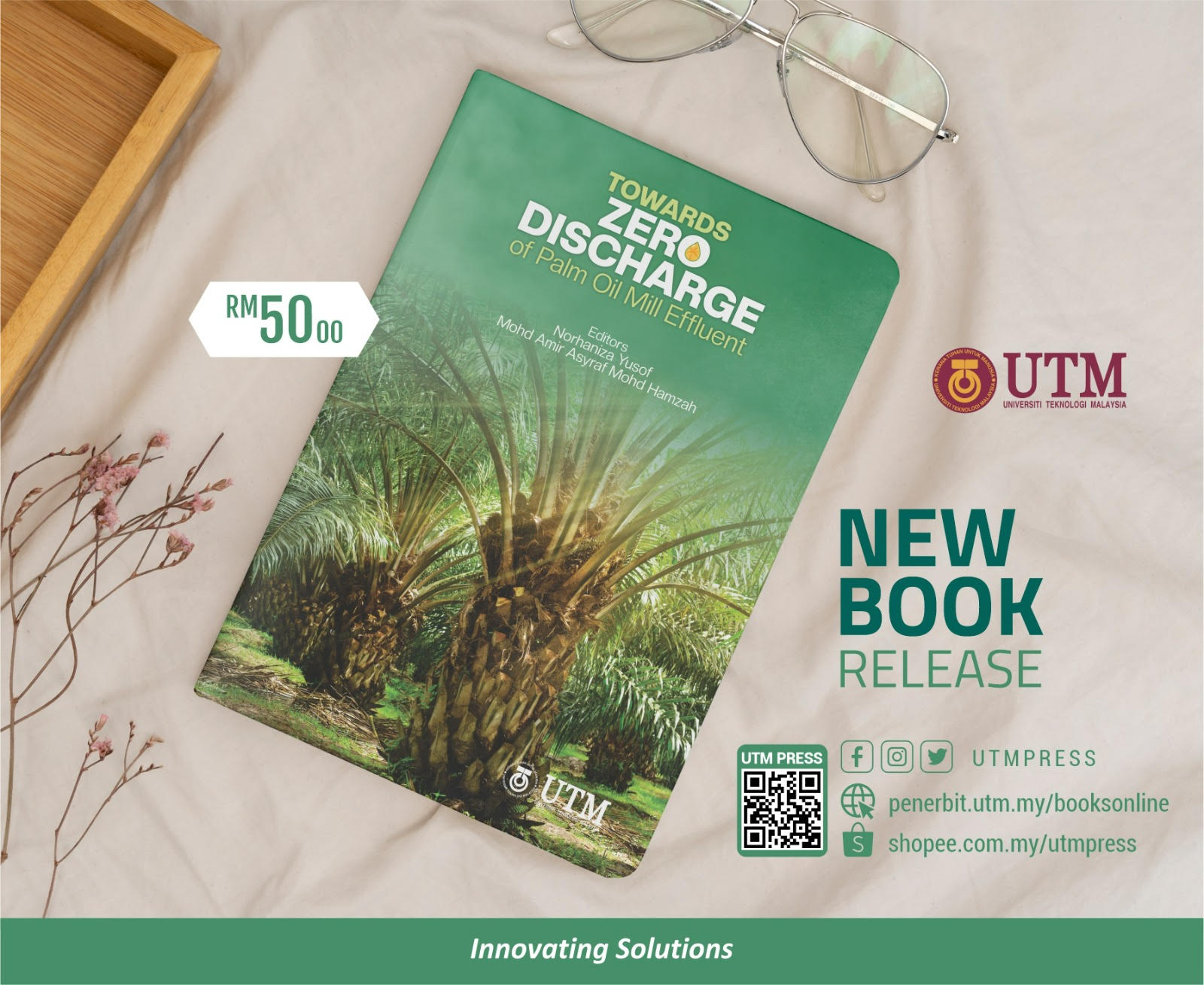
New Book Chapter Published in “Towards Zero Discharge of Palm Oil Mill Effluent” Edited Book (Eds. Norhaniza Yusof, Mohd Amir Asyraf Mohd Hamzah)

Our laboratory has contributed a chapter in this edited book, published by UTM Publisher. The chapter is titled “Aerobic and Anaerobic Biodegradation of Palm Oil Mill Effluent” by J. O. Audu and M. F. Abdul-Wahab, summarizing the different processes involved in the POME treatment system, including a discussion on the key microbial communities involved.

The book can be purchased at the link provided in the poster below.

UTM Academic Calendar 2024/2025

Welcoming our old and new students to UTM and the Faculty of Science! The academic calendar for the Semester I and II Session 2024/2025 (undergraduate degree and postgraduate) can be found at the Academic Management Division’s website, or attached below.

Give back to the faculty and UTM | Peluang untuk menyumbang kepada fakulti dan UTM

Calling all our alumni, private sectors, individuals and anyone interested to contribute to the development of UTM, the faculty and our students, join the Royal Gala Dinner 2024! The donations received during the Dinner will benefit our students and university development through the various endowment funds available, and will directly benefit the faculty as well. All donations are also eligible for tax deduction. Get in touch with myself or any faculty members if you are interested to contribute and participate. More information provided in the linked brochure below, or through the official website (https://royalgaladinner.utm.my). Thank you!

Majlis Santapan Diraja kini kembali pada tahun 2024, yang memberi peluang alumni-alumni, syarikat swasta, individu-individu dan sesiapa sahaja yang berminat untuk menyumbanf kepada pembangung UTM, fakulti dan pelajar-pelajar kita. Segala sumbangan yang diterima akan membantu pelajar dan universiti melalui pelbagai tabung endowmen yang disediakan, dan memberikan manfaat terus kepada fakulti. Segala sumbangan yang diterima akan diberikan pengecualian cukai. Hubungi saya atau staf-staf fakulti yang lain jika anda berminat untuk menyumbang. Maklumat lanjut ada di dalam brosur dibawah atau melalui laman web rasmi (https://royalgaladinner.utm.my). Terima kasih!

New Book Publication “Abdul-Wahab et al. Technologies in Developing Countries to Achieve Sustainable Development Goals”

A new edited book is currently at the final stage, focusing on the technologies and socioeconomy of clean water and sustainable energy in the developing countries in Asia. This book will be published by the Royal Society of Chemistry (UK), with contributions by authors from countries like Malaysia, Indonesia, India, Nepal and Laos. Check out this space again for the release date!

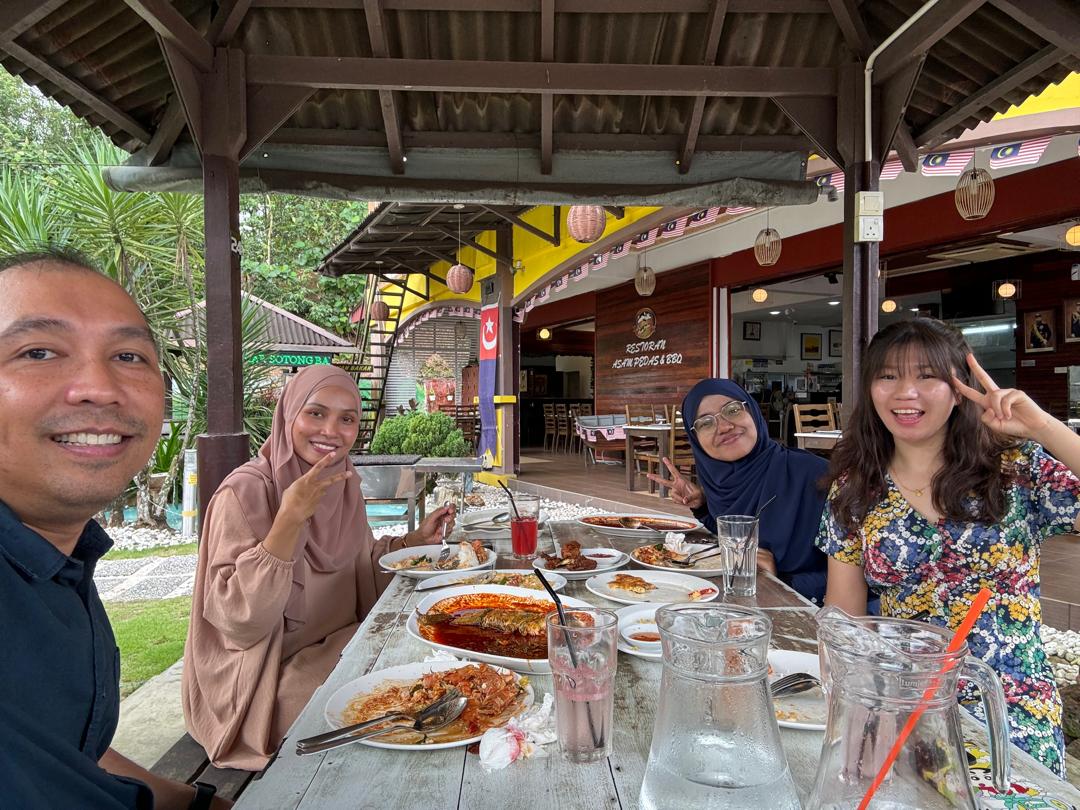
Hui Jing’s Farewell Lunch

A farewell lunch was held on 10 June 2024 to commemorate Hui Jing’s successful MPhil thesis submission. Hui Jing’s thesis was on “Insight into Microbial Community Dynamics and Methane Metabolism in Palm Oil Mill Effluent Anaerobic Sludge via Next Generation Sequencing”. The project combined temporal sampling of POME anaerobic digester sludge, amplicon, and shotgun metagenomics sequencing to explore further into the intricacies of microbial biomethane production using POME as substrate.
Congratulations Hui Jing and we wish you a success in your future endeavours!

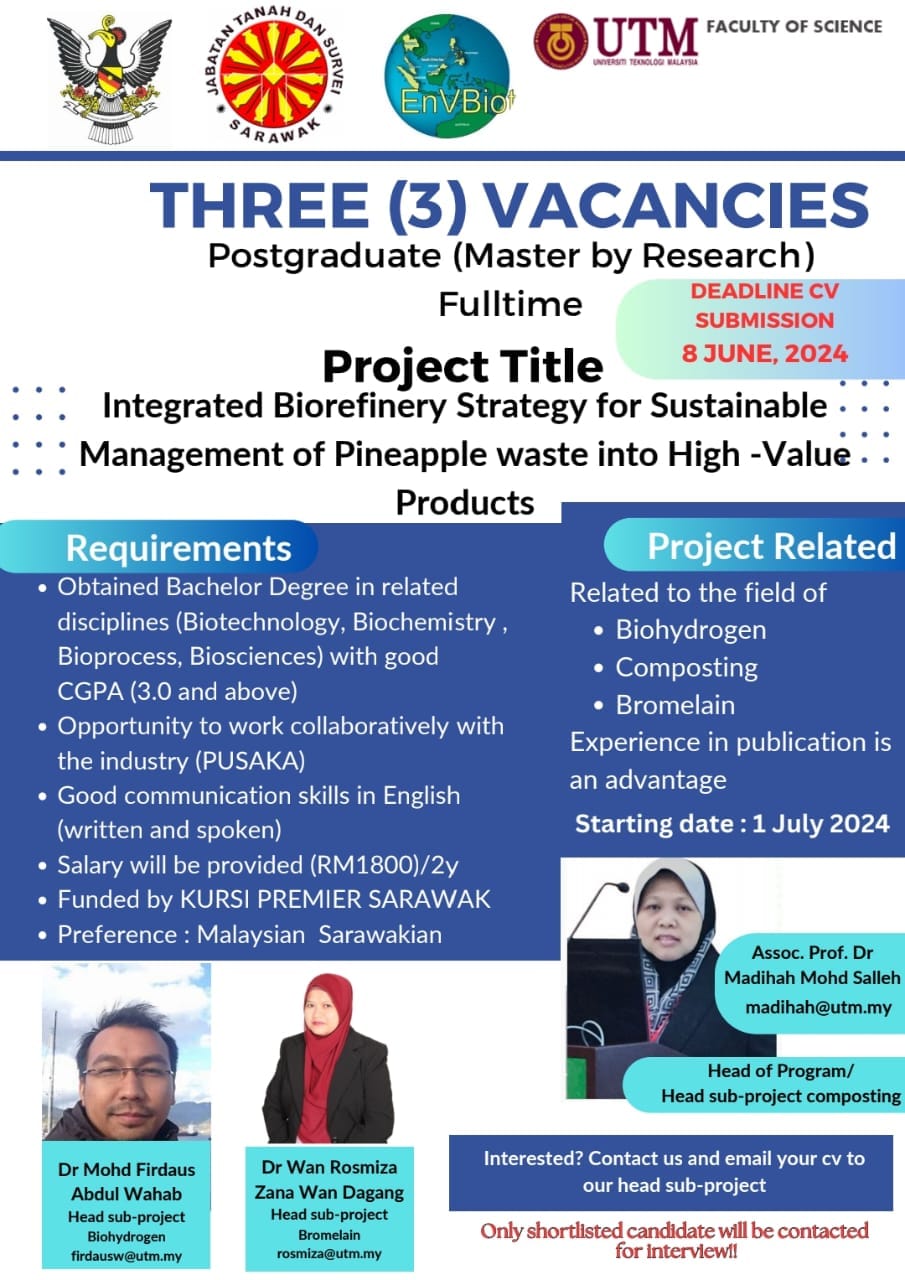
Masters by Research (MPhil) Opportunity in Environmental Biotechnology

Our group has an opening for an MPhil position on biohydrogen production from pineapple-related wastes, in collaboration with the Sarawak government and Sarawakian agencies and industries. The project will investigate the suitable inocula and substrate for biohydrogen production, before upscaling and optimization in a lab-scale bioreactor. The candidate will be exposed to bioprocess technology, waste treatment, environmental biochemistry, and molecular microbiology.

Monthly allowance will be provided to the successful candidate. Kindly drop me an email at firdausw@utm.my if you are interested.

Candidates from chemistry, biochemistry, biosciences, chemical engineering, bioprocess engineering, and related fields are welcomed to apply. Sarawakian preferred due to the nature of the grant.

This position has been filled.

Feel free to reach out if you are interested in the other sub-projects on bromelain and composting.

PhD Opportunity in Environmental Biotechnology

Update (12 June 2024): This position has been filled. Thank you for all the interests and I apologise if I missed replying to your messages/emails.

My lab, in collaboration with the Advanced Membrane Technology Research Centre – AMTEC UTM, has an opening for a PhD position on biomethane production performance from palm oil mill effluent (POME). The project will investigate the effects of physicochemical parameters on methane production in a lab-scale bioreactor, and the association with the microbial community dynamics. The candidate will be exposed to bioprocess technology, wastewater treatment, environmental biochemistry, and molecular microbiology.

Monthly allowance will be provided to the successful candidate. Kindly drop me an email at firdausw@utm.my if you are interested.

Candidates from chemistry, biochemistry, biosciences, chemical engineering, bioprocess engineering, and related fields are welcomed to apply. Only open to Malaysians due to the nature of the grant.

This position has been filled.

Microbial community dynamics and functional potentials in the conversion of oil palm wastes into biomethane

Our latest review article on the microbial community involved in the conversion of oil palm wastes into biomethane is now published in 3 Biotech! Read the article here.

Abstract
Oil palm processing generates substantial waste materials rich in organic content, posing various environmental challenges. Anaerobic digestion (AD), particularly for palm oil mill effluent (POME), offers a sustainable solution, by converting waste into valuable biomethane for thermal energy or electricity generation. The synergistic activities of the AD microbiota directly affect the biomethane production, and the microbial community involved in biomethane production in POME anaerobic digestion has been reported. The composition of bacterial and archaeal communities varies under different substrate and physicochemical conditions. This review discusses the characteristics of POME, explores the microbial members engaged in each stage of AD, and elucidates the impacts of substrate and physicochemical conditions on the microbial community dynamics, with a specific focus on POME. Finally, the review outlines current research needs and provides future perspectives on optimizing the microbial communities for enhanced biomethane production from oil palm wastes.