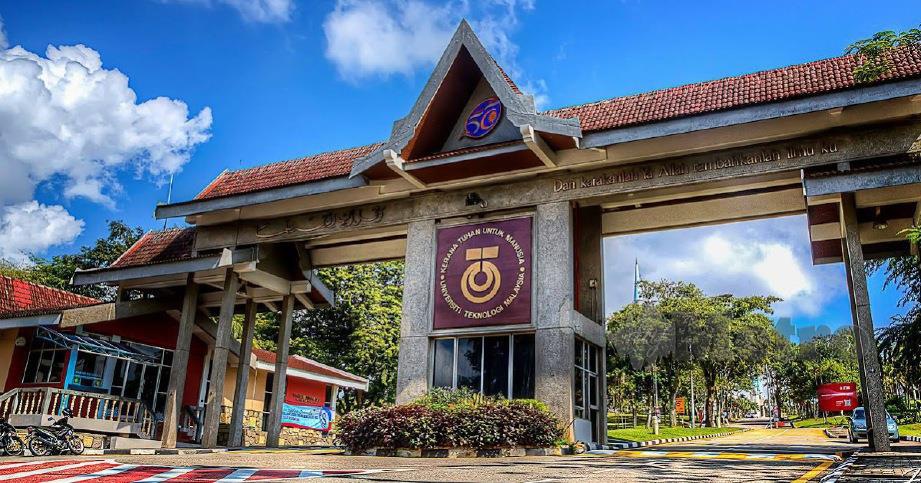
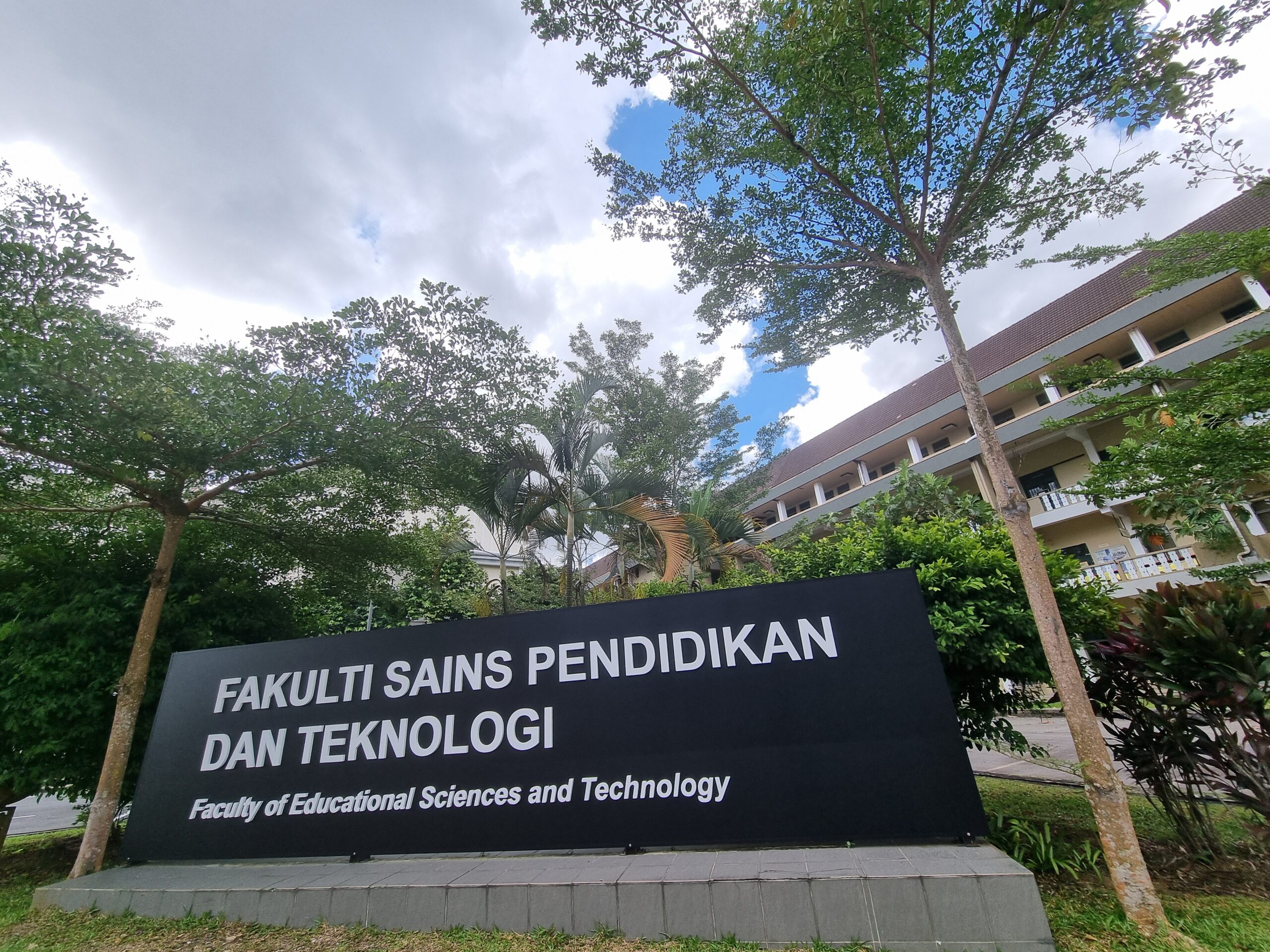
Salam everyone. Here are the 8 Research Groups (RG) available in the Faculty of Education, Universiti Teknologi Malaysia (UTM)
Research Group 1 : Science and Mathematics Education (SME)
Science and Mathematics Education (SME) Research Group has a long history within the Faculty of Education as an active and influential research group. It brings together a strong team of notable academics, experienced teaching practitioners and graduate students who share common passion to promote and improve the quality of science and mathematics education in schools both nationally and internationally. The group seeks to build new professional knowledge by undertaking high quality science and mathematics education research which informs, challenges and transforms the learning and teaching of science across learning communities. Areas of research interest and expertise include; encouraging and exploring understanding of scientific literacy, teaching to promote student conceptual understanding, investigating the Nature of Science and Mathematics (NoSM), the role of values in science and mathematics education, teaching emerging in virtual classrooms and the design of innovative pedagogy to improve the quality of science and mathematics education and student engagement. The group shares strong research links with several highly regarded international science and mathematics education groups and regularly undertakes collaborative research projects, science and mathematics teachers’ professional learning programs and publications.

Areas of Expertise and Strength:
• Philosophy in Science, Technology, Engineering and Mathematics Education
• Curriculum in Science, Technology, Engineering and Mathematics Education
• Teaching and Learning in Science, Technology, Engineering and Mathematics Education
• Assessment in Science, Technology, Engineering and Mathematics Education
• Problem solving in Science, Technology, Engineering and Mathematics Education
• Thinking skills in Science, Technology, Engineering and Mathematics Education
• Technology in Science, Technology, Engineering and Mathematics Education
• Current issues in Science, Technology, Engineering and Mathematics Education
• Creativity and Innovation in Science, Technology, Engineering and Mathematics Education
• Reflective Teaching in Science, Technology, Engineering and Mathematics Education
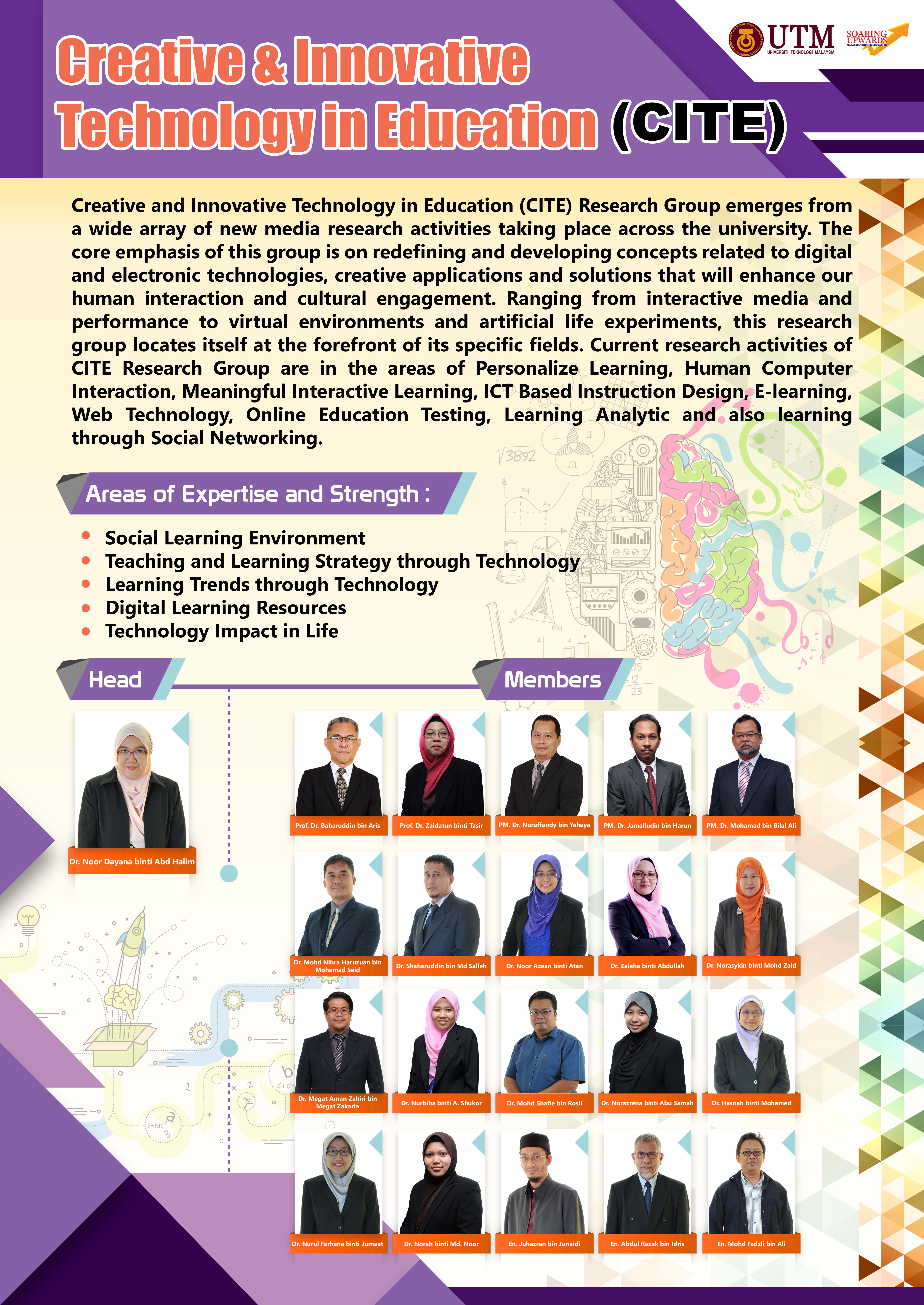
Research Group 2 : Creative & Innovative Technology in Education (CITE)
Creative and Innovative Technology in Education (CITE) Research Group emerges from a wide array of new media research activities taking place across the university. The core emphasis of this group is on redefining and developing concepts related to digital and electronic technologies, creative applications and solutions that will enhance our human interaction and cultural engagement. Ranging from interactive media and performance to virtual environments and artificial life experiments, this research group locates itself at the forefront of its specific fields. Current research activities of CITE Research Group are in the areas of Personalize Learning, Human Computer Interaction, Meaningful Interactive Learning, ICT Based Instruction Design, E-learning, Web Technology, Online Education Testing, Learning Analytic and also learning through Social Networking.
Areas of Expertise and Strength:
• Social Learning Environment
• Teaching and Learning Strategy through Technology
• Learning Trends through Technology
• Digital Learning Resources
• Technology Impact in Life
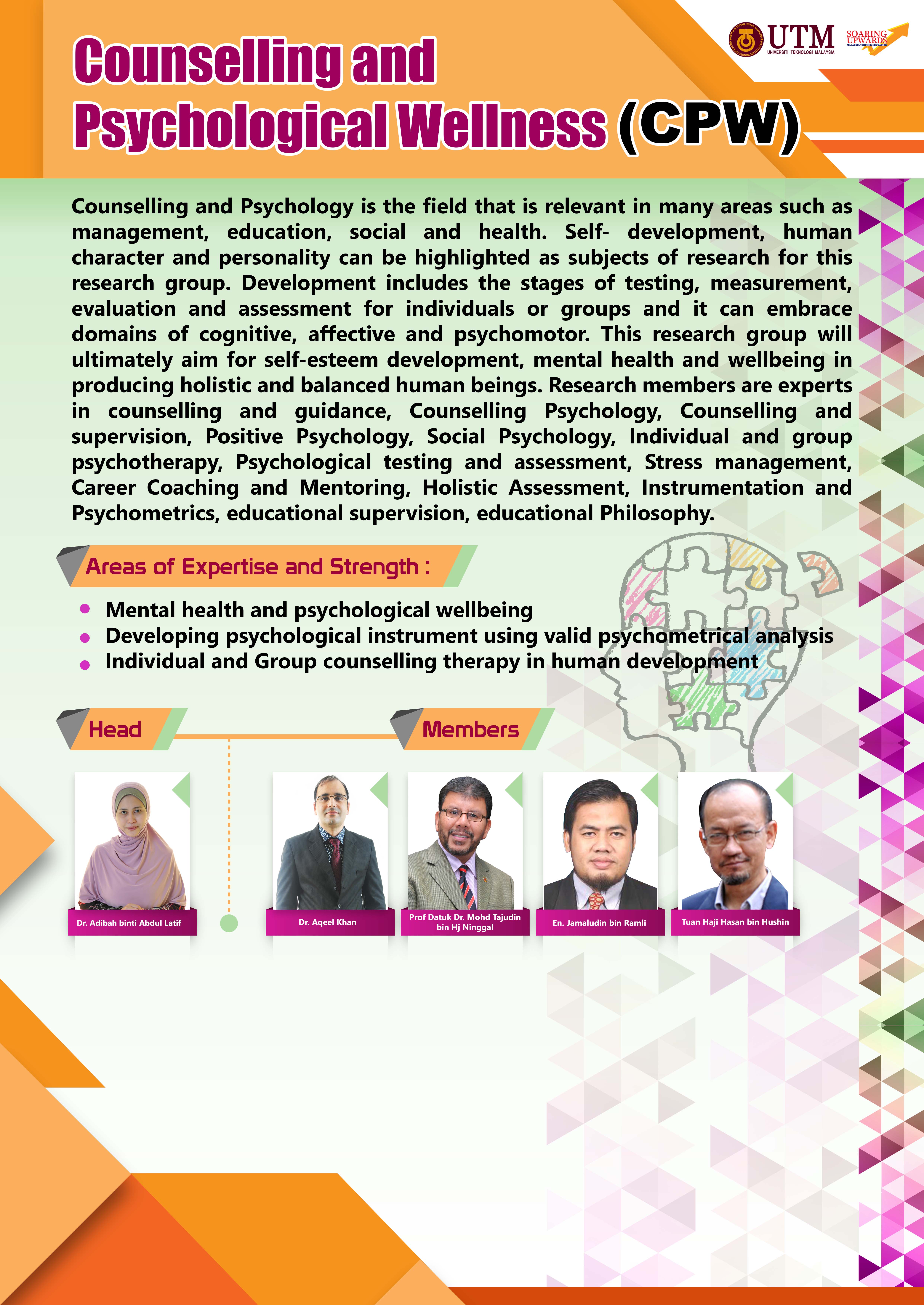
Research Group 3 : Counselling and Psychological Wellness (CPW)
Counselling and Psychology is the field that is relevant in many areas such as management, education, social and health. Self- development, human character and personality can be highlighted as subjects of research for this research group. Development includes the stages of testing, measurement, evaluation and assessment for individuals or groups and it can embrace domains of cognitive, affective and psychomotor. This research group will ultimately aim for self-esteem development, mental health and wellbeing in producing holistic and balanced human beings. Research members are experts in counselling and guidance, Counselling Psychology, Counselling and supervision, Positive Psychology, Social Psychology, Individual and group psychotherapy, Psychological testing and assessment, Stress management, Career Coaching and Mentoring, Holistic Assessment, Instrumentation and Psychometrics, educational supervision, educational Philosophy.
Areas of Expertise and Strength:
• Mental health and psychological wellbeing
• Developing psychological instrument using valid psychometrical analysis
• Individual and Group counselling therapy in human development
Research Group 4 : Educational Growth and Human Development (EGHD)
Lifelong learning
The purpose of this area is to investigate the mechanisms of lifetime human development and formation through lifestyle, culture, work (technology), and sports, primarily within the school, but also within family, community, and workplace. Furthermore, this area studies the ways in which corresponding educational systems can become more systematic, approaching the matter with historical and empirical analyses of the cultural and societal factors inherent in education and human development. It examines the societal and national organizational functions and structures of education both in and out of schools from the standpoint of securing lifelong educational opportunity for individuals, and it aims in particular to produce professionals with outstanding ability, who are able to inquire theoretically into the mechanisms of lifelong human development.

Sports Science for Lifelong learning
This research area is concerned with the multitude of issues related to physical and sports activities engaged in over the course of a lifetime. While including perspectives from related areas such as sports participation, physical sciences and exercise therapy, various topics related to human physical activities and sports activities are explored within the framework of lifelong development and physical education.
Areas of Expertise and Strength:
• Human development and growth (lifestyle, culture, work, sports etc) through education
• Sports talent identification and mass sports
• Healthy lifestyle sustainability
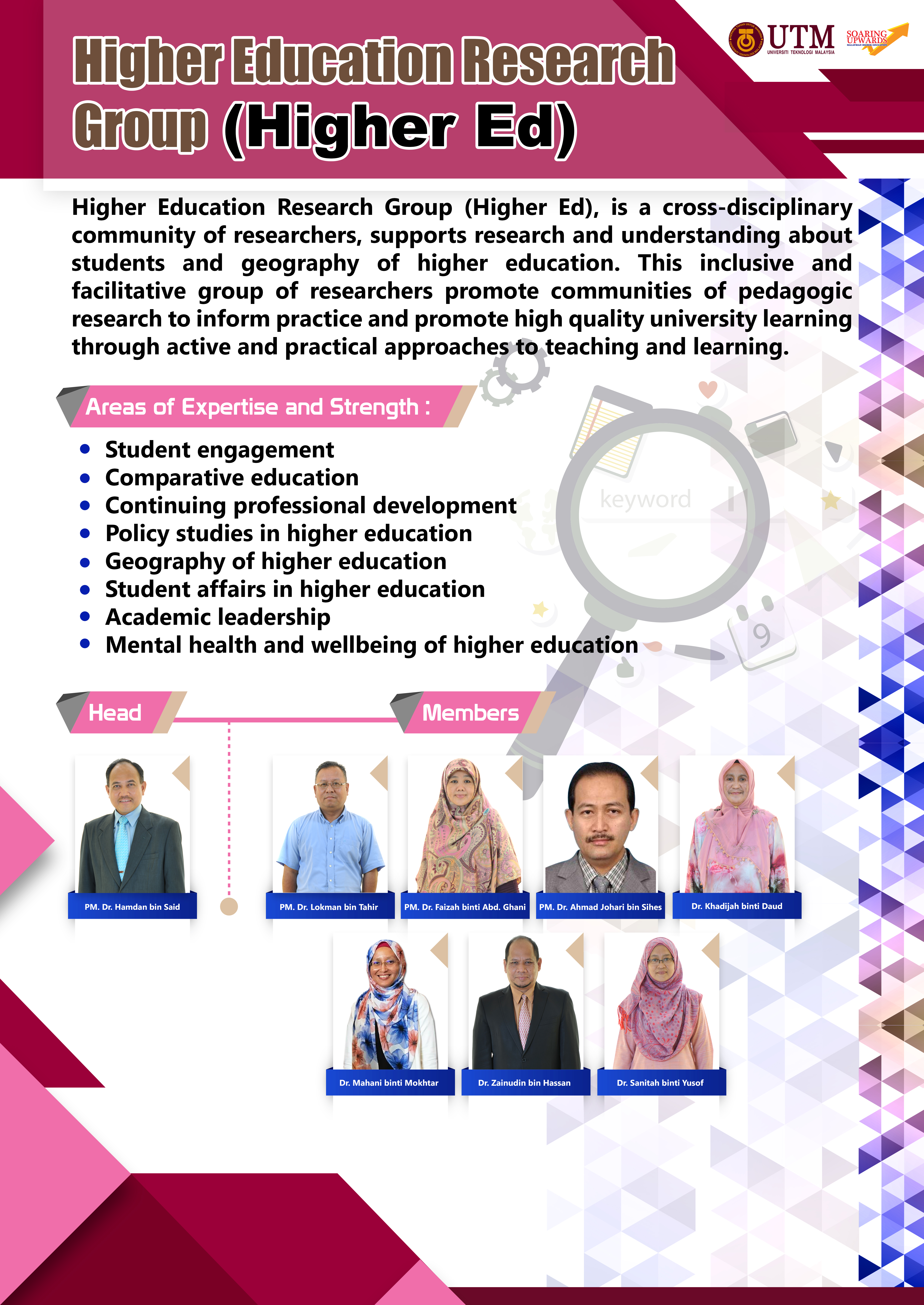
Research Group 5 : Higher Education Research Group (Higher Ed)
Higher Education Research Group (Higher Ed), is a cross-disciplinary community of researchers, supports research and understanding about students and geography of higher education. This inclusive and facilitative group of researchers promote communities of pedagogic research to inform practice and promote high quality university learning through active and practical approaches to teaching and learning.
Areas of Expertise and Strength:
• Student engagement
• Comparative education
• Continuing professional development
• Policy studies in higher education
• Geography of higher education
• Student affairs in higher education
• Academic leadership
• Mental health and well being of higher education
Research Group 6 : Technical and Vocational Education and Teaching (TVET)
Technical Vocational Education and Training (TVET) is a field which has been acknowledged by government, development agencies and academicians for its potential to offer economic, social, technological, and societal sustainability. TVET research also includes studies on everyday reality such as policies. TVET remains a veritable means of reducing poverty, industrialization and economic development of the world. Innovations in TVET research promises to evolve outcomes that will help in re-engineering TVET to improve technical teacher education, up-skilling researchers and develop instructional materials which will be used in technical schools, Vocational Colleges, Community Colleges, polytechnics, and universities.

Areas of Expertise and Strength:
• Assessment
• Cognitive Science
• Curriculum Reform
• Evaluation
• Human Capital Development
• Learning Technologies
• Management
• Pedagogical Methods
• Policies
• Technical and Vocational education Practice
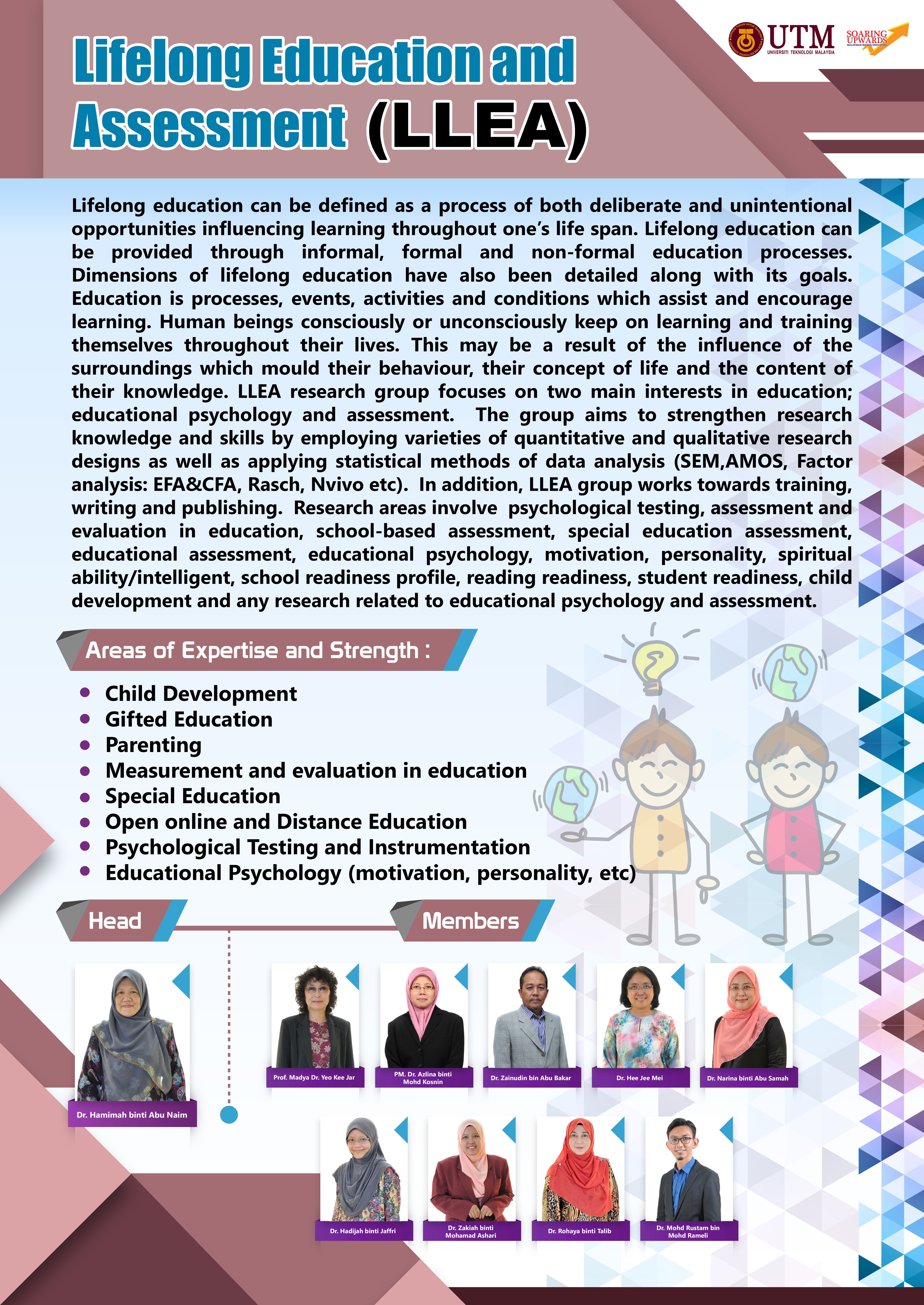
Research Group 7 : Lifelong Education and Assessment (LLEA)
Lifelong education can be defined as a process of both deliberate and unintentional opportunities influencing learning throughout one’s life span. Lifelong education can be provided through informal, formal and non-formal education processes. Dimensions of lifelong education have also been detailed along with its goals. Education is processes, events, activities and conditions which assist and encourage learning. Human beings consciously or unconsciously keep on learning and training themselves throughout their lives. This may be a result of the influence of the surroundings which mould their behaviour, their concept of life and the content of their knowledge. LLEA research group focuses on two main interests in education; educational psychology and assessment. The group aims to strengthen research knowledge and skills by employing varieties of quantitative and qualitative research designs as well as applying statistical methods of data analysis (SEM,AMOS, Factor analysis: EFA&CFA, Rasch, Nvivo etc). In addition, LLEA group works towards training, writing and publishing. Research areas involve psychological testing, assessment and evaluation in education, school-based assessment, special education assessment, educational assessment, educational psychology, motivation, personality, spiritual ability/intelligent, school readiness profile, reading readiness, student readiness, child development and any research related to educational psychology and assessment.
Areas of Expertise and Strength:
• Child Development
• Gifted Education
• Parenting
• Measurement and evaluation in education
• Special Education
• Open online and Distance Education
• Psychological Testing and Instrumentation
• Educational Psychology (motivation, personality, etc)
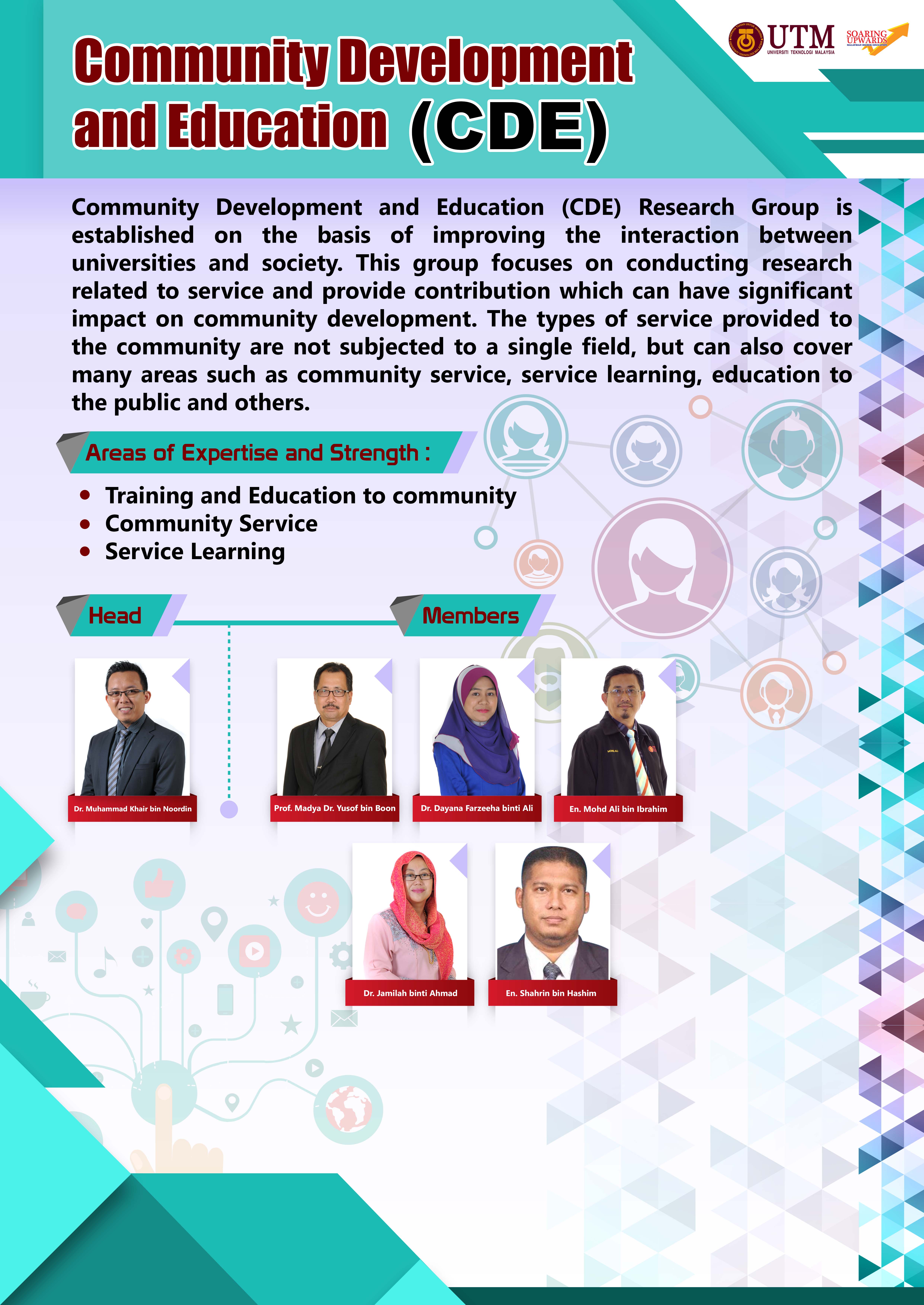
Research Group 8 : Community Development and Education (CDE)
Community Development and Education (CDE) Research Group is established on the basis of improving the interaction between universities and society. This group focuses on conducting research related to service and provide contribution which can have significant impact on community development. The types of service provided to the community are not subjected to a single field, but can also cover many areas such as community service, service learning, education to the public and others.
Areas of Expertise and Strength:
• Training and Education to community
• Community Service
• Service Learning

 Tahniah Universiti Teknologi Malaysia (UTM) kerana menerima penarafan enam bintang (sangat cemerlang), iaitu pengiktirafan tertinggi dalam Sistem Penarafan Institusi Pendidikan Tinggi (SETARA) 2017. SETARA 2017 telah dikendalikan oleh Agensi Kelayakan Malaysia (MQA). Ia merupakan usaha penambahbaikan secara berterusan (Continous Quality Improvement (CQI)) dari Kementerian Pendidikan Tinggi Malaysia (KPT) dalam meningkatkan budaya penambahbaikan kualiti akademik secara berterusan. Perkara ini penting dalam menjamin kualiti akademik, kebertanggungjawaban dan prestasi setiap universiti awam dan universiti swasta di Malaysia dengan memberikan penekanan terhadap pengajaran dan pembelajaran peringkat ijazah pertama. SETARA adalah satu proses penting bagi mengukur kedudukan pencapaian sesebuah universiti. Menurut Menteri KPT Malaysia, Datuk Seri Idris Jusoh, SETARA 2017 dilaksanakan melalui penilaian beberapa kriteria seperti keupayaan pensyarah, kewangan yang kukuh, kualiti pengajaran dan pembelajaran serta hasil penyelidikan dan inovasi.
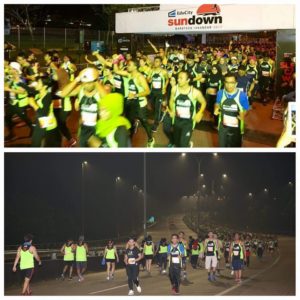 Berikut merupakan pengalaman kali pertama Night Run saya:
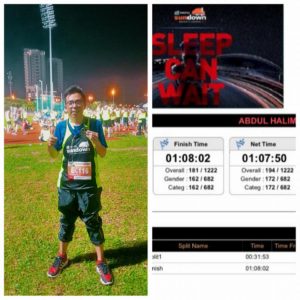 Selalunya setiap petang, semasa berlari atas treadmill, saya setkan kadar larian saya ialah 8km/jam. Kebiasaannya saya boleh bertahan selama 40 minit tanpa henti iaitu, dari maksud matematiknya, larian saya hanya boleh mencapai jarak sejauh 5.3 km sahaja. Tetapi keputusan larian yang saya perolehi agak mengejutkan saya.. jeng.. jeng… jeng… Ini bermaksud keupayaan berlari di atas treadmill tidak membayangkan keupayaan sebenar anda berlari di atas jalan raya.