Monthly Archives: October 2026

WHEN STUDENTS RUN OUT OF ANSWERS

WHEN STUDENTS RUN OUT OF ANSWERS

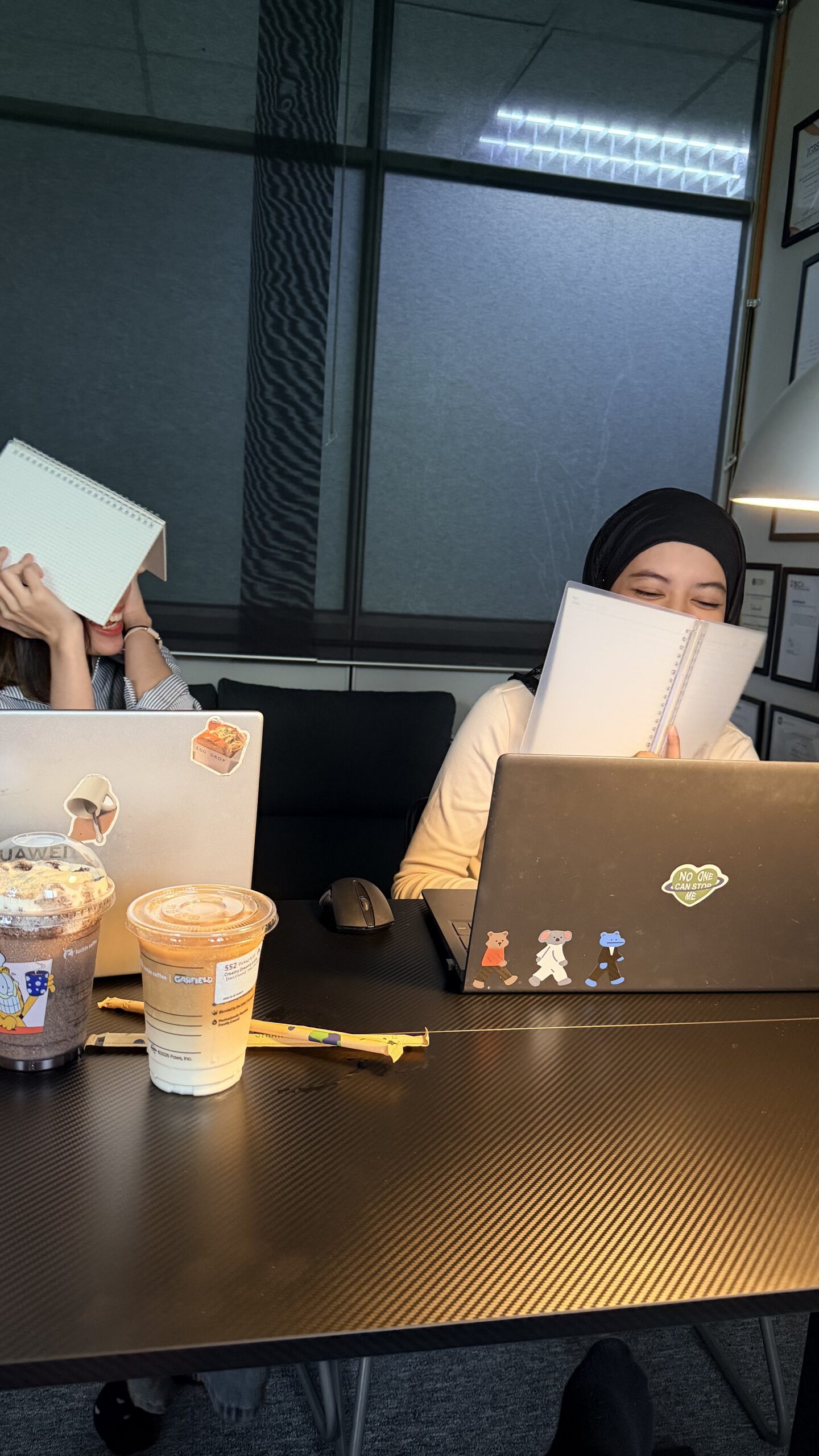
This week, two of my students somehow managed to survive our progress meeting without being able to answer all their supervisor’s questions. 

First came the awkward smiles. Then hiding their faces behind books. Then consulting AI for help. And when everything else failed, the ultimate survival strategy: innocent faces! 

Eventually, I sent them to the sofa to do some reading and find the answers. But in the end, both requested to postpone their progress updates until next week. Nice try! 

Well, that is pretty much how I run my supervision sessions. We can joke around, laugh, and have fun, but when it comes to research and learning, we still need to take things seriously.

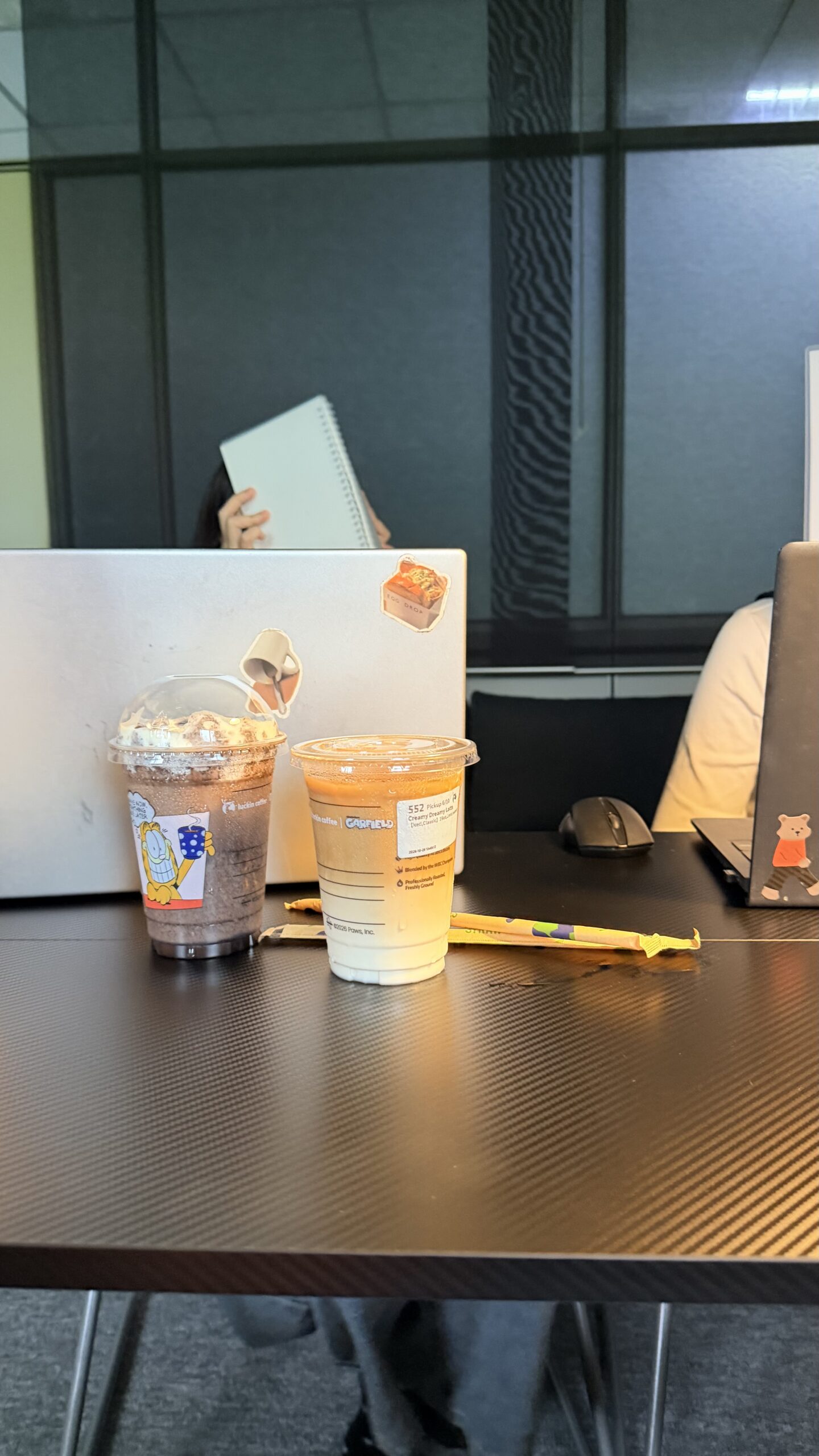
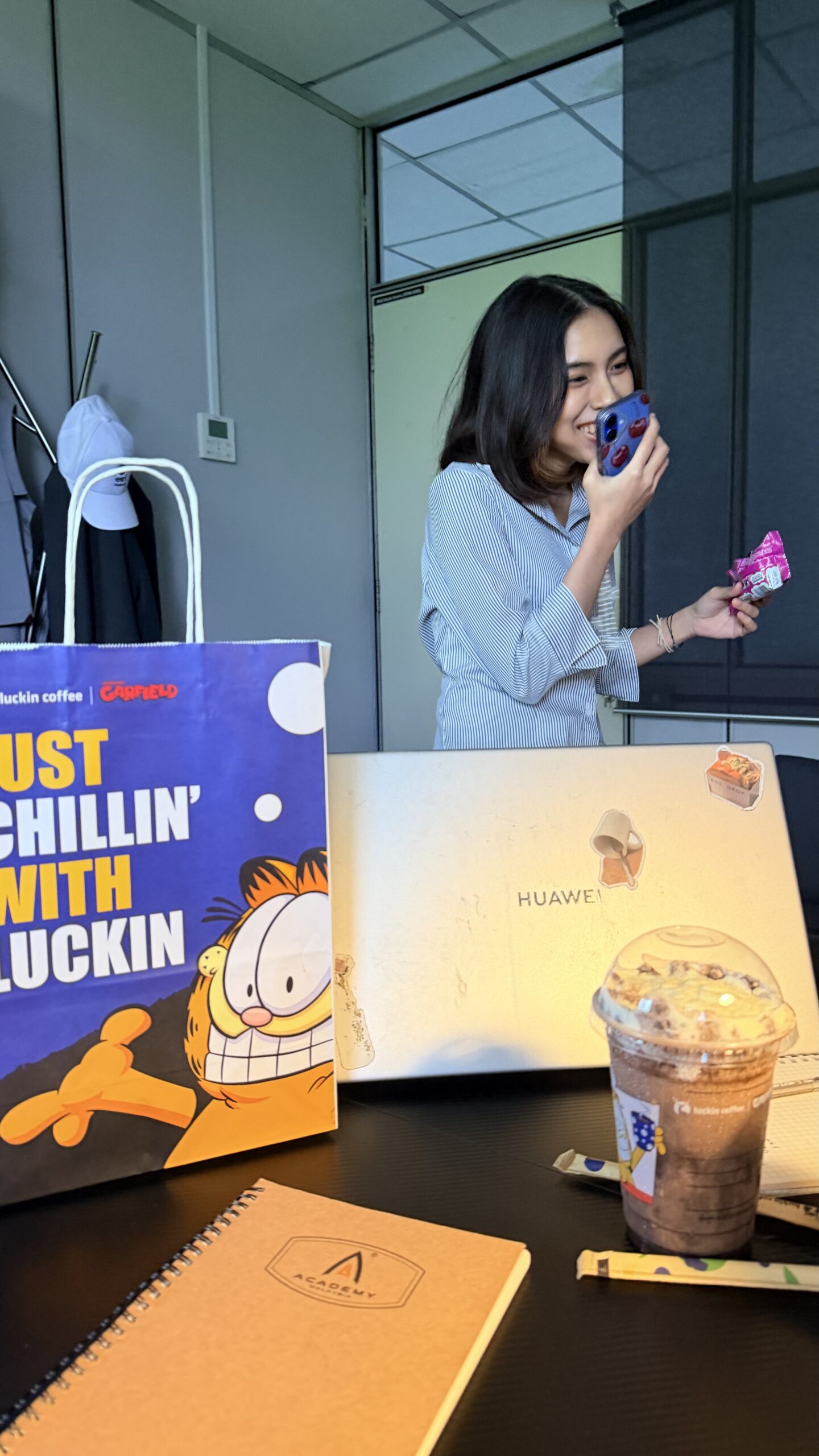
This time, Luckin Coffee again! 😂 My treat for all the students who attended. Luckily, Wiliyan was there to help carry all 10 cups of coffee.

Supervision does not always have to be serious. A little laughter and good coffee can make the learning journey more enjoyable.

But next week, those two had better come prepared! 

#PostgraduateLife #ResearchSupervision #AcademicLife #LearningJourney #CoffeeAndResearch

HOW I AM SUPPOSED TO ACCEPT THIS INVITATION?

Screenshot

HOW I AM SUPPOSED TO ACCEPT THIS INVITATION?

Sometimes, interesting opportunities arrive when you are already wondering how to manage everything on your plate.

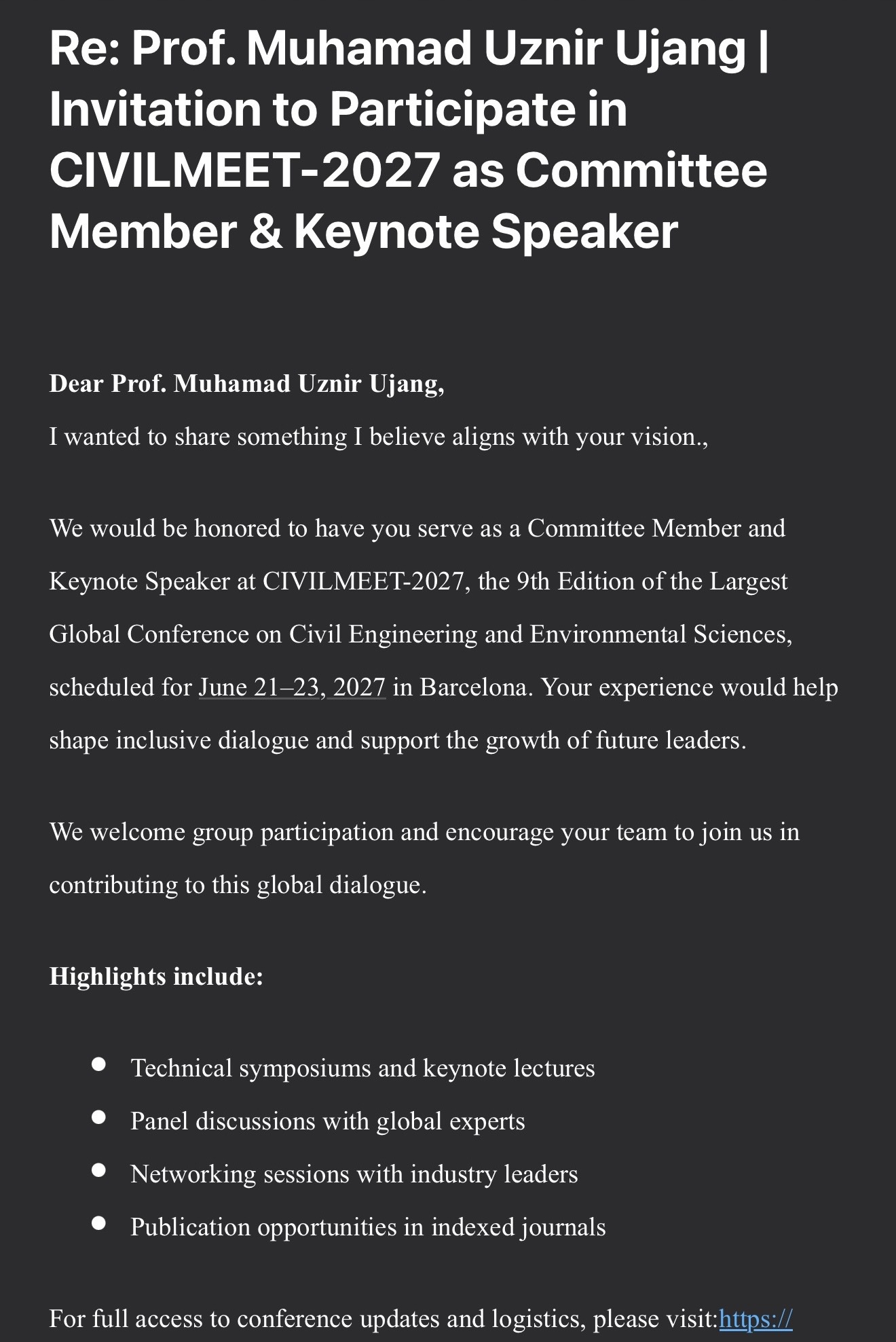
This time, I received an invitation to serve as both a Committee Member and Keynote Speaker at CIVILMEET 2027, the 9th International Conference on Civil Engineering and Environmental Sciences, scheduled for 21-23 June 2027 in Barcelona, Spain. 🇪🇸

Not just a committee member, but a keynote speaker as well. That part made me read the email twice. 

The conference brings together researchers, academics and industry professionals to exchange ideas on civil engineering, environmental sciences and emerging technologies.

Although much of my research revolves around 3D city modelling, GIS, GeoAI and urban digital twins, these areas are increasingly connected to civil engineering, environmental sustainability and intelligent urban development. So, it is interesting to see how our research contributions are being recognised beyond our immediate field.

But then comes the usual reality of academic life. Undergraduate teaching, postgraduate supervision, research projects, journal publications, administrative responsibilities and many other commitments.

Still need to think carefully before accepting another responsibility.

Nevertheless, receiving an invitation like this is already a meaningful recognition. It is encouraging to know that the research we have been doing over the years is reaching people and institutions beyond our own academic community.

Thank you to the CIVILMEET 2027 organising committee for considering me for these roles.

Whether I eventually accept or not, I appreciate the invitation and the confidence placed in my academic contributions.

Now, the real question is whether my calendar can accommodate Barcelona in June 2027. 😅

#KeynoteSpeaker #CIVILMEET2027 #AcademicJourney #GeospatialResearch #InternationalCollaboration

A LITTLE UNEXPECTED RECOGNITION 

Screenshot

A LITTLE UNEXPECTED RECOGNITION 

Sometimes, our research travels further than we expect.

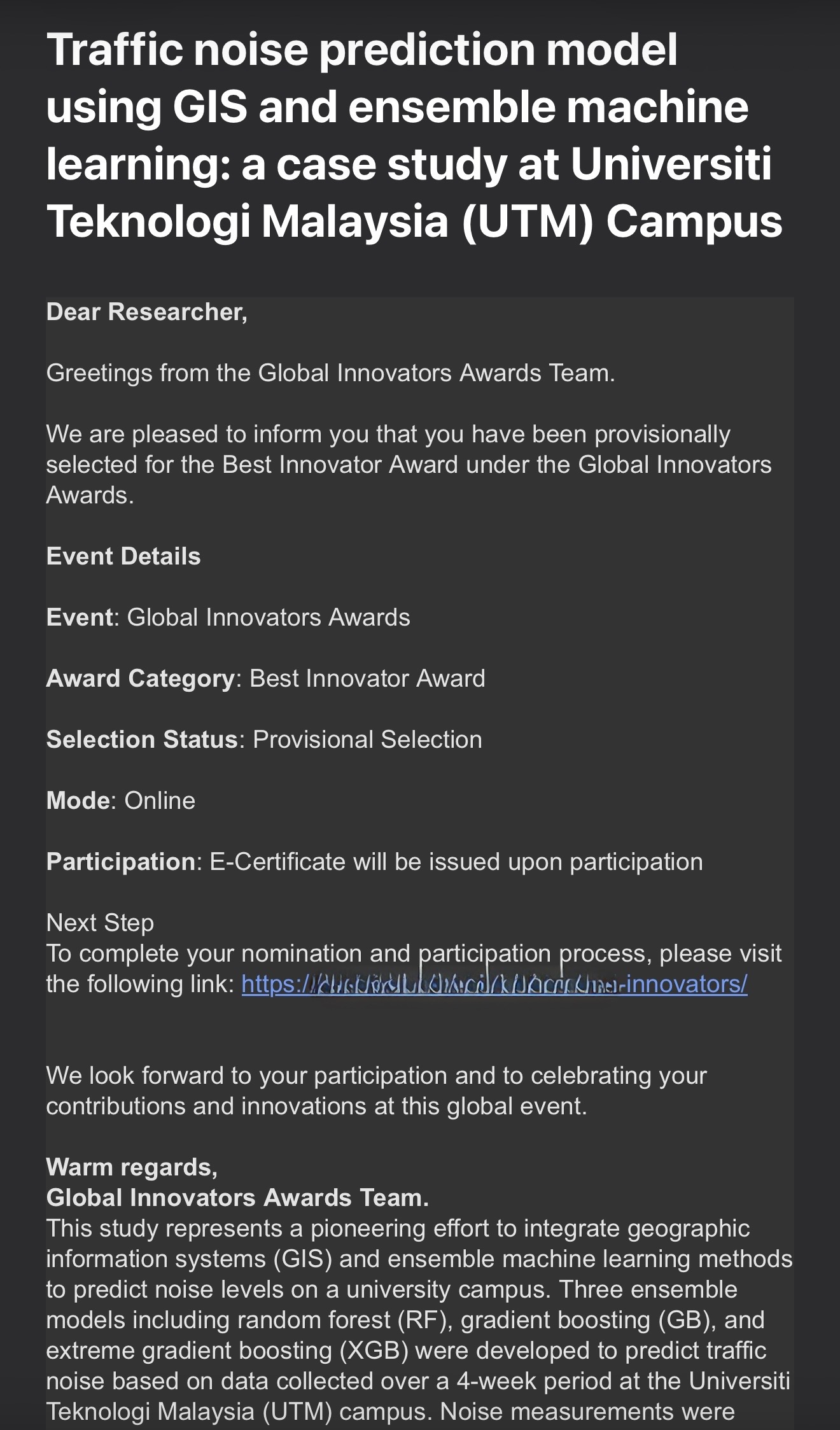
Received an interesting email today informing me that one of our research works, “Traffic Noise Prediction Model Using GIS and Ensemble Machine Learning: A Case Study at Universiti Teknologi Malaysia (UTM) Campus,” has been provisionally selected for the Best Innovator Award under the Global Innovators Awards.

The study explores how GIS and ensemble machine learning, particularly Random Forest, Gradient Boosting and XGBoost, can be used to predict traffic noise levels within a university campus.

To be honest, I wasn’t expecting this. We simply conducted the research, published our findings, and moved on to the next research problem. 😄

Of course, this is still a provisional selection, not a confirmed award. And I still need to understand more about the organiser and its selection process.

Nevertheless, it is interesting to see our research getting noticed beyond the usual academic publications and citations.

Well, at least our work on GIS and machine learning is making some noise. Literally! 😂

Still plenty to learn, explore and improve. Hopefully, our research will continue to contribute something useful, even in small ways.

#GIS #GeoAI #MachineLearning #ResearchRecognition #TrafficNoise

DID NOT EXPECT TO SEE MY NAME HERE

DID NOT EXPECT TO SEE MY NAME HERE

Received this invitation today and had to read it twice.

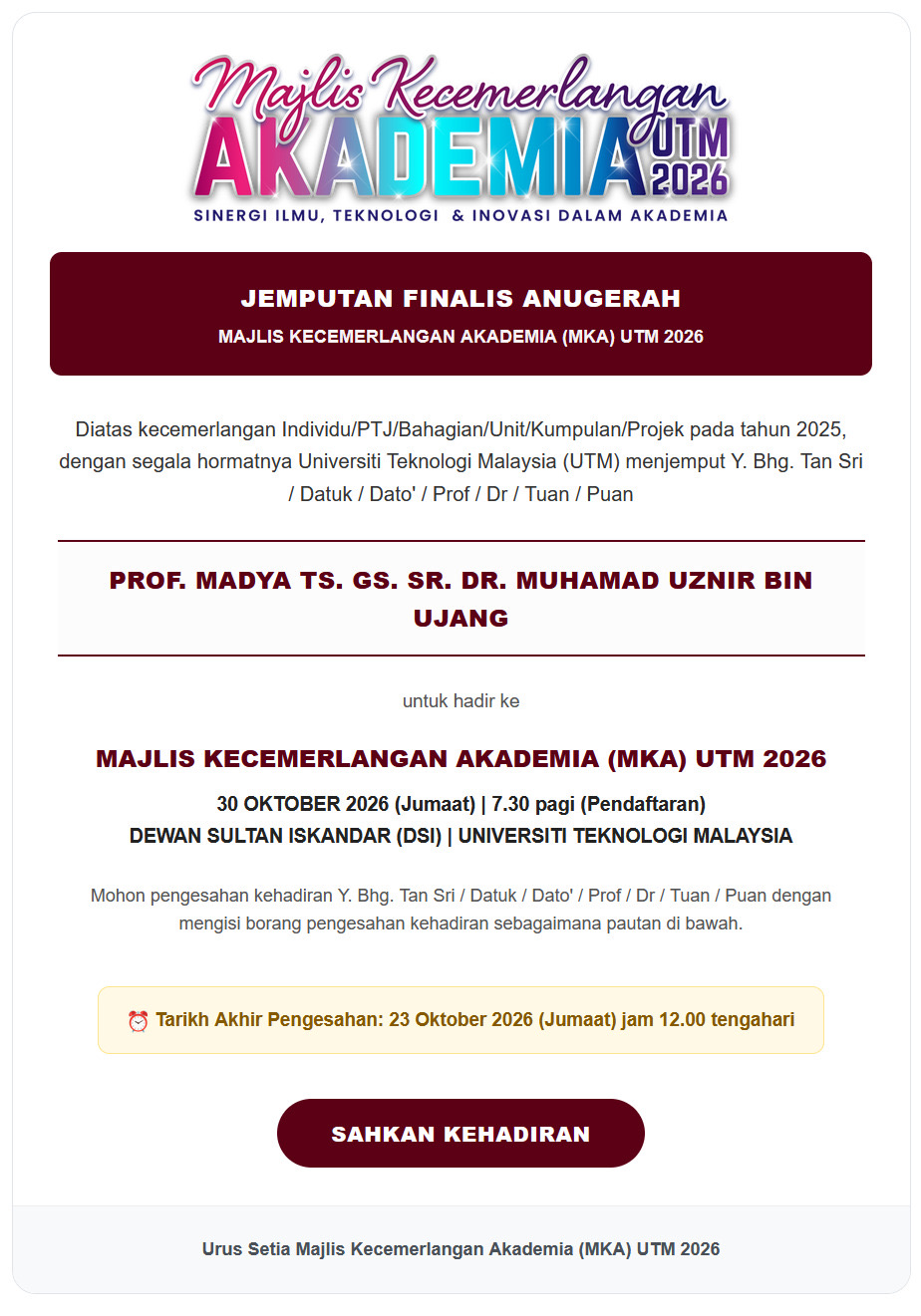
UTM appreciation for its staff is at another level! This year, UTM management make a new moves, organizing a new dedicated and personalized event called Majlis Kecemerlangan Akademia (MKA) UTM 2026. 

Apparently, I have been selected for an award at the MKA UTM 2026, which will be held on 30 October 2026 at Dewan Sultan Iskandar, UTM.

To be honest, I do not know yet which award category this is for. But just being selected at university level already feels like a meaningful recognition of the work done throughout 2025.

Academic work is usually quite routine from the inside. Teaching, supervising students, writing papers, applying for grants, reviewing manuscripts, attending meetings, and handling administrative tasks. Most of the time, we just move from one responsibility to another without really stopping to think about it.

So when something like this arrives, it is a nice reminder that perhaps all those small efforts do add up somewhere along the way.

Thank you to everyone who has been part of the journey, especially my students, colleagues, collaborators, and the research team.

Now we wait for 30 October. Whatever the outcome, I am already grateful to be among it. 😊

#MKAUTM2026 #AcademicJourney #ResearchAchievement #UTM #GratefulMoment

A SMALL MILESTONE IN MY RESEARCH JOURNEY

Screenshot

A SMALL MILESTONE IN MY RESEARCH JOURNEY

Honestly, I am not entirely sure how they calculate these rankings.

But one thing I do appreciate is that the ranking is based on the specific research areas I have been working on, rather than broad disciplines such as Civil Engineering or Engineering in general.

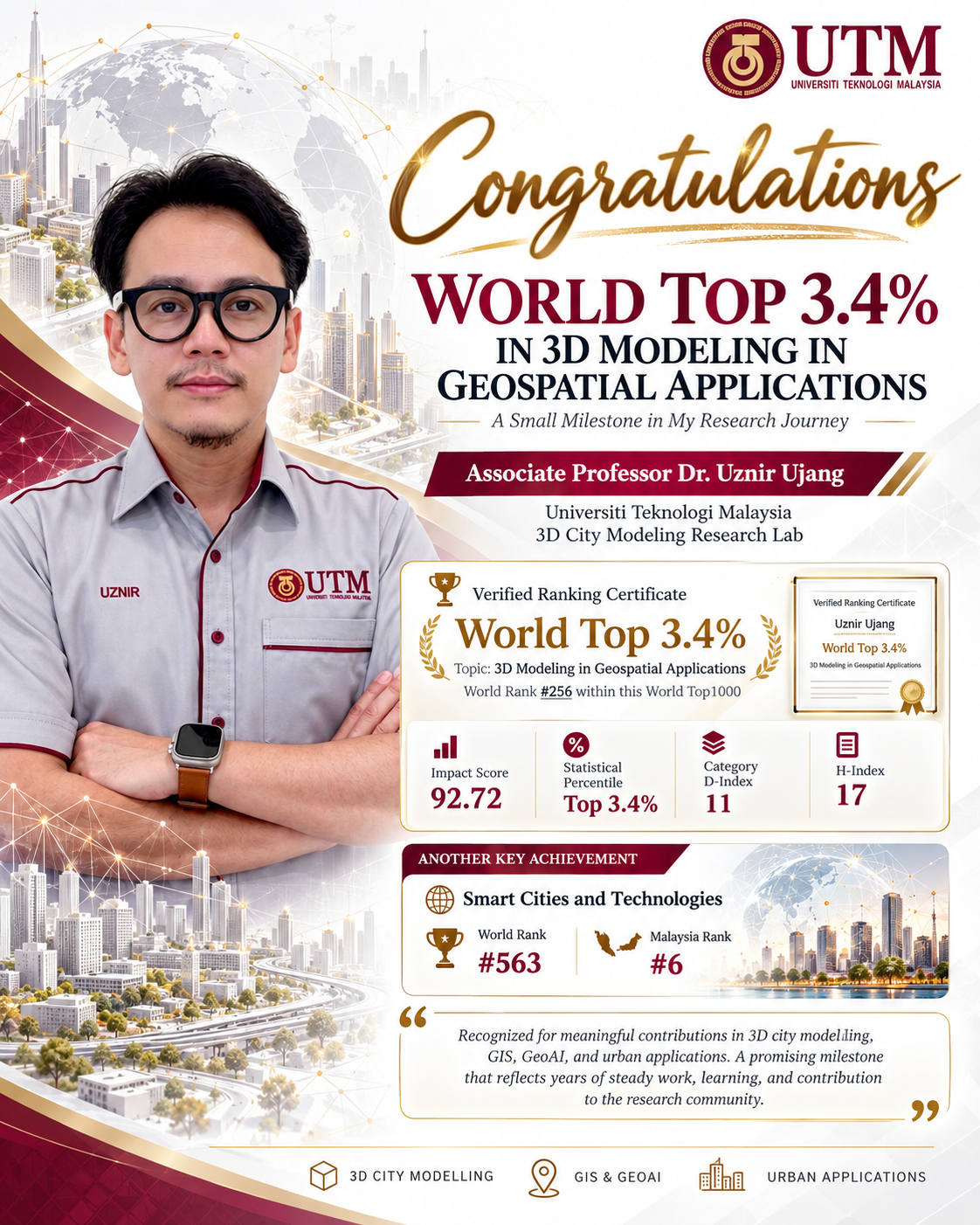
Apparently, my research is ranked in the World Top 3.4% for 3D Modeling in Geospatial Applications, with a world ranking of #256.

Another area, Smart Cities and Technologies, places my research at World #563 and Malaysia #6.

At least these are the fields I have been spending years working on, particularly 3D city modelling, GIS, GeoAI and urban applications. So, it is quite interesting to see how my publications are positioned within these specific research areas.

Well, not too bad, I guess.

At least there is a little contribution to the academic world after all these years. Better than nothing, right?

Still a long way to go, and plenty more to learn.

Hopefully, whatever I have contributed so far will be useful to the research community, my students and future researchers.

#3DCityModelling #GeospatialScience #GeoAI #SmartCities #Research

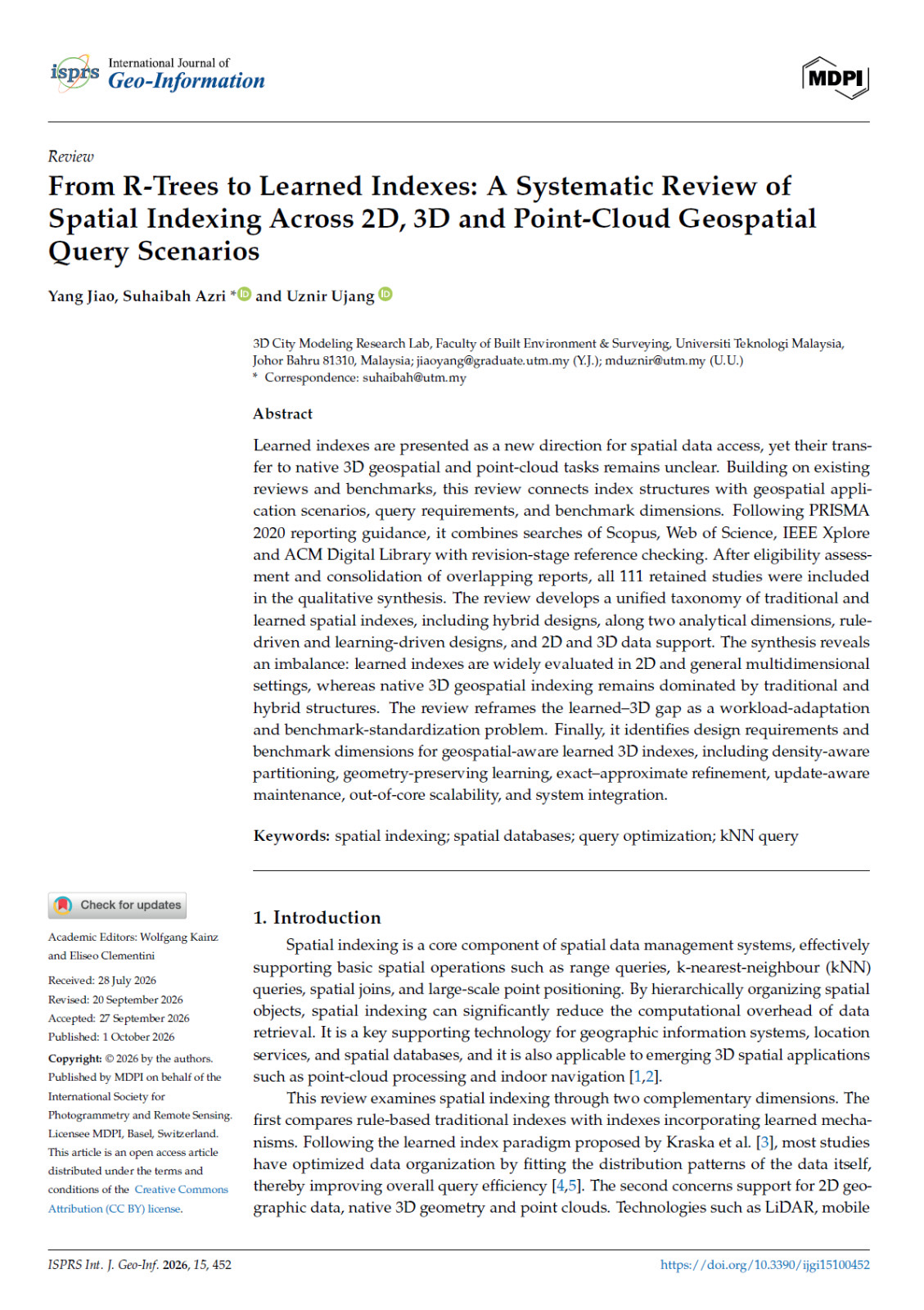
WHEN STUDENT TAKES THE INITIATIVE

Screenshot

WHEN STUDENT TAKES THE INITIATIVE

Always nice to see a PhD student not only follow the research plan, but also take the initiative to push the work further.

Congratulations to our PhD student, Jiao Yang, on the publication of his new paper in the ISPRS International Journal of Geo-Information, a Web of Science Q2 journal.

What I appreciate about this paper is that the decision to aim for a WoS journal came from his own initiative. That is something encouraging to see. When students begin setting their own targets and taking ownership of their research, it shows that they are gradually developing into independent researchers.

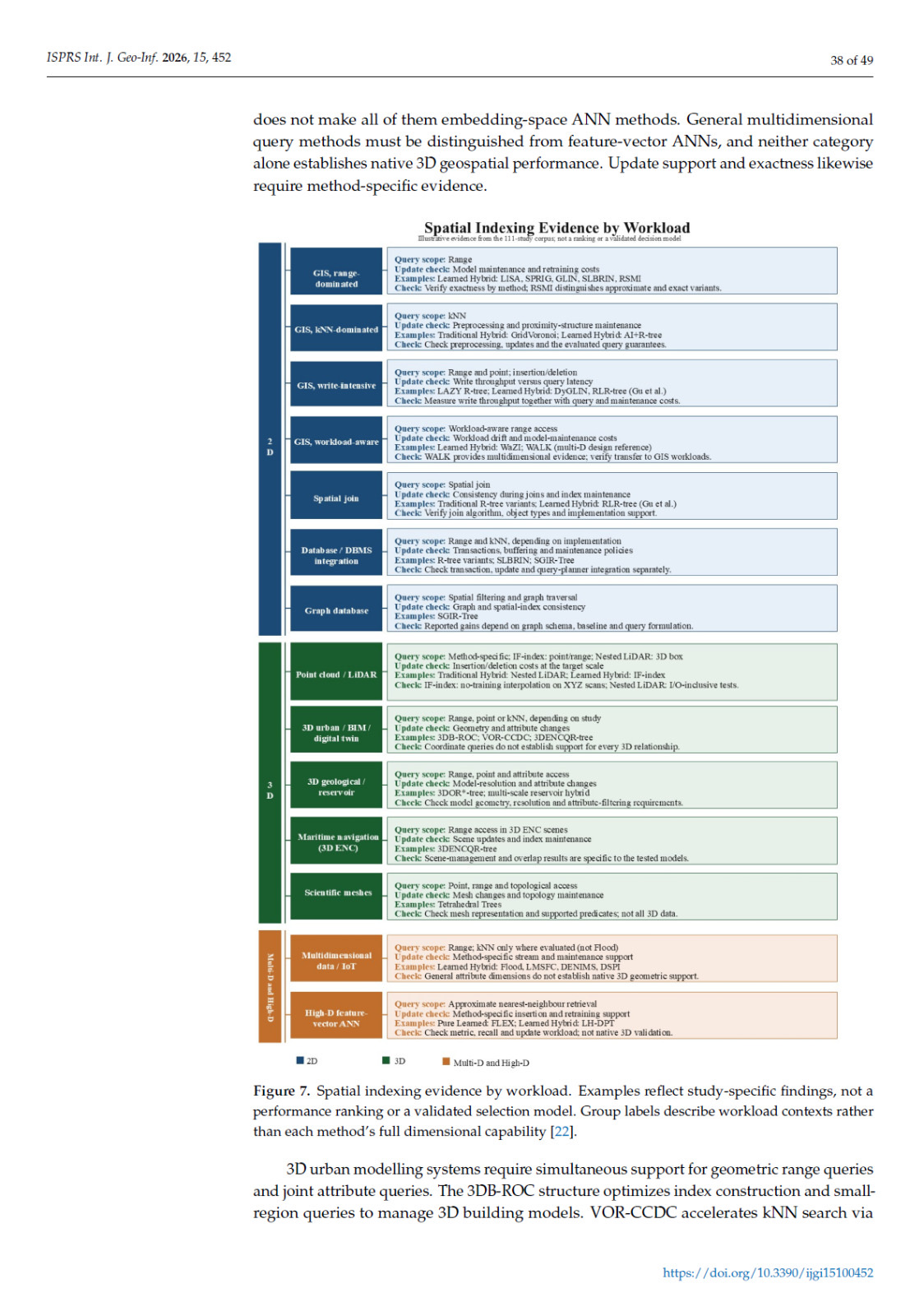
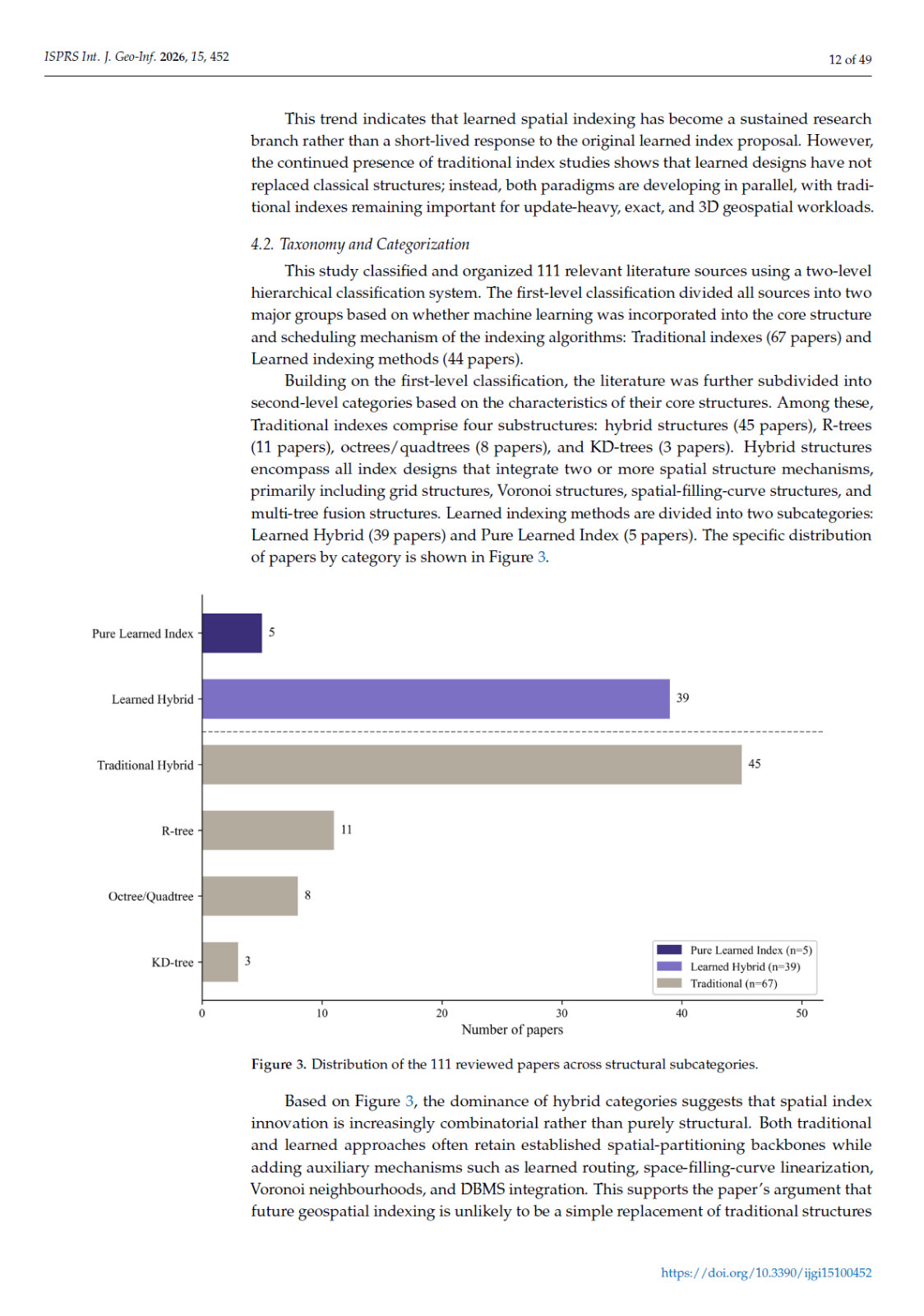
The paper, titled “From R-Trees to Learned Indexes: A Systematic Review of Spatial Indexing Across 2D, 3D and Point-Cloud Geospatial Query Scenarios,” reviews 111 studies and examines how spatial indexing has evolved from traditional structures such as R-trees, octrees and KD-trees towards learned and hybrid indexing approaches.

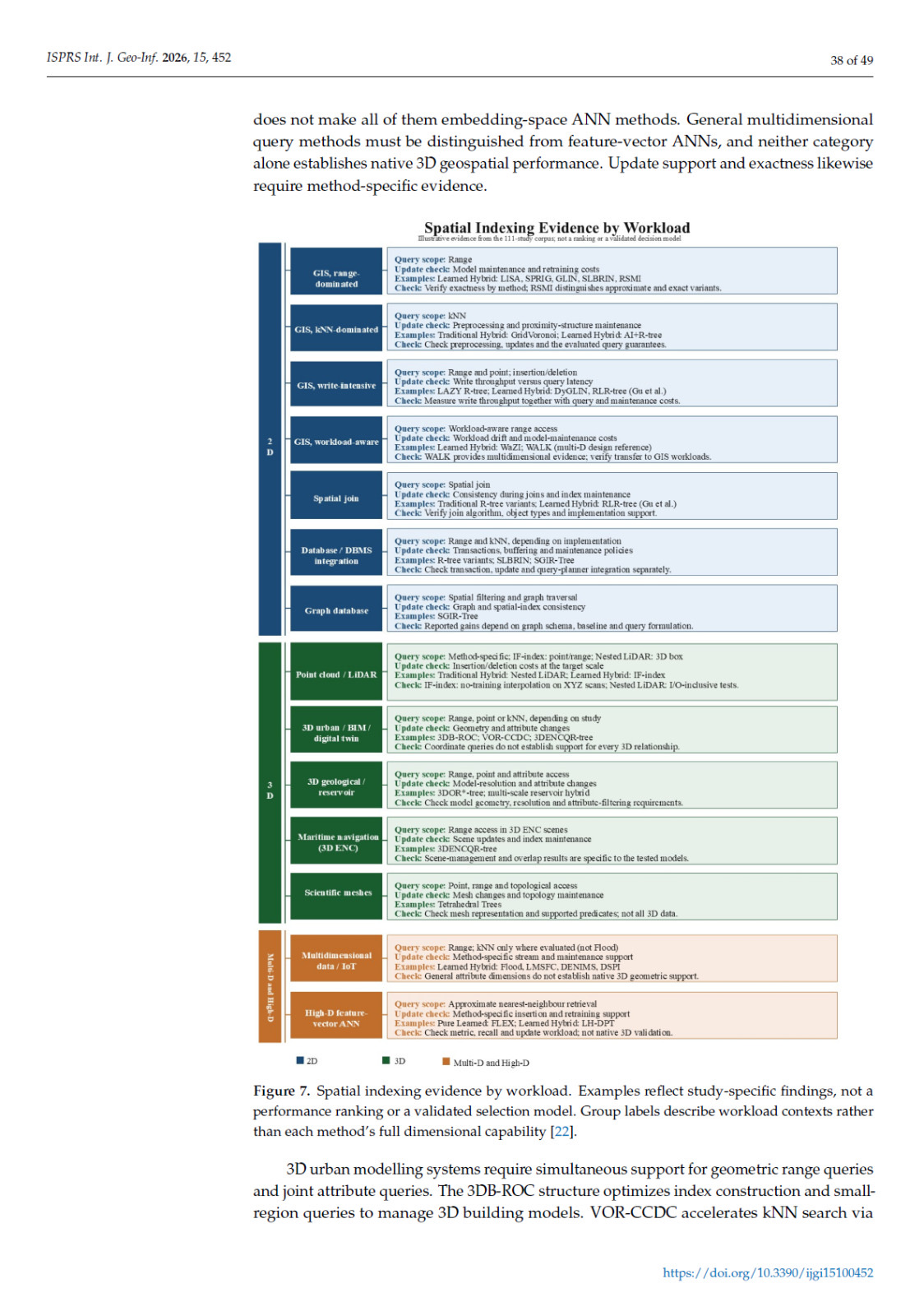
One of the interesting findings is that learned indexes are growing rapidly, particularly for 2D applications, but traditional and hybrid structures are still very important for native 3D geospatial data, point clouds and update-intensive spatial workloads. The paper also highlights what still needs to be solved before learned indexing can be effectively applied to complex 3D geospatial environments.

A good contribution to an area that sits right at the foundation of efficient spatial data management.

Good job, Jiao. Keep taking the initiative and keep pushing your research further. 👍🏻

📖 Read the paper here:

https://doi.org/10.3390/ijgi15100452

#NewPublication #SpatialIndexing #3DGIS #GeospatialResearch #PhDJourney