Tag Archives: Higher Education

ANOTHER EDITORIAL BOARD INVITATION, ANOTHER DECISION TO MAKE 

Screenshot

ANOTHER EDITORIAL BOARD INVITATION, ANOTHER DECISION TO MAKE 

Sometimes, I wonder how many more academic responsibilities can fit into one calendar.

Then another invitation arrives.

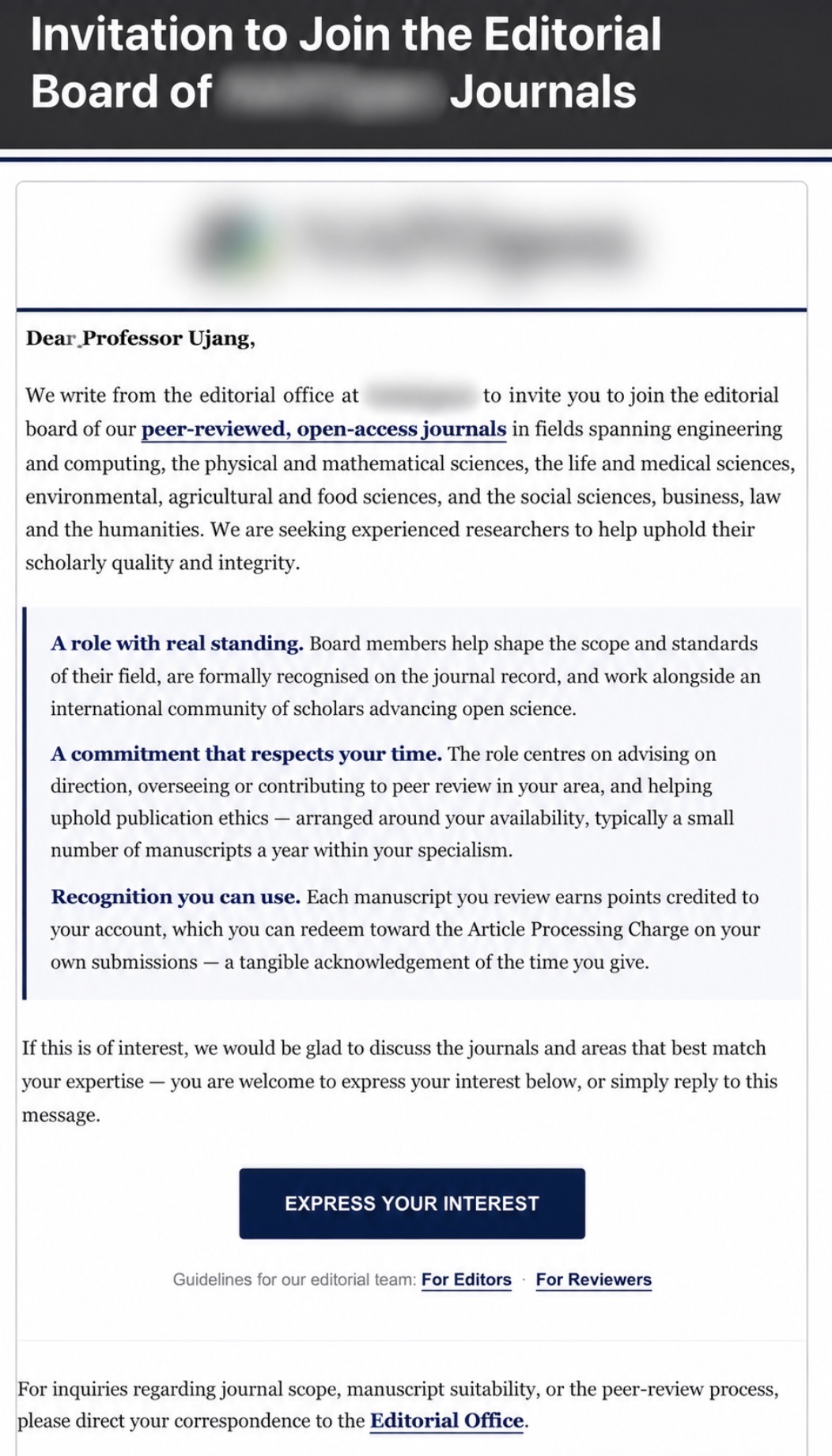
This time, I received an invitation to join the Editorial Board of an international peer-reviewed, open-access journal.

The invitation mentioned my potential role in helping shape the journal’s academic direction, contributing to the peer review process, and maintaining the quality and integrity of scholarly publications.

Interesting, actually.

Over the years, much of my time has been spent publishing research, supervising students, reviewing manuscripts, and collaborating with researchers from different countries. So, it is always encouraging when these contributions lead to opportunities to serve the wider academic community.

But editorial board membership is not simply about having another title on your academic profile.

It comes with responsibilities. Ensuring research quality, maintaining publication ethics, and helping researchers communicate meaningful contributions to their fields.

And of course, there is always the question of time.

With undergraduate teaching, postgraduate supervision, research projects, publications, and administrative work already filling the calendar, accepting another responsibility requires some consideration.

I have not decided whether to accept this invitation yet. There are still a few things to evaluate, particularly the journal’s scope, academic standing, and expectations.

Nevertheless, it is nice to know that our research contributions are being noticed beyond our own institution.

Sometimes, even an invitation is a small reminder that the work we have been doing over the years is reaching the wider research community.

Now, to accept or not to accept? That is another question.

#EditorialBoard #AcademicService #ResearchCommunity #ScholarlyPublishing #AcademicJourney
HOW I AM SUPPOSED TO ACCEPT THIS INVITATION?

Screenshot

HOW I AM SUPPOSED TO ACCEPT THIS INVITATION?

Sometimes, interesting opportunities arrive when you are already wondering how to manage everything on your plate.

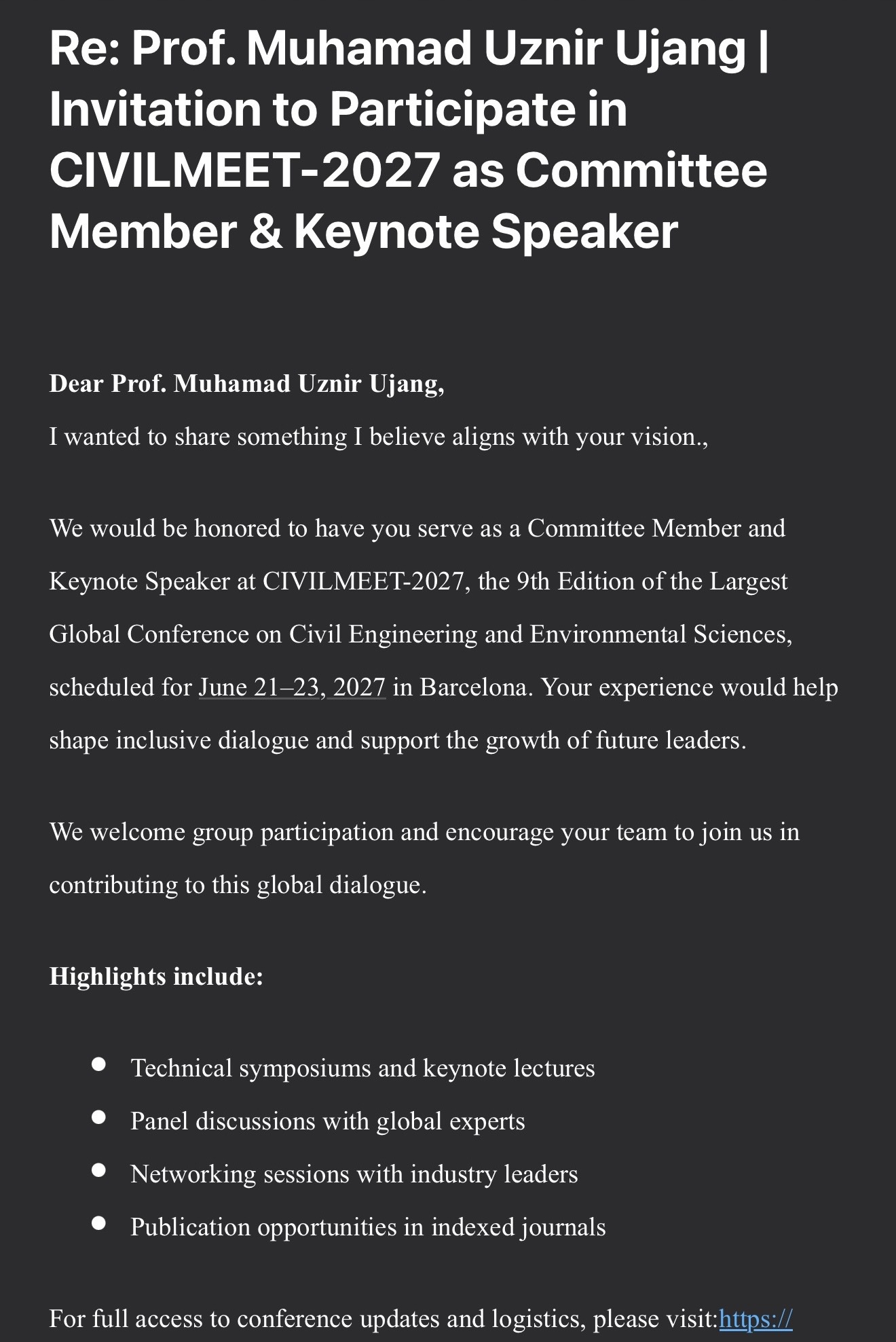
This time, I received an invitation to serve as both a Committee Member and Keynote Speaker at CIVILMEET 2027, the 9th International Conference on Civil Engineering and Environmental Sciences, scheduled for 21-23 June 2027 in Barcelona, Spain. 🇪🇸

Not just a committee member, but a keynote speaker as well. That part made me read the email twice. 

The conference brings together researchers, academics and industry professionals to exchange ideas on civil engineering, environmental sciences and emerging technologies.

Although much of my research revolves around 3D city modelling, GIS, GeoAI and urban digital twins, these areas are increasingly connected to civil engineering, environmental sustainability and intelligent urban development. So, it is interesting to see how our research contributions are being recognised beyond our immediate field.

But then comes the usual reality of academic life. Undergraduate teaching, postgraduate supervision, research projects, journal publications, administrative responsibilities and many other commitments.

Still need to think carefully before accepting another responsibility.

Nevertheless, receiving an invitation like this is already a meaningful recognition. It is encouraging to know that the research we have been doing over the years is reaching people and institutions beyond our own academic community.

Thank you to the CIVILMEET 2027 organising committee for considering me for these roles.

Whether I eventually accept or not, I appreciate the invitation and the confidence placed in my academic contributions.

Now, the real question is whether my calendar can accommodate Barcelona in June 2027. 😅

#KeynoteSpeaker #CIVILMEET2027 #AcademicJourney #GeospatialResearch #InternationalCollaboration
A LITTLE UNEXPECTED RECOGNITION 

Screenshot

A LITTLE UNEXPECTED RECOGNITION 

Sometimes, our research travels further than we expect.

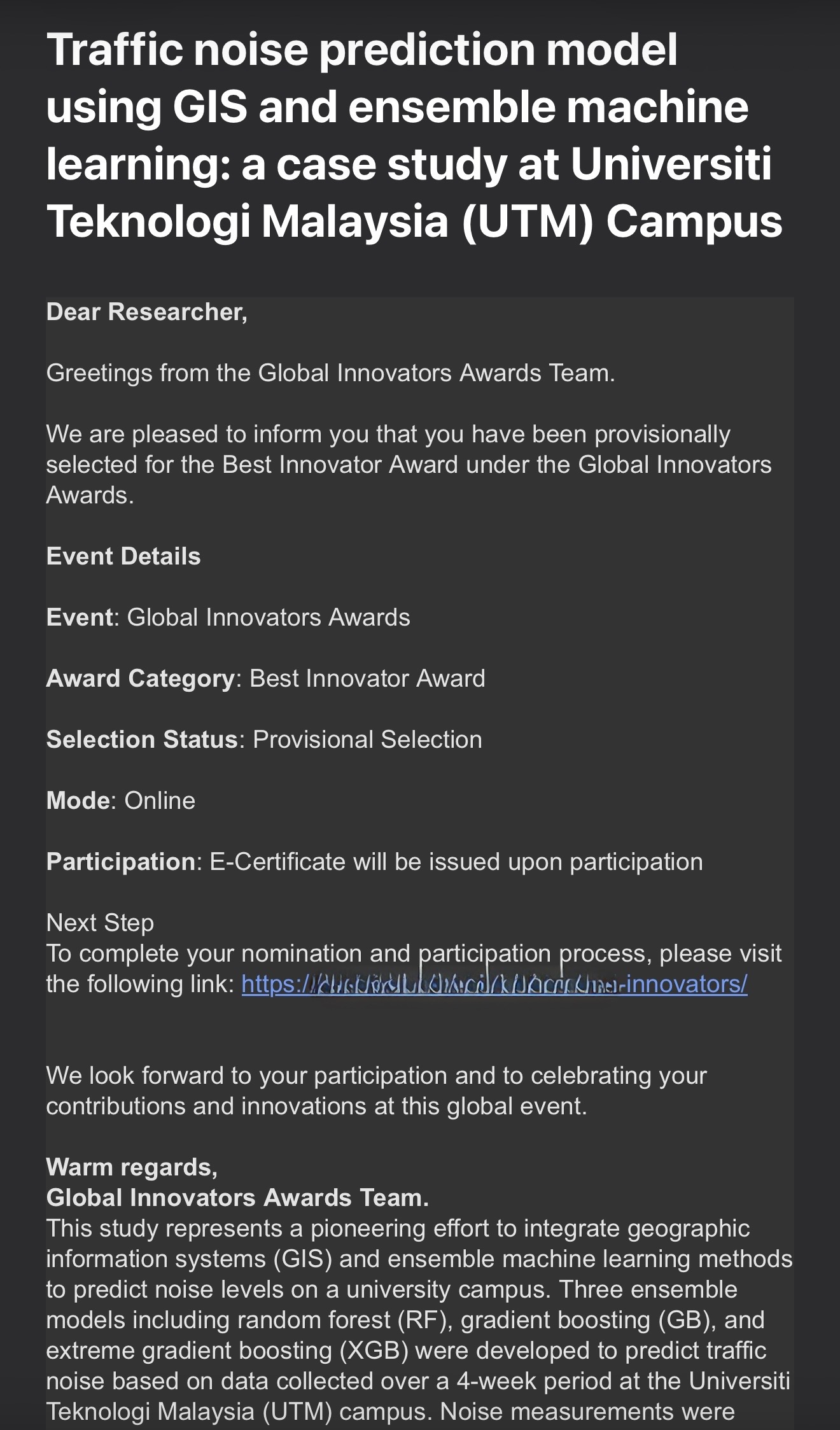
Received an interesting email today informing me that one of our research works, “Traffic Noise Prediction Model Using GIS and Ensemble Machine Learning: A Case Study at Universiti Teknologi Malaysia (UTM) Campus,” has been provisionally selected for the Best Innovator Award under the Global Innovators Awards.

The study explores how GIS and ensemble machine learning, particularly Random Forest, Gradient Boosting and XGBoost, can be used to predict traffic noise levels within a university campus.

To be honest, I wasn’t expecting this. We simply conducted the research, published our findings, and moved on to the next research problem. 😄

Of course, this is still a provisional selection, not a confirmed award. And I still need to understand more about the organiser and its selection process.

Nevertheless, it is interesting to see our research getting noticed beyond the usual academic publications and citations.

Well, at least our work on GIS and machine learning is making some noise. Literally! 😂

Still plenty to learn, explore and improve. Hopefully, our research will continue to contribute something useful, even in small ways.

#GIS #GeoAI #MachineLearning #ResearchRecognition #TrafficNoise

A SMALL MILESTONE IN MY RESEARCH JOURNEY

Screenshot

A SMALL MILESTONE IN MY RESEARCH JOURNEY

Honestly, I am not entirely sure how they calculate these rankings.

But one thing I do appreciate is that the ranking is based on the specific research areas I have been working on, rather than broad disciplines such as Civil Engineering or Engineering in general.

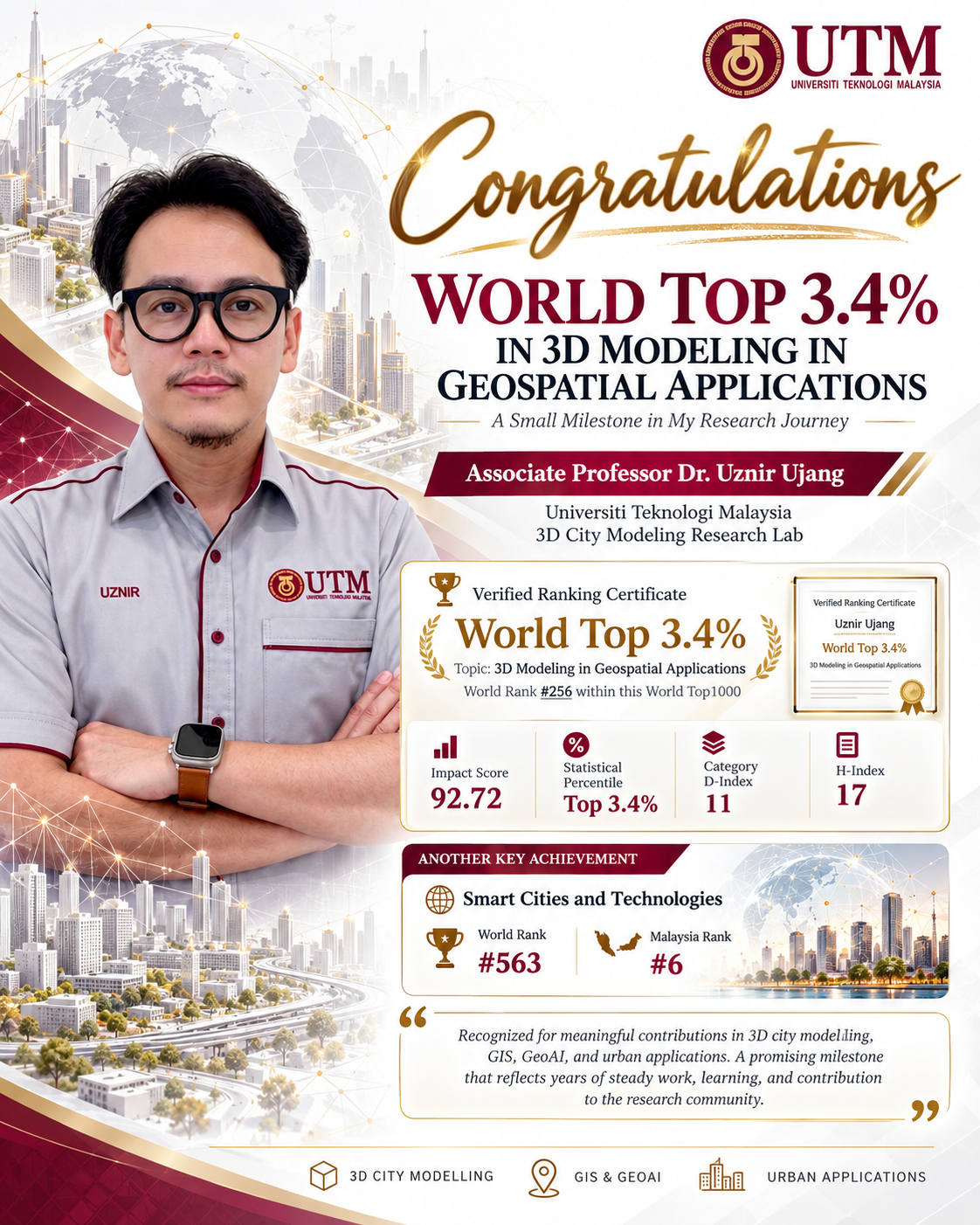
Apparently, my research is ranked in the World Top 3.4% for 3D Modeling in Geospatial Applications, with a world ranking of #256.

Another area, Smart Cities and Technologies, places my research at World #563 and Malaysia #6.

At least these are the fields I have been spending years working on, particularly 3D city modelling, GIS, GeoAI and urban applications. So, it is quite interesting to see how my publications are positioned within these specific research areas.

Well, not too bad, I guess.

At least there is a little contribution to the academic world after all these years. Better than nothing, right?

Still a long way to go, and plenty more to learn.

Hopefully, whatever I have contributed so far will be useful to the research community, my students and future researchers.

#3DCityModelling #GeospatialScience #GeoAI #SmartCities #Research

WHEN YOUR STUDENT MOVES FASTER THAN YOU EXPECT

WHEN YOUR STUDENT MOVES FASTER THAN YOU EXPECT 😅

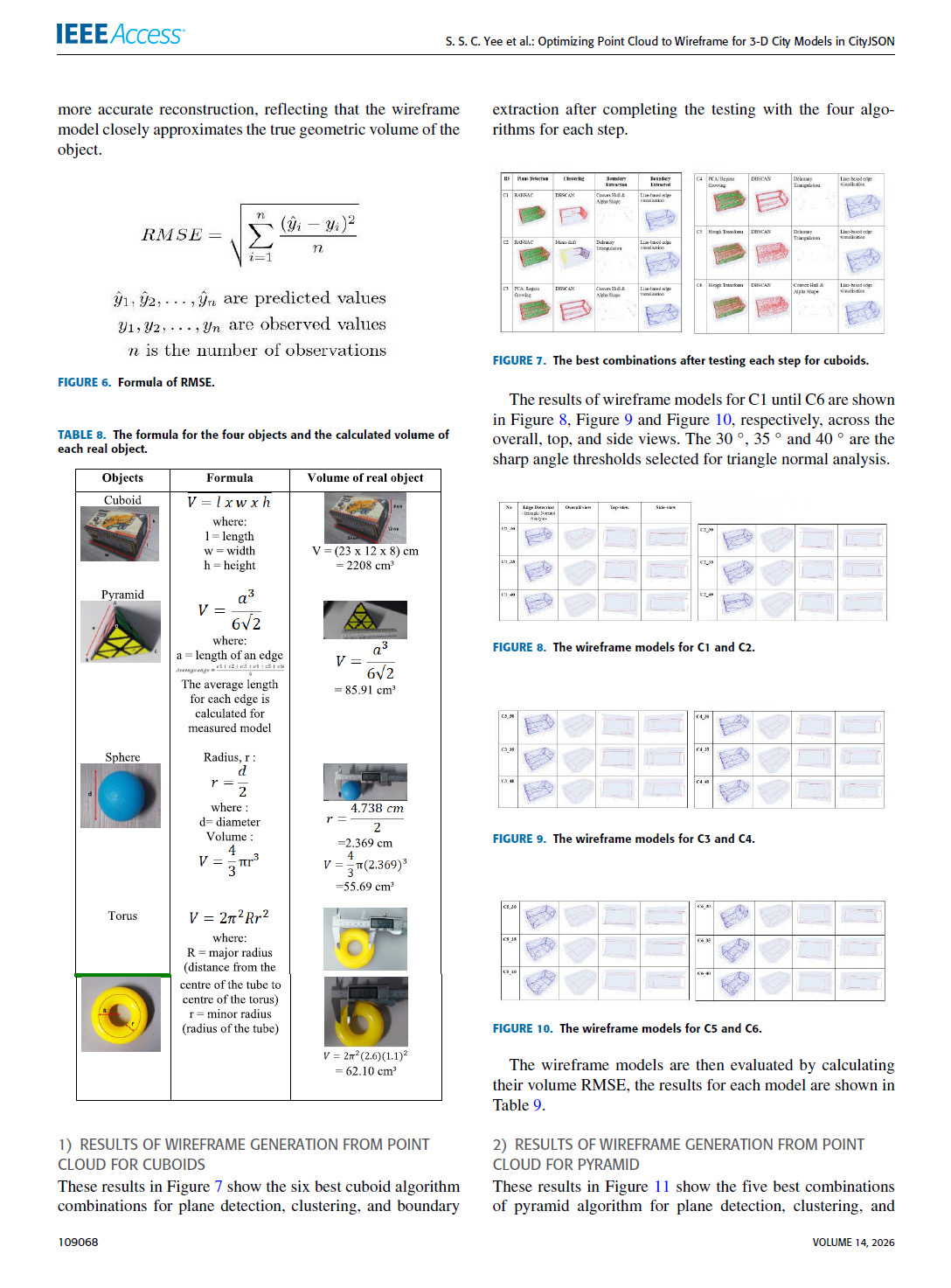
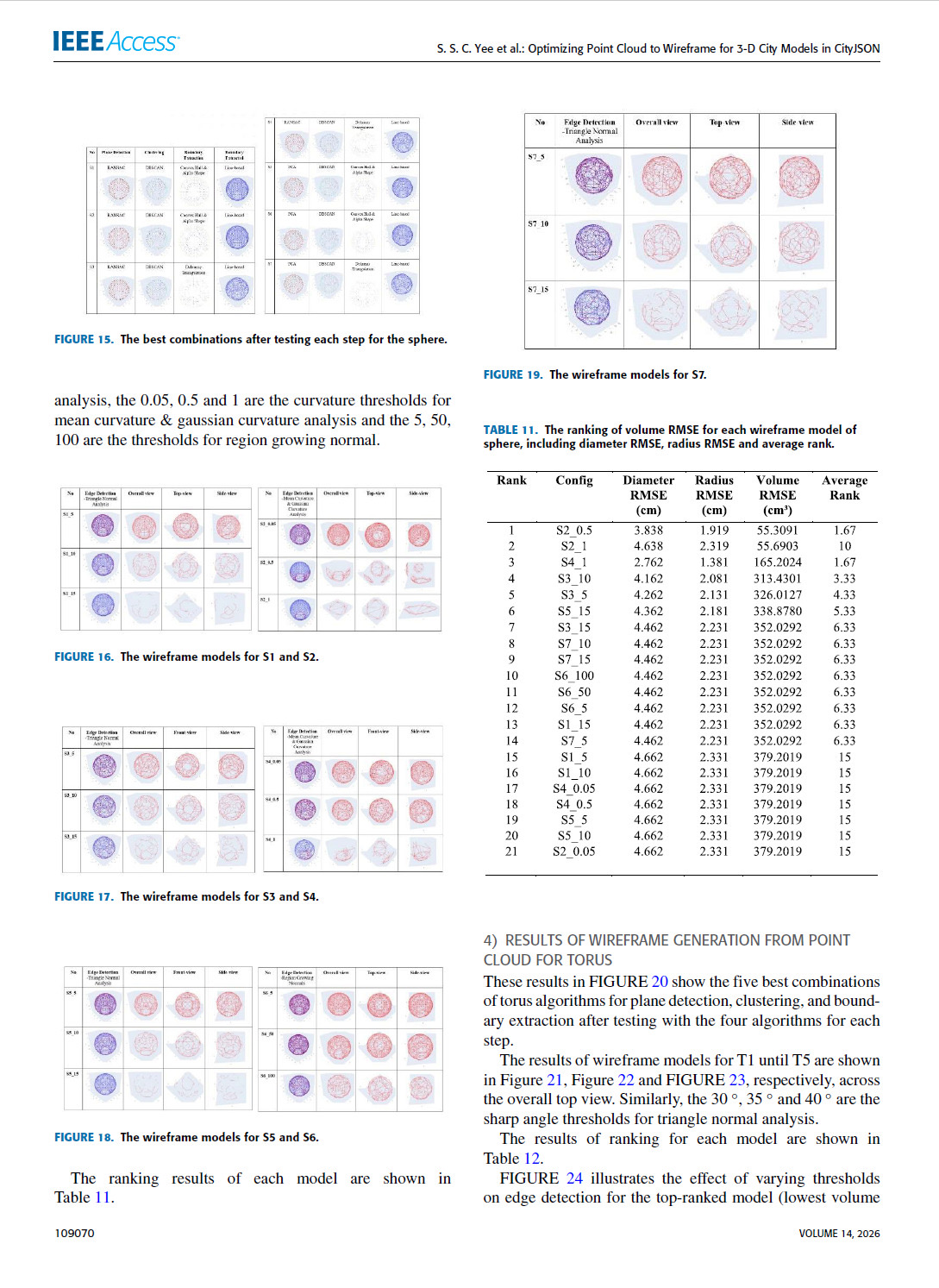
I have to admit, I am quite proud of my fast-track PhD student, Samantha Soo Chin Yee.

She is only in her second semester, but her research has already produced a publishable result in IEEE Access, a Web of Science Q2 journal.

Sometimes she works so fast that I find myself thinking, “Why are you moving this quickly? Slow down a little.” 😅

But that is Samantha. Very hardworking, consistent, and always eager to move to the next stage.

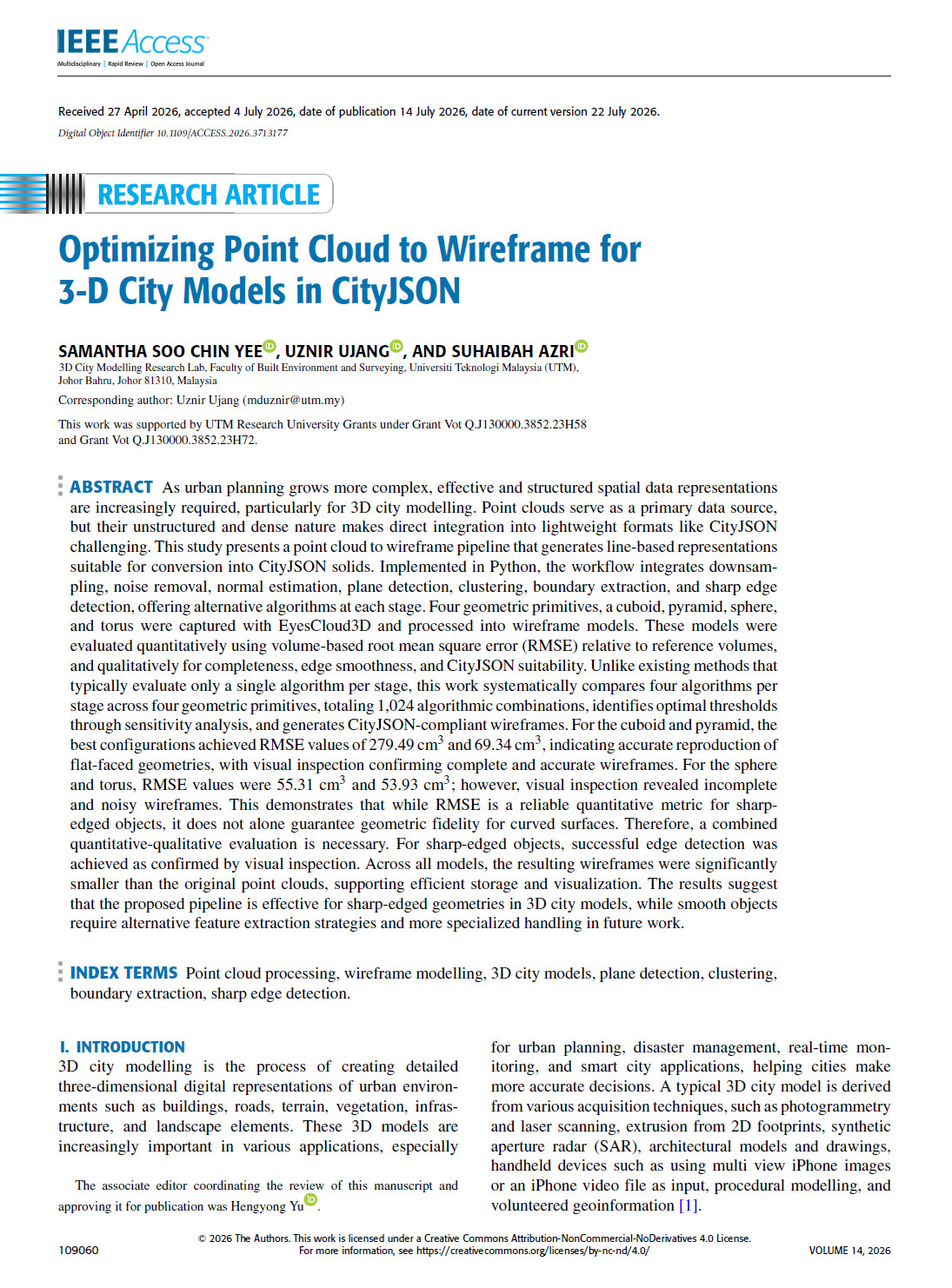
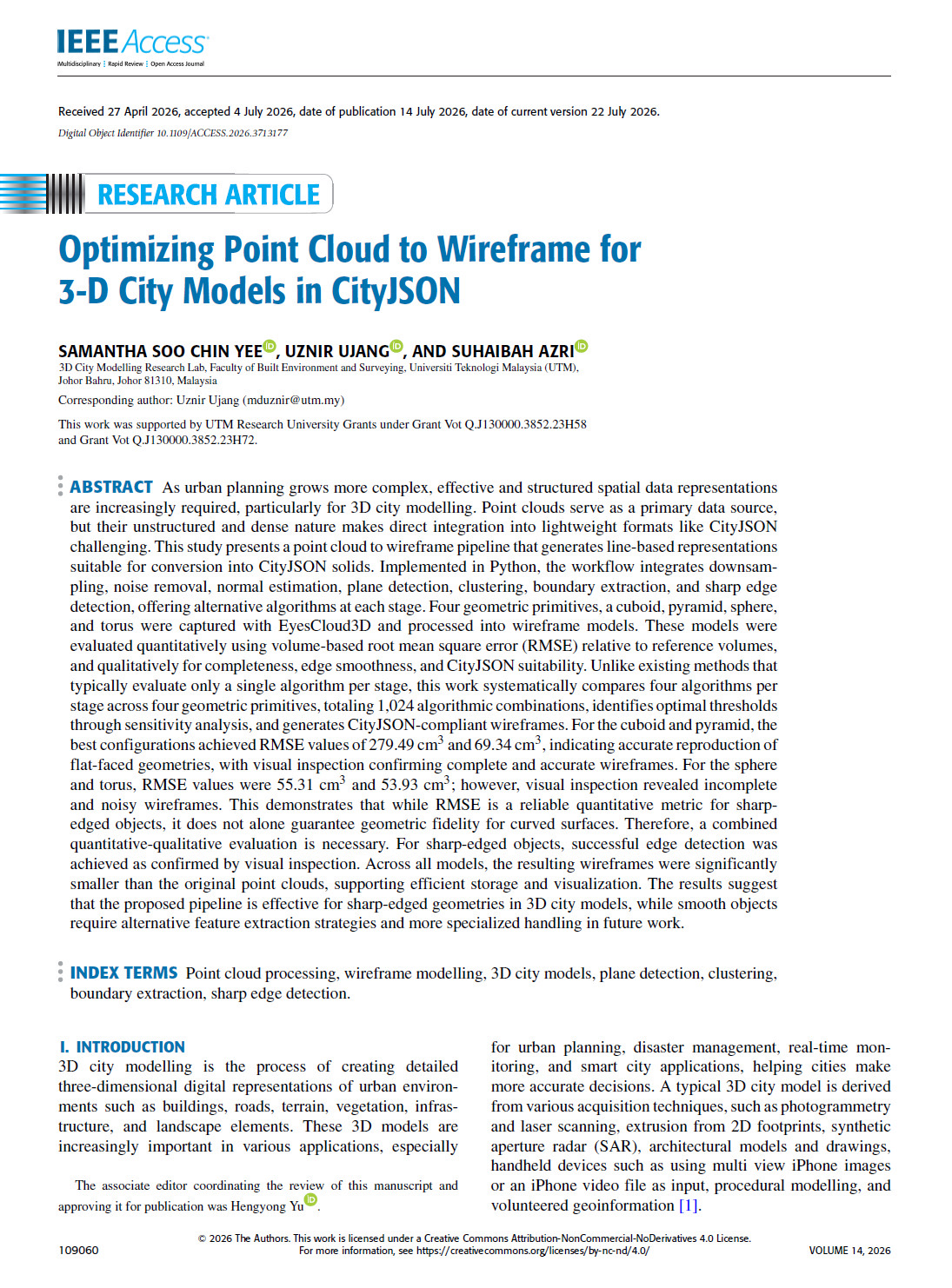
Our paper, “Optimizing Point Cloud to Wireframe for 3-D City Models in CityJSON,” focuses on transforming unstructured point cloud data into lightweight and structured wireframe models that can be used within CityJSON.

The study systematically evaluates different combinations of algorithms for plane detection, clustering, boundary extraction, and edge detection. Instead of simply testing one method, we compared a large number of algorithmic combinations to understand which approaches work best for different geometries. The results also show an important point. Methods that work well for sharp-edged objects may not necessarily perform equally well for curved geometries.

For someone who is still very early in her PhD journey, getting this level of work published is a very encouraging start.

Congratulations, Samantha. Keep the momentum going.

Again, she’s a fast track PhD. But maybe… slow down just a little bit. Your supervisor needs time to catch up too. 😂

📖 Read the paper here:

https://doi.org/10.1109/ACCESS.2026.3713177

#IEEEAccess #PhDJourney #3DCityModelling #CityJSON #GeospatialResearch

APPARENTLY, MY POSTGRADUATE STUDENTS HAVE HIDDEN TALENTS

Screenshot

APPARENTLY, MY POSTGRADUATE STUDENTS HAVE HIDDEN TALENTS 😂❤️

A little update from our lab.

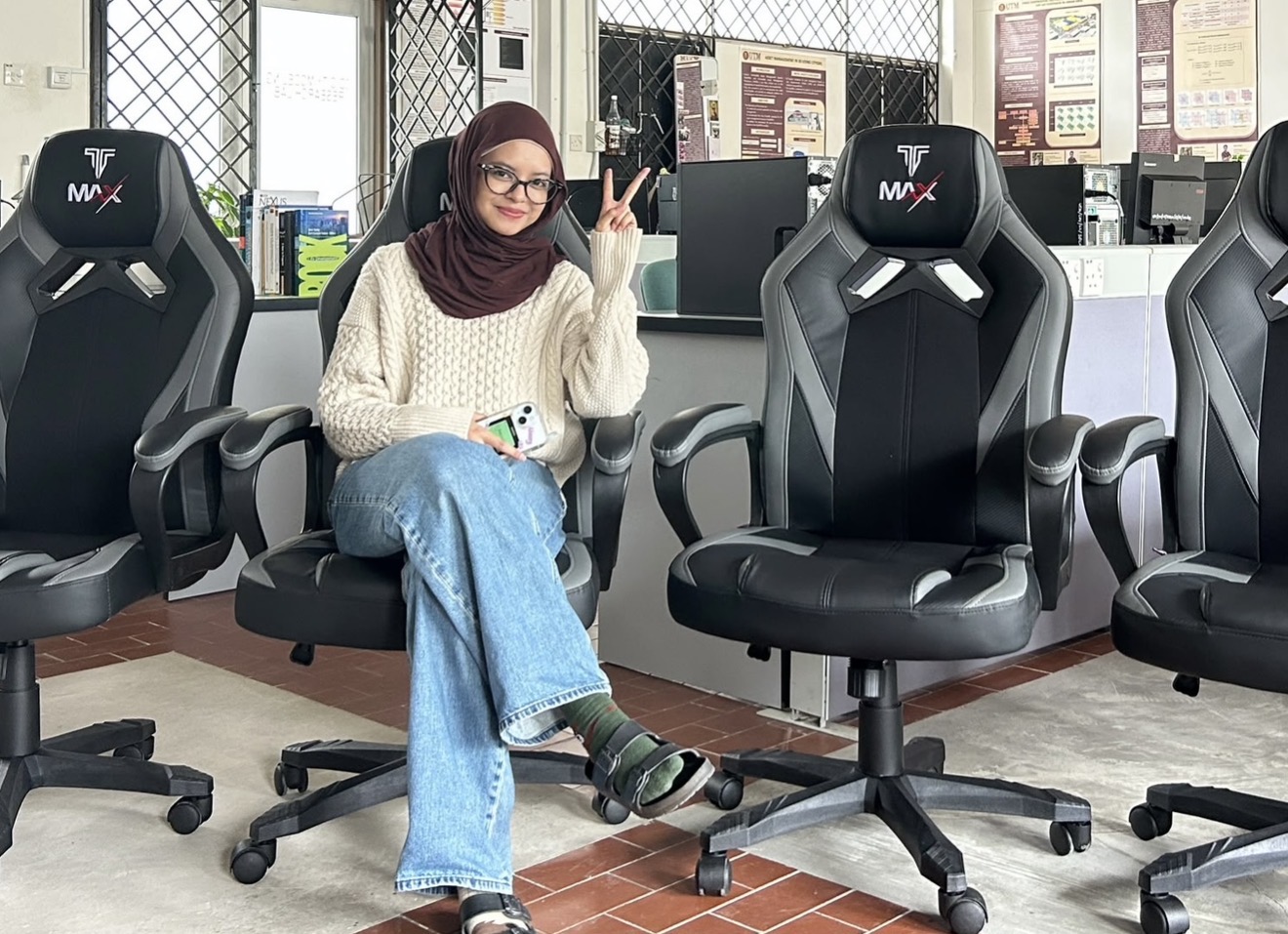
This time, we were fortunate enough to add four more gaming chairs for the students.

I thought we would assemble them together later when everyone was free.

But somehow, Melati had a different plan. 😂

Without saying much, she quietly sat there and started assembling the chairs by herself. The funny part was, we did not even have all the proper tools ready.

By the time I realised what was happening, three chairs were already done. 😅

For the fourth chair, Wiliyan had just arrived, so at least he managed to join in and help.

I honestly did not expect Melati to have this hidden talent.

I thought sewing was already her speciality. Apparently, assembling gaming chairs can now be added to the list too. 😂

Looks like my postgraduate students are quite talented after all. Research is one thing, but apparently there are many other skills being developed along the PhD and Master journey.

Slowly, our little lab is becoming more comfortable.

Four chairs before, two more after that, and now another four.

One step at a time. ❤️

And perhaps next time we buy furniture, I already know who to call. 😂

#PostgraduateLife #ResearchLife #LabLife #AcademicLife

WHEN YOUR RESEARCH INTERESTS FIND A NEW HOME

WHEN YOUR RESEARCH INTERESTS FIND A NEW HOME

Another small milestone in the academic journey.

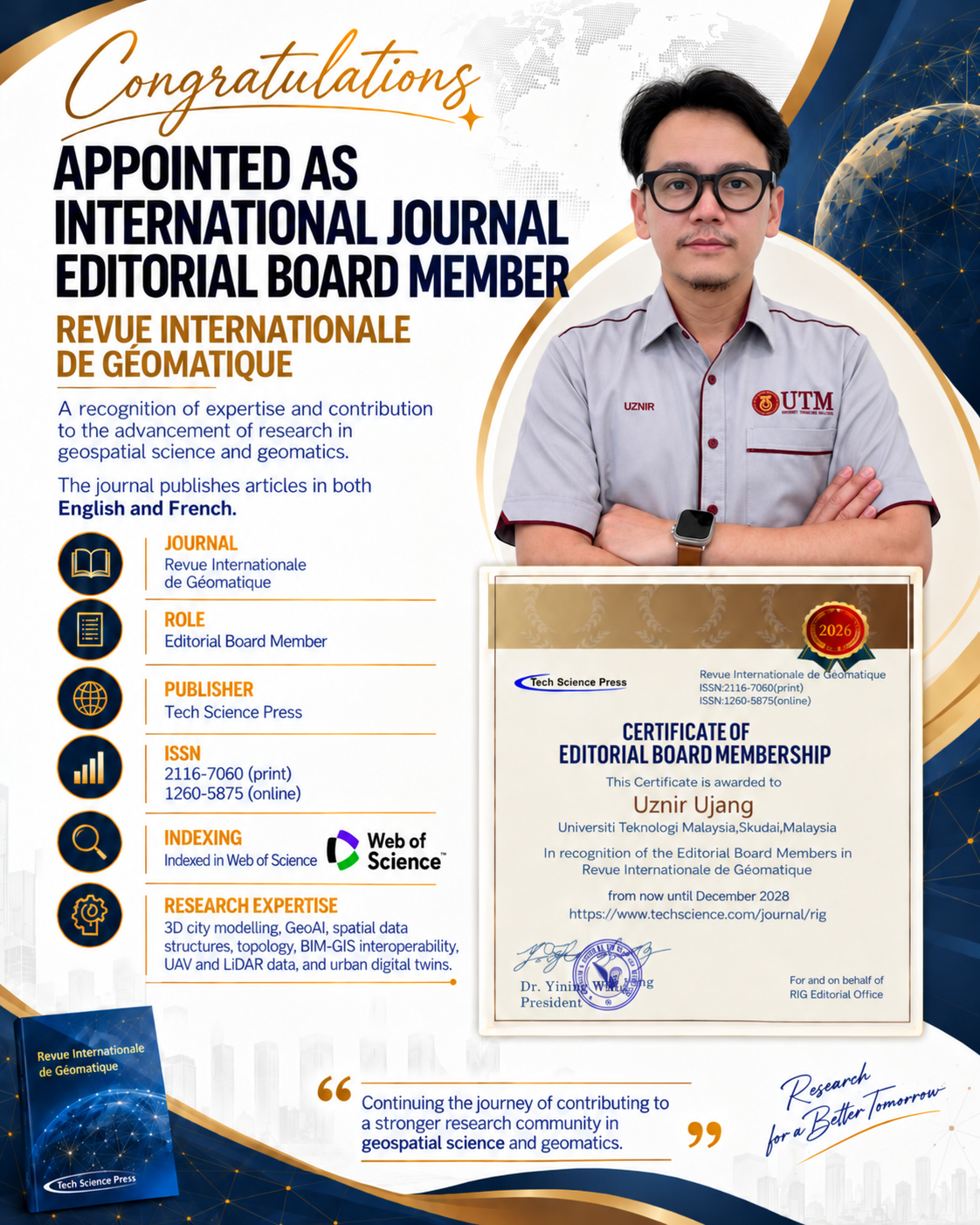
I have been appointed as an Editorial Board Member for Revue Internationale de Géomatique, an international journal published by Tech Science Press and indexed in Web of Science.

What makes this appointment meaningful to me is how closely the journal aligns with the areas I have been working on for years, including 3D city modelling, GeoAI, spatial data structures, topology, BIM-GIS interoperability, UAV and LiDAR data, and urban digital twins.

The journal also publishes articles in both English and French, giving it a wider international reach within the geomatics and geospatial research community.

Editorial work is another side of academia that often happens quietly. It involves reading, evaluating, discussing, and helping ensure that good research is communicated clearly and contributes something meaningful to the field.

I see this appointment less as a title and more as another responsibility to contribute back to the research community that has shaped much of my own academic journey.

Thank you to the editorial team for the trust and invitation. Looking forward to supporting the journal and learning from the research that comes through it.

#EditorialBoard #GeospatialScience #Geomatics #AcademicService #ResearchCommunity

SOMETIMES, THE RESEARCH JOURNEY HAS ITS OWN TIMELINE

SOMETIMES, THE RESEARCH JOURNEY HAS ITS OWN TIMELINE

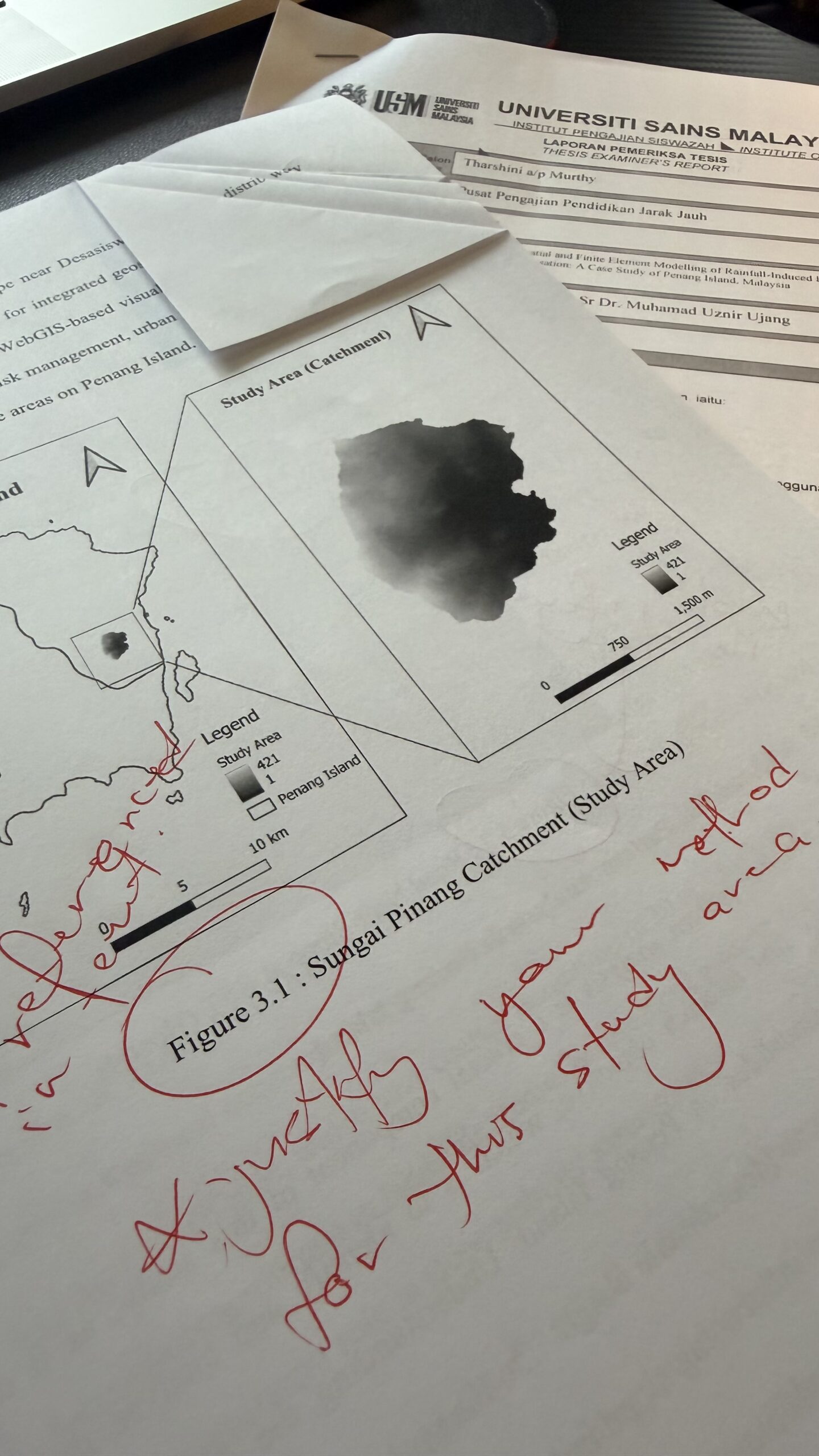
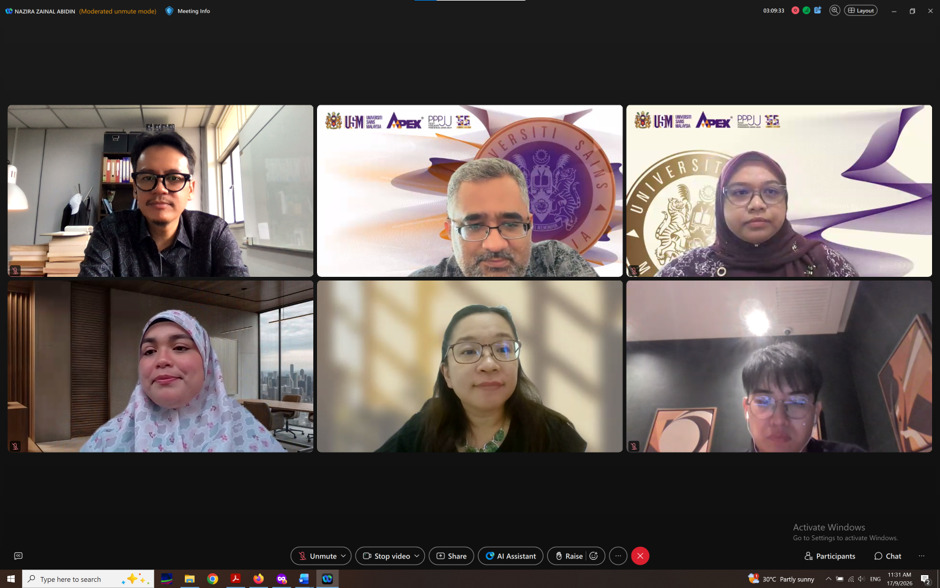
I actually read this thesis much earlier this year in preparation for my role as the External Examiner for a Master candidate at Universiti Sains Malaysia (USM).

The viva date was already fixed earlier this year. Everything seemed ready.

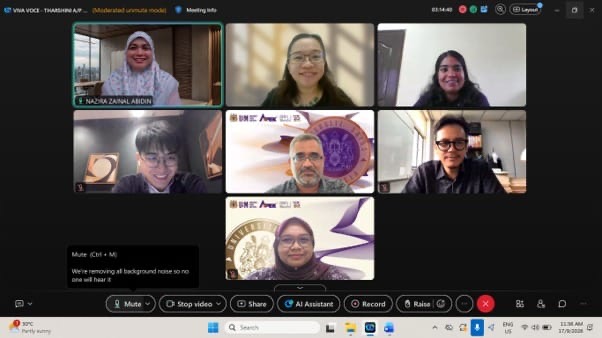
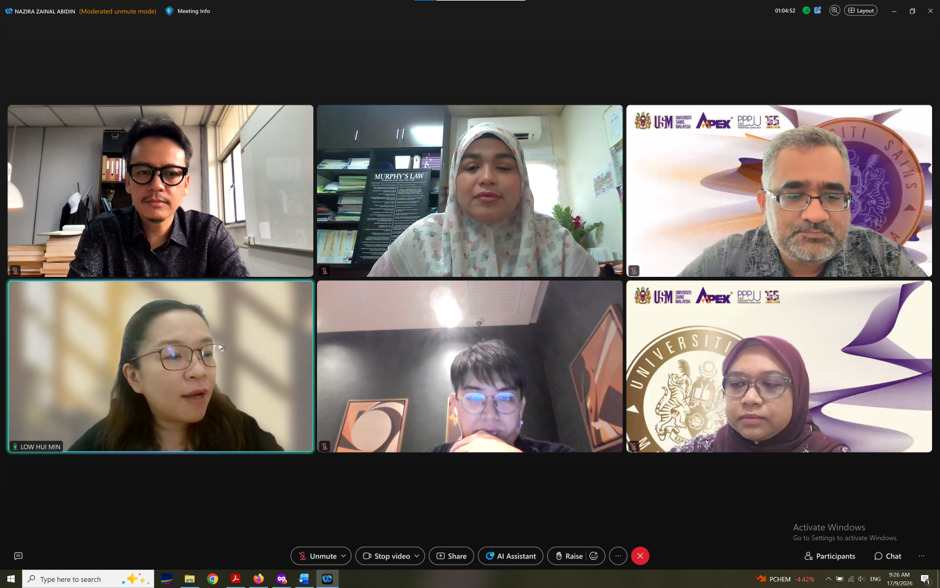
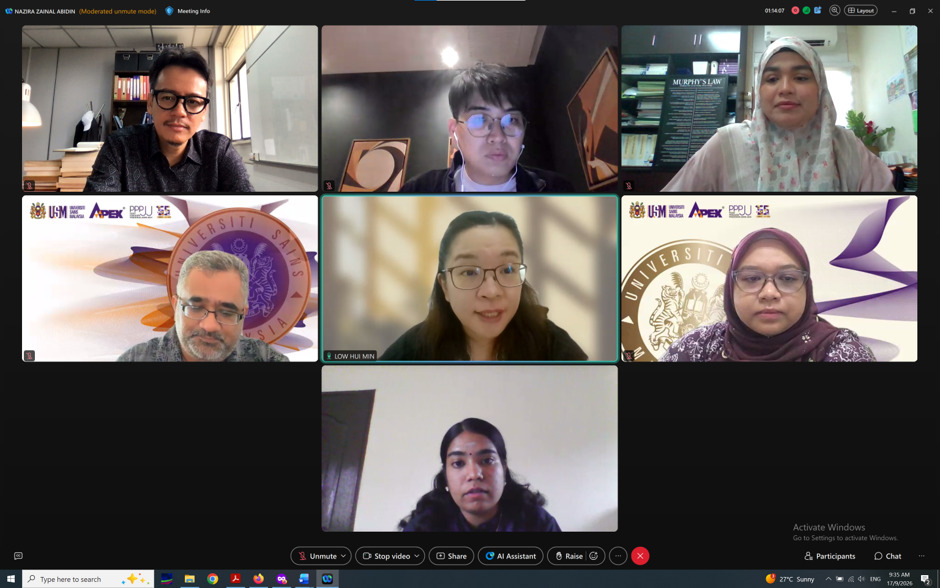
Then, about a week before the viva, the student, Tharshini, came down with dengue and the viva voce examination had to be postponed.

We tried to arrange another date, but somehow it took longer than expected. We waited, and waited again. At one point, I started wondering what had happened.

Later, when I checked with USM, I learned that her father had recently passed away.

At that point, the delay became completely understandable. Research is important, but sometimes life gives us something much bigger to deal with. Emotionally, she probably needed time to recover before facing an important academic examination.

So we waited again.

Until today.

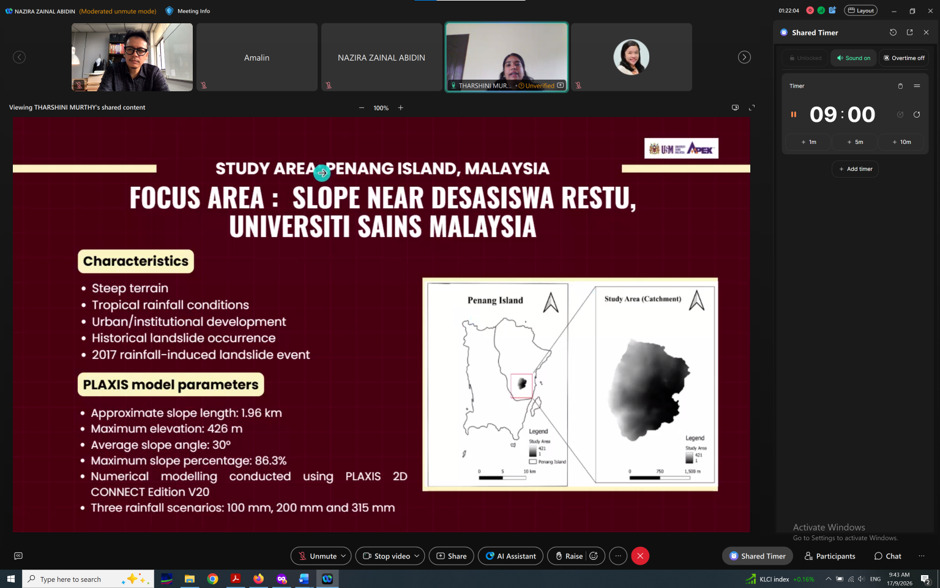
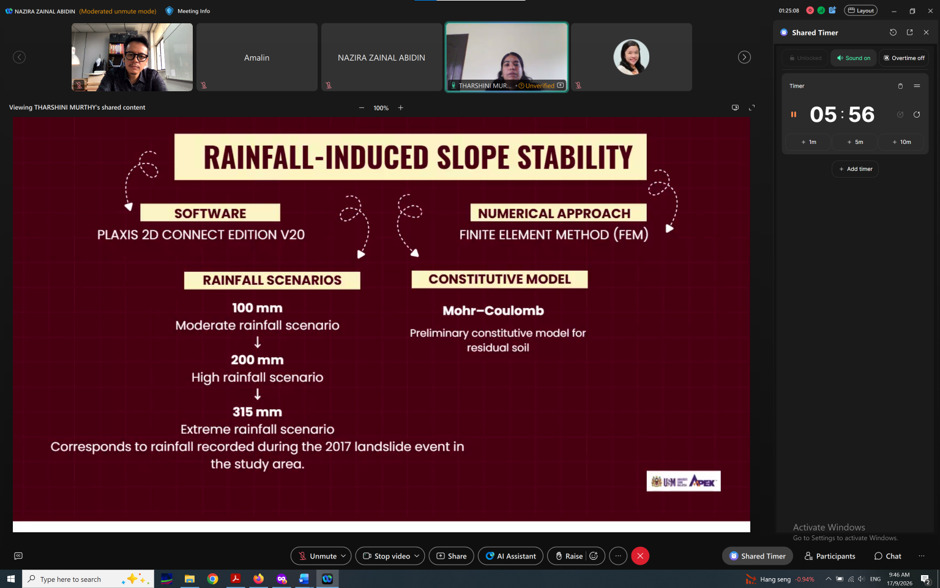
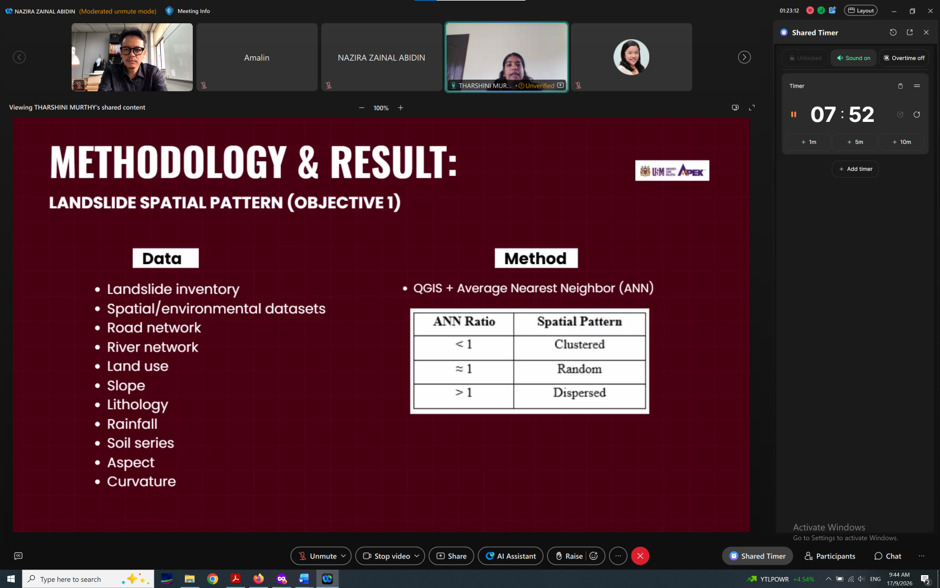
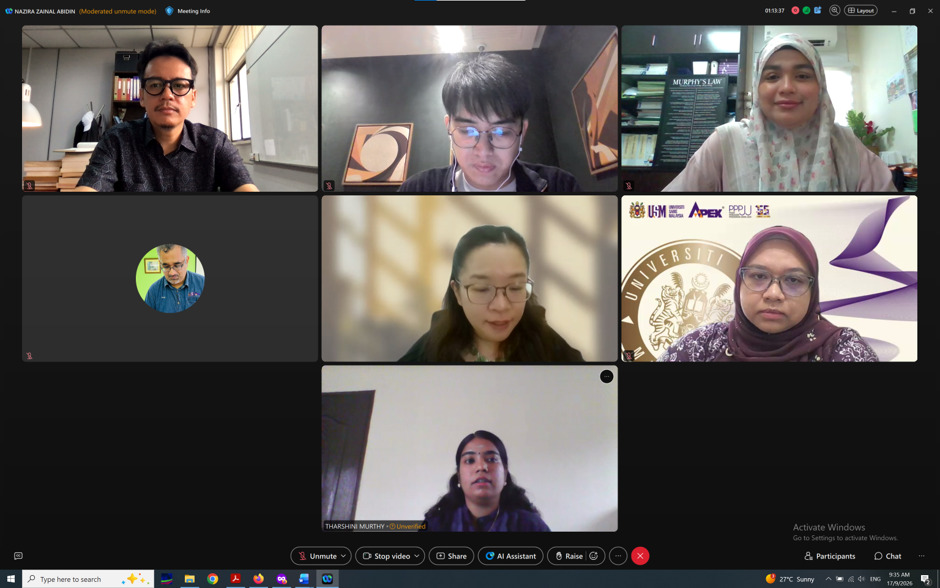
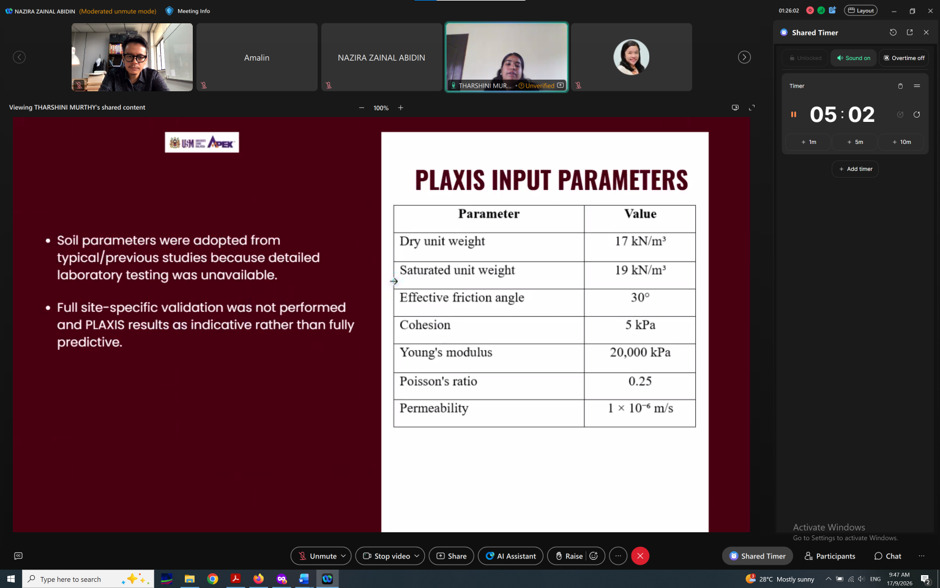
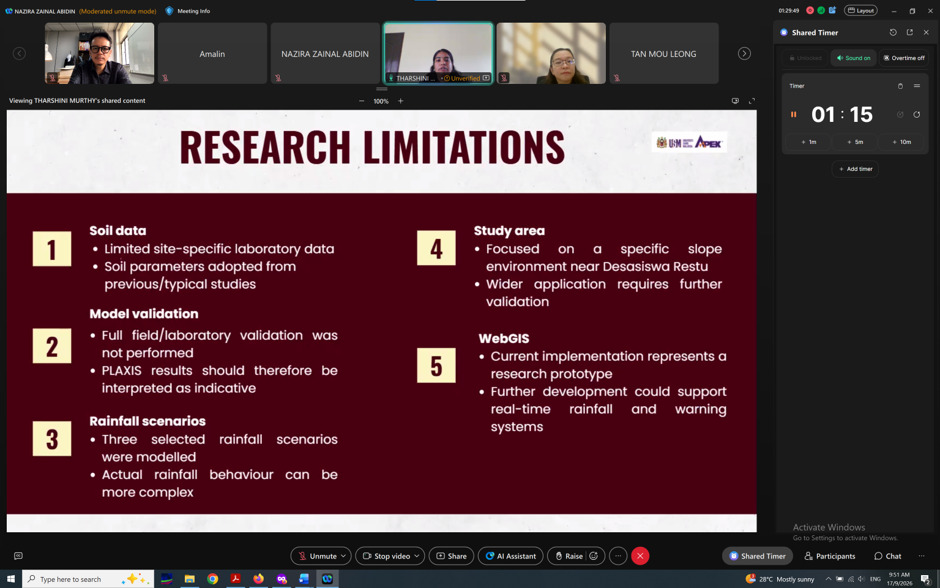
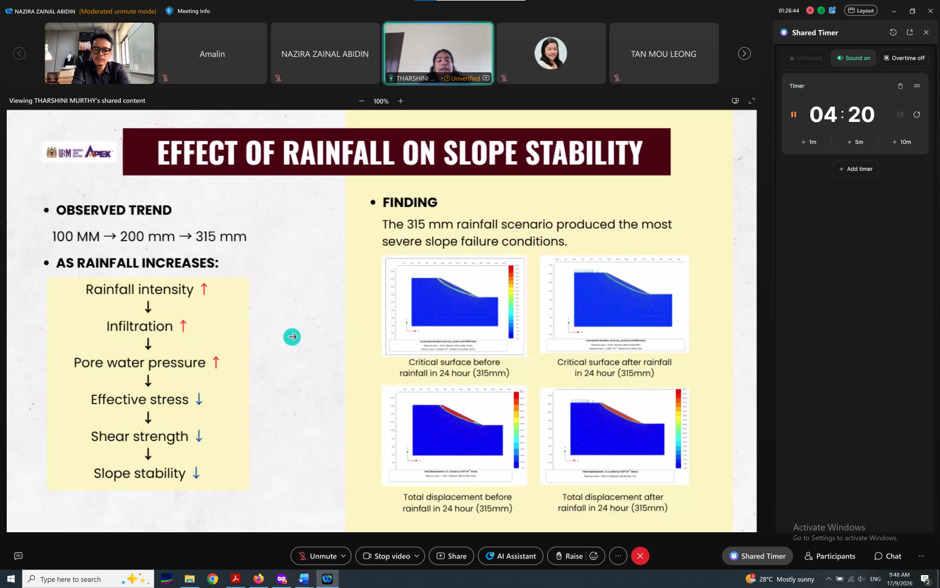
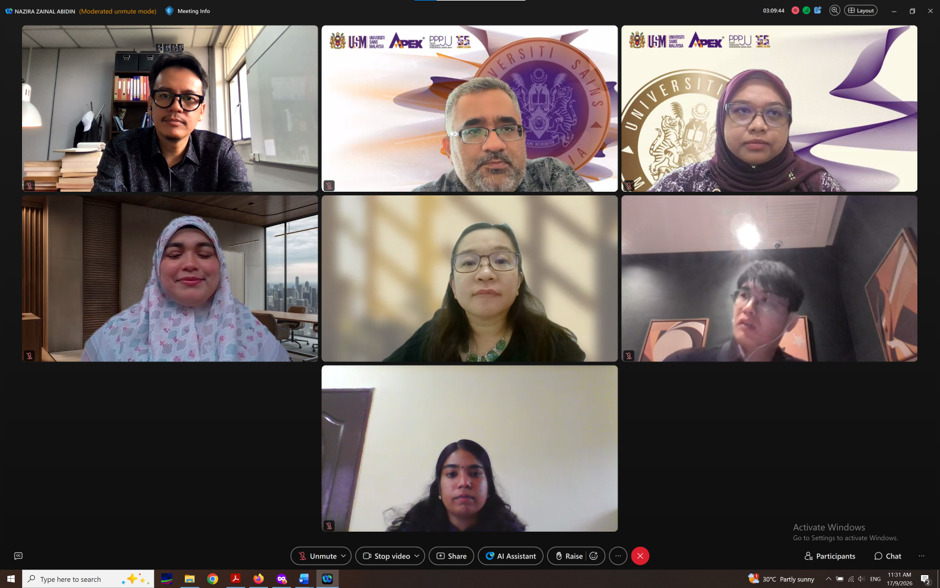
Finally, Tharshini completed her viva for the thesis titled “Integrated Geospatial and Finite Element Modelling of Rainfall Induced Landslides with WebGIS-Based Risk Visualisation: A Case Study of Penang Island, Malaysia”. 

The research integrates geospatial analysis, finite element modelling and WebGIS to better understand rainfall-induced landslide risks and communicate those risks through an interactive spatial platform.

And the good news, she passed with minor corrections. 🎓

Congratulations Tharshini. Considering everything that happened along the way, completing this viva is an achievement that carries a little more meaning.

This experience also reminded me of something.

We can plan our research schedule, submission, viva, graduation and everything else. But we never really know what life will bring tomorrow.

So, to those who are still studying, especially postgraduate students, try not to procrastinate too much. When you have the opportunity to move your research forward, do it.

Finish what you can, while you can.

#VivaVoce #PostgraduateJourney #GeospatialResearch #LandslideRisk #AcademicLife

WHEN ANOTHER UNIVERSITY ASKS YOU TO BE THEIR ACADEMIC PROGRAM REVIEW COMMITTEE

WHEN ANOTHER UNIVERSITY ASKS YOU TO BE THEIR ACADEMIC PROGRAM REVIEW COMMITTEE

Another small academic responsibility added to the list. 

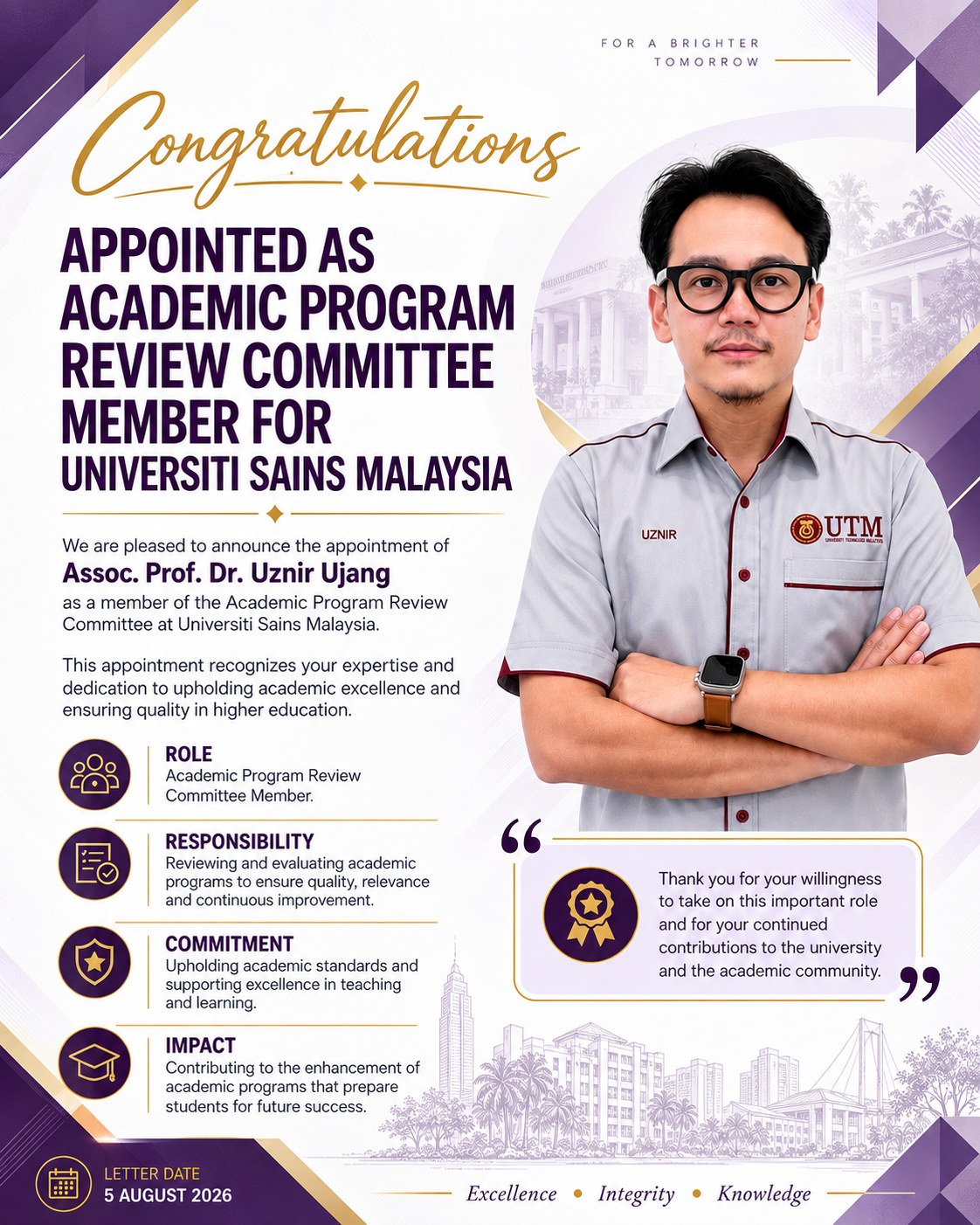
I have been appointed as a Member of the Academic Program Review Committee at Universiti Sains Malaysia (USM).

This role involves reviewing and evaluating academic programmes to ensure that the curriculum remains relevant, current, academically sound, and aligned with the needs of students, industry, and the wider professional community.

For me, appointments like this are always interesting because they allow us to look beyond our own university. Different institutions have different strengths, approaches, and experiences, and there is always something to learn from one another.

Academic programme review is also an important responsibility. What we recommend today will eventually influence what students learn, the competencies they develop, and how prepared they are when they enter the professional world.

Thank you to Universiti Sains Malaysia for the invitation and confidence. I will do my best to contribute whatever experience and perspective I can to the review process.

Sometimes academic service happens quietly behind the scenes, but its impact can continue for many cohorts of students to come.

#AcademicService #ProgramReview #HigherEducation #AcademicQuality #USM

WHEN COLLABORATION COMES FULL CIRCLE

WHEN COLLABORATION COMES FULL CIRCLE

Another invitation landed in the inbox, this time from Türkiye. 

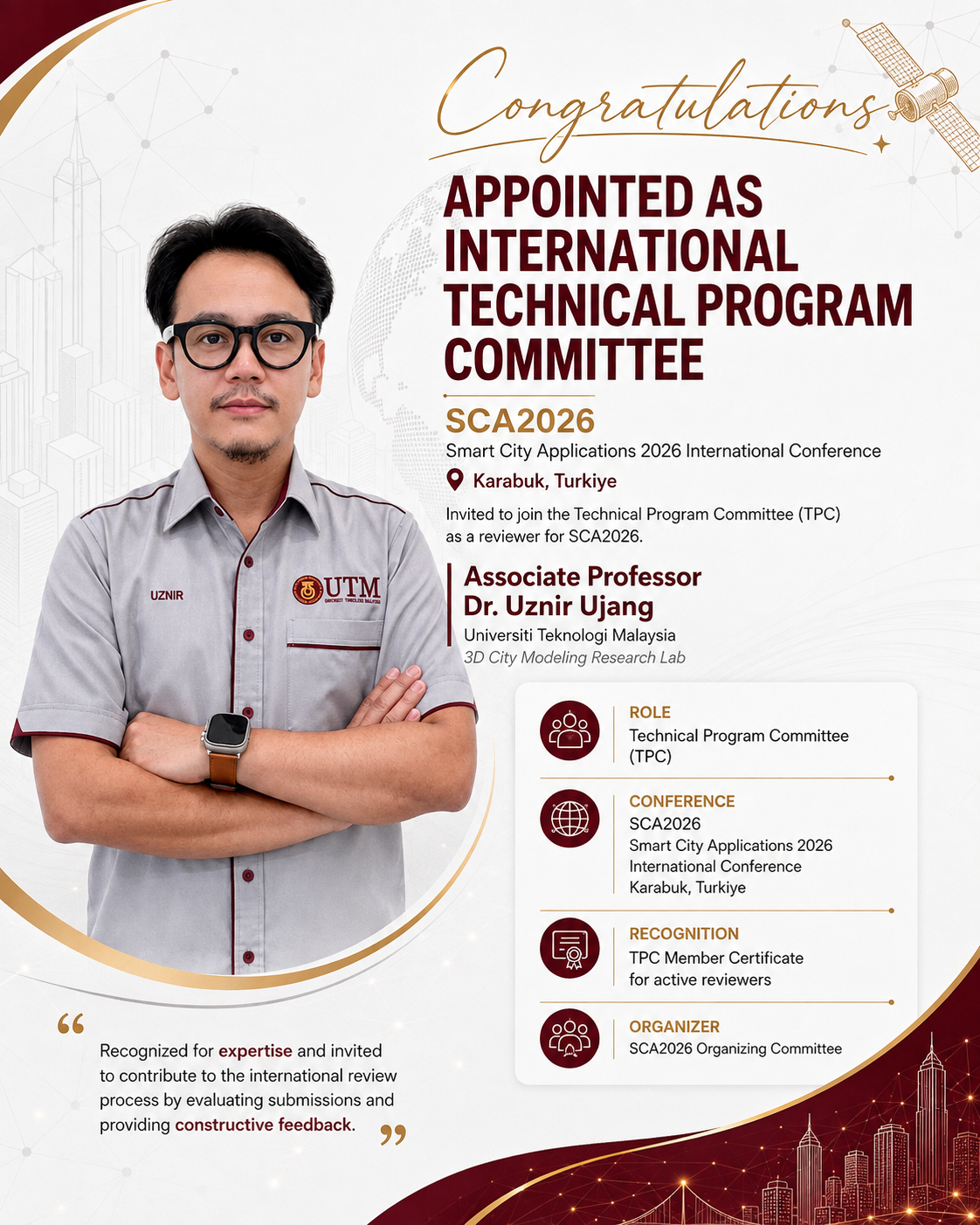
I have been appointed as a Technical Program Committee (TPC) Reviewer for the Smart City for Applications 2026 International Conference (SCA 2026), which will be held inTürkiye, from 13 to 16 October 2026.

This one feels a little closer to home because we have previously worked with colleagues from Karabuk University through our research and publications. Nice to see that collaboration now extending into academic service as well.

As a TPC reviewer, the responsibility is to evaluate submitted papers, provide constructive feedback, and help the committee select research that contributes meaningfully to the conference. Reviewing may happen quietly behind the scenes, but it remains an important part of maintaining academic quality.

With smart cities increasingly bringing together AI, geospatial technologies, digital twins, urban analytics and intelligent systems, I am looking forward to seeing what researchers are working on for SCA 2026.

Thank you to the organising committee for the invitation and confidence. Another small opportunity to contribute back to the research community.

#SCA2026 #SmartCities #AcademicService #GeospatialResearch #InternationalCollaboration