Definition of Language
- A form of communication (spoken, written or signed) that is based on a system of symbols.
- Consists of words used by a community (vocabulary) and the rules for varying and combining them (grammar and syntax)
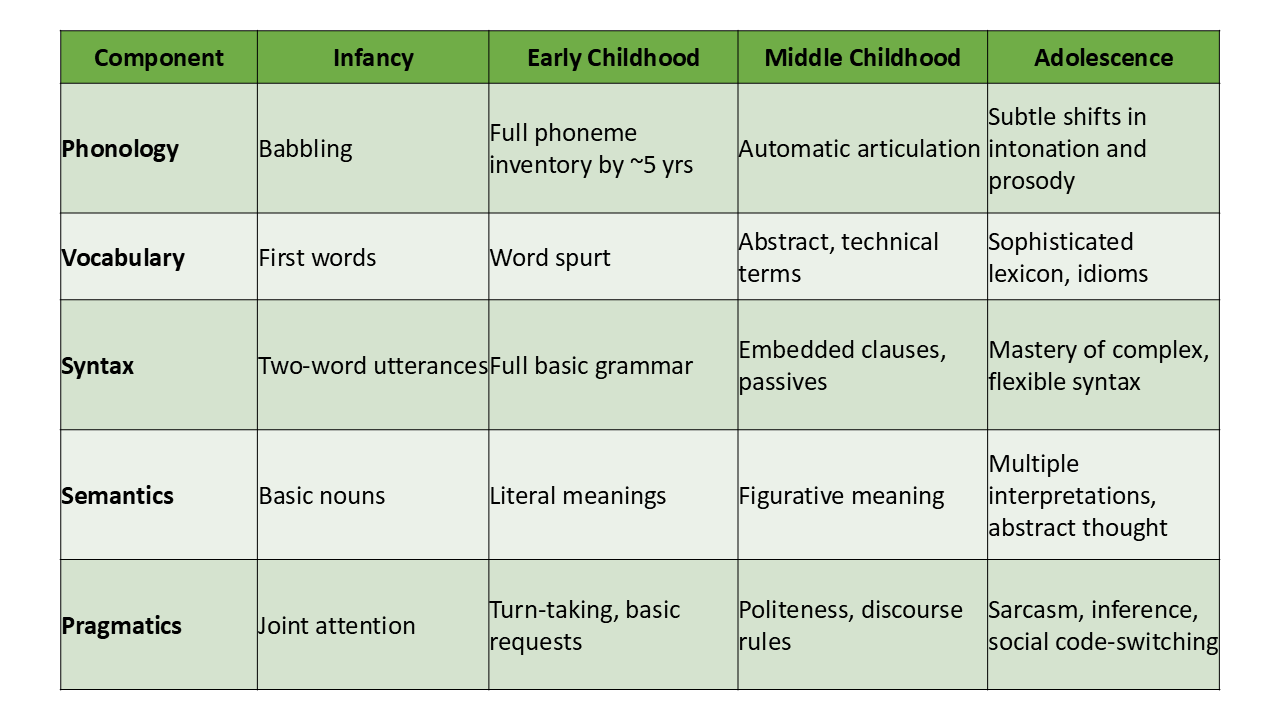
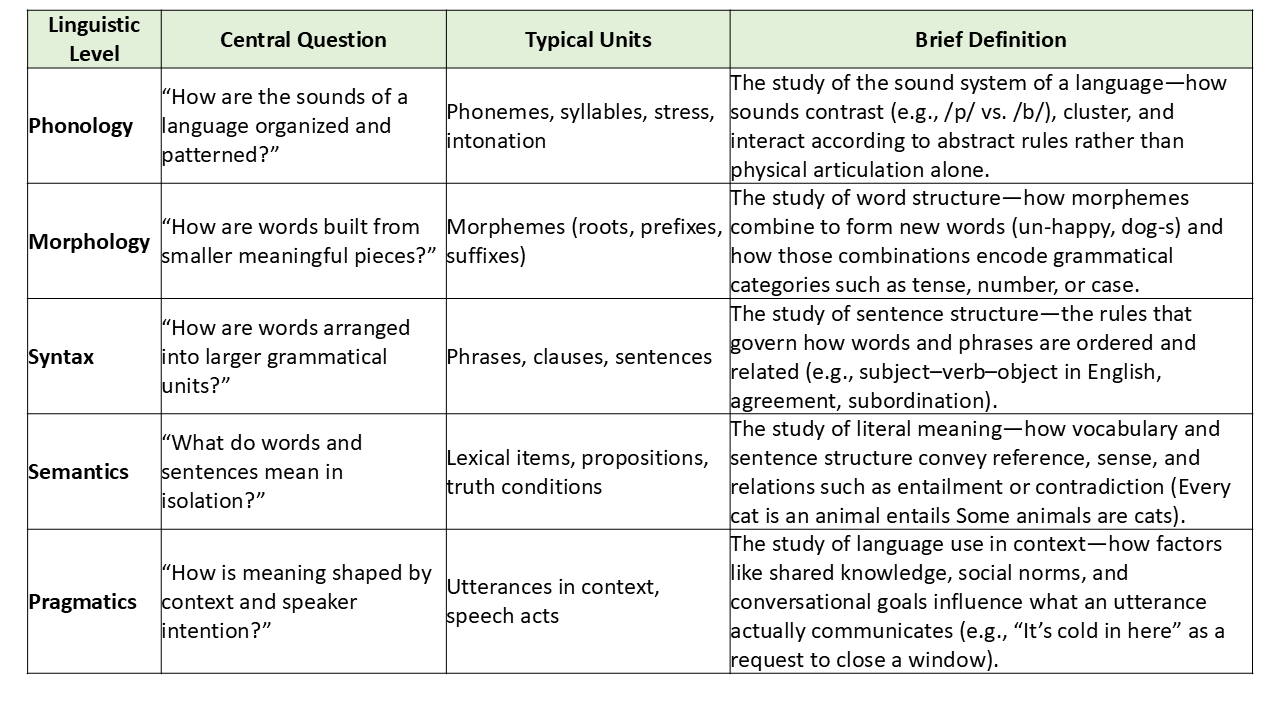
- Involves five (5) systems of rules: phonology, morphology, syntax, semantics and pragmatics.
Theories related to Language Development (Basic)
1. Nativist Theory (Noam Chomsky)
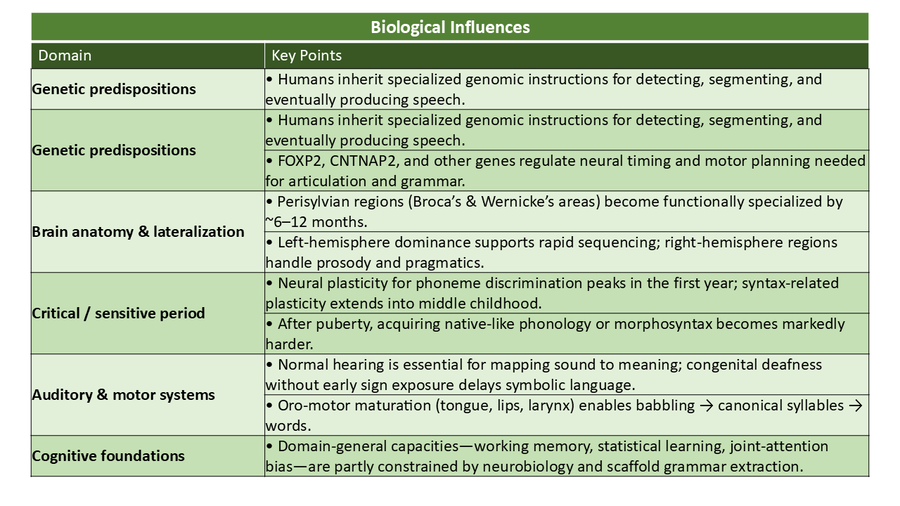
The Nativist perspective argues that humans are biologically programmed to gain knowledge. Chomsky famously challenged the idea that language is learned through mere imitation, noting that children often produce sentences they have never heard before.
Core Concepts:
- Language Acquisition Device (LAD): An innate biological “module” or mental processor that allows children to understand the rules of whatever language they are exposed to.
- Universal Grammar (UG): The theory that all human languages share a common underlying structural basis. Children aren’t learning grammar from scratch; they are “plugging in” the specific rules of their native tongue to a pre-existing template.
- The Critical Period: Nativists argue there is a specific biological window (usually ending around puberty) during which language must be acquired for a person to reach full fluency.
2. Interactionist Theory
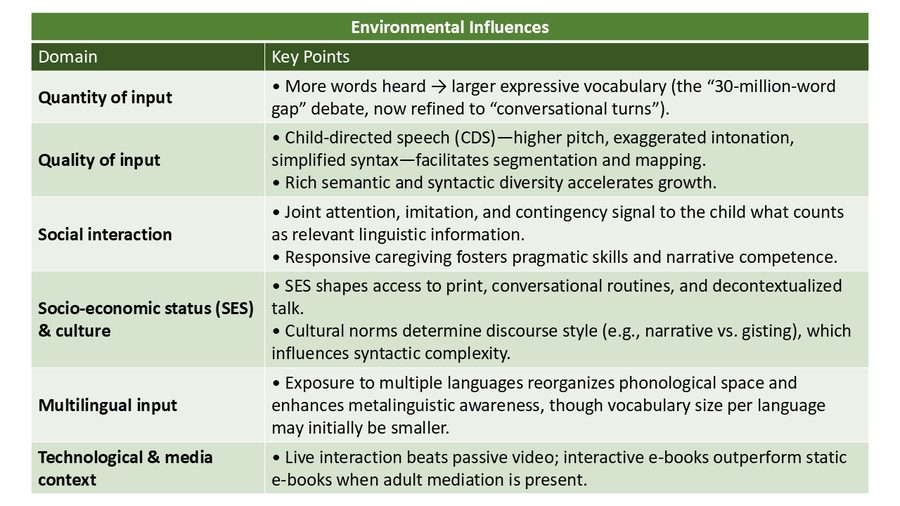
Interactionism serves as a bridge between biological and behavioral theories. It suggests that while biological preparation is important, language only develops through meaningful social interaction with others.
Core Concepts:
- Language Acquisition Support System (LASS): Proposed by Jerome Bruner as a counterpoint to the Language Acquisition Device (LAD). It emphasizes the importance of a child’s social network (parents, teachers, peers) in providing the necessary framework for learning.
- Social Context: Children learn language because they have a powerful desire to communicate and socialize. The environment provides the “input” that triggers and shapes linguistic growth.
- Zone of Proximal Development (ZPD): Often associated with Lev Vygotsky, this concept suggests that children learn best when interacting with a “More Knowledgeable Other” (MKO) who provides scaffolding as temporary support that is removed as the child becomes more proficient.