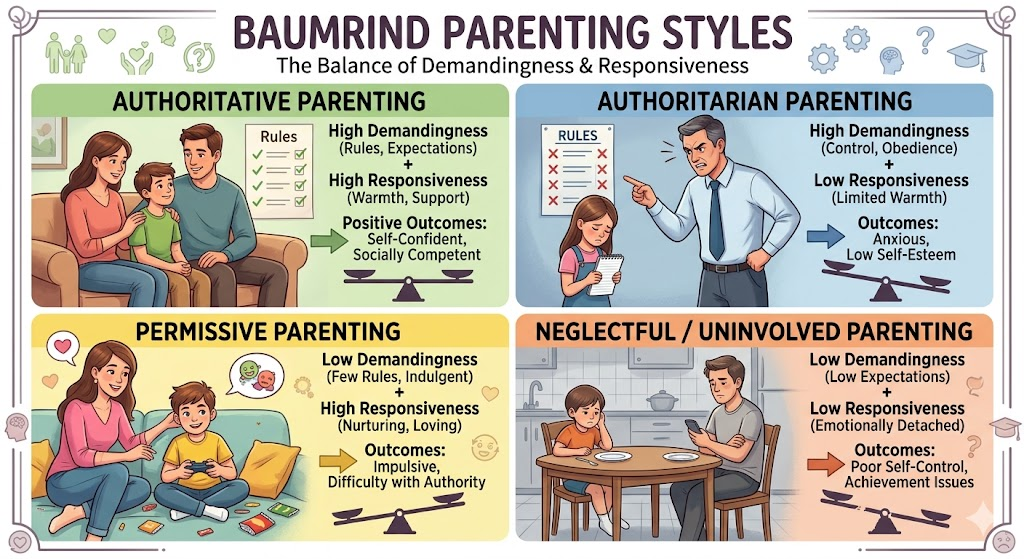
Diana Baumrind identified how the balance of responsiveness (warmth) and demandingness (control) shapes a child’s social competence. There are four types of parenting styles.
1. Authoritative Parenting (High Warmth, High Control)
Characteristics:
- Warm, responsive, and supportive
- Clear rules and expectations
- Encourages independence and reasoning
- Uses explanation rather than punishment
- Considered the most effective style in many cultural contexts.
Example:
A parent explains why homework is important and sets a routine, while still listening to the child’s concerns.
Outcomes (research-consistent):
- High self-esteem
- Good social skills
- Better academic performance
- Strong self-regulation
2. Authoritarian Parenting (Low Warmth, High Control)
Characteristics:
- Strict rules, high expectations
- Low emotional warmth
- Emphasis on obedience and discipline
- “Because I said so” approach
Example:
A child is punished for breaking a rule without explanation or discussion.
Outcomes:
- Obedient but less happy
- Lower self-esteem
- Higher anxiety or aggression
- Poorer social skills
3. Permissive Parenting (High Warmth, Low Control)
Characteristics:
- Very loving and indulgent
- Few rules or boundaries
- Avoids discipline
- Acts more like a “friend” than authority
Example:
A child can decide bedtime, screen time, and routines without limits.
Outcomes:
- Poor self-discipline
- Impulsivity
- Difficulty following rules
- Lower academic achievement
4. Neglectful / Uninvolved Parenting (Low Warmth, Low Control)
Characteristics:
- Lack of responsiveness and guidance
- Minimal involvement in child’s life
- Basic needs may be met, but emotional needs neglected
Example:
Parents are physically present but emotionally unavailable and uninvolved.
Outcomes:
- Low self-esteem
- Poor academic performance
- Attachment issues
- Higher risk behaviors

