I was initially hesitant to join NALI this year. A friend changed my mind with a simple reminder: setting up a booth is our best chance to gather candid questions and critiques. After all, that is how we genuinely improve our teaching practice.
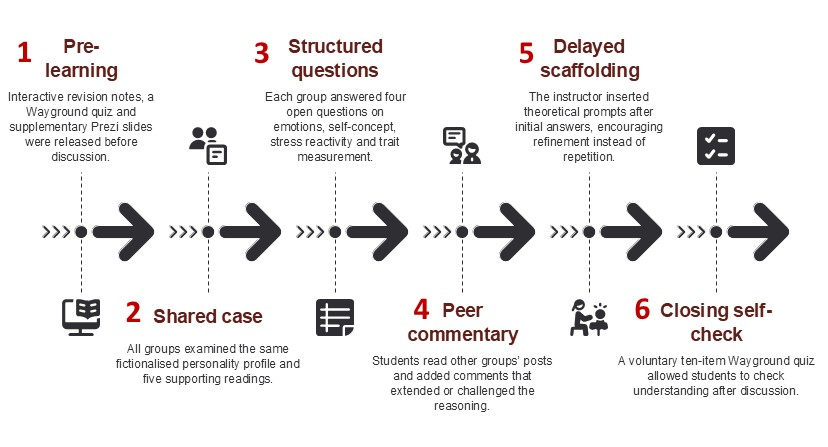
With that in mind, I revisited data I had gathered over the past two semesters and leaned back into Lev Vygotsky’s scaffolding theory. My core question was straightforward: on digital platforms like Padlet, how can I or students acting as More Knowledgeable Others (MKOs) effectively scaffold peers working within their Zone of Proximal Development (ZPD)? The concept is intentionally simple, sustainable, and easily replicated across different disciplines.
At the booth, several thoughtful questions emerged from visitors:
- How do students actually perceive this approach?
- How do we know that active participation genuinely translates into deeper understanding?
- Were any AI tools used to prepare or implement the activity?
Visitors also shared two notable comments:
- Delayed scaffolding feels time-consuming, as students must wait to review peer responses.
- There were no AI-generated apps directly integrated into the activity.
To that, my stance is simple: AI tools are just tools. Genuine learning and pedagogical innovation can happen with or without heavy technology. As AI becomes the default, we cannot forget that our students are human; their psychosocial and emotional needs cannot be outsourced to an algorithm. AI can still play a tangible role behind the scenes such as using ChatGPT or Claude to revise and polish printed worksheets. Having recently completed a six-week AI ethics course by GCED (organized by UNESCO-APCEIU), I am especially guarded. AI is like a knife: it requires specific skill, care, and right intention to handle safely.
The turning point of the event came from a conversation with two experts from the Faculty of Artificial Intelligence at UTMKL. They validated my initial concerns while teaching me fresh perspectives on where the technology is heading. Their work represents a gold standard to me, and one of them even shared an early site prototype with coding and all that I plan to test out for video making.
In the end, I am glad I pushed past my hesitation. Joining NALI not only gave me valuable feedback on my teaching, but it also connected me with generous experts I can turn to as I continue learning.