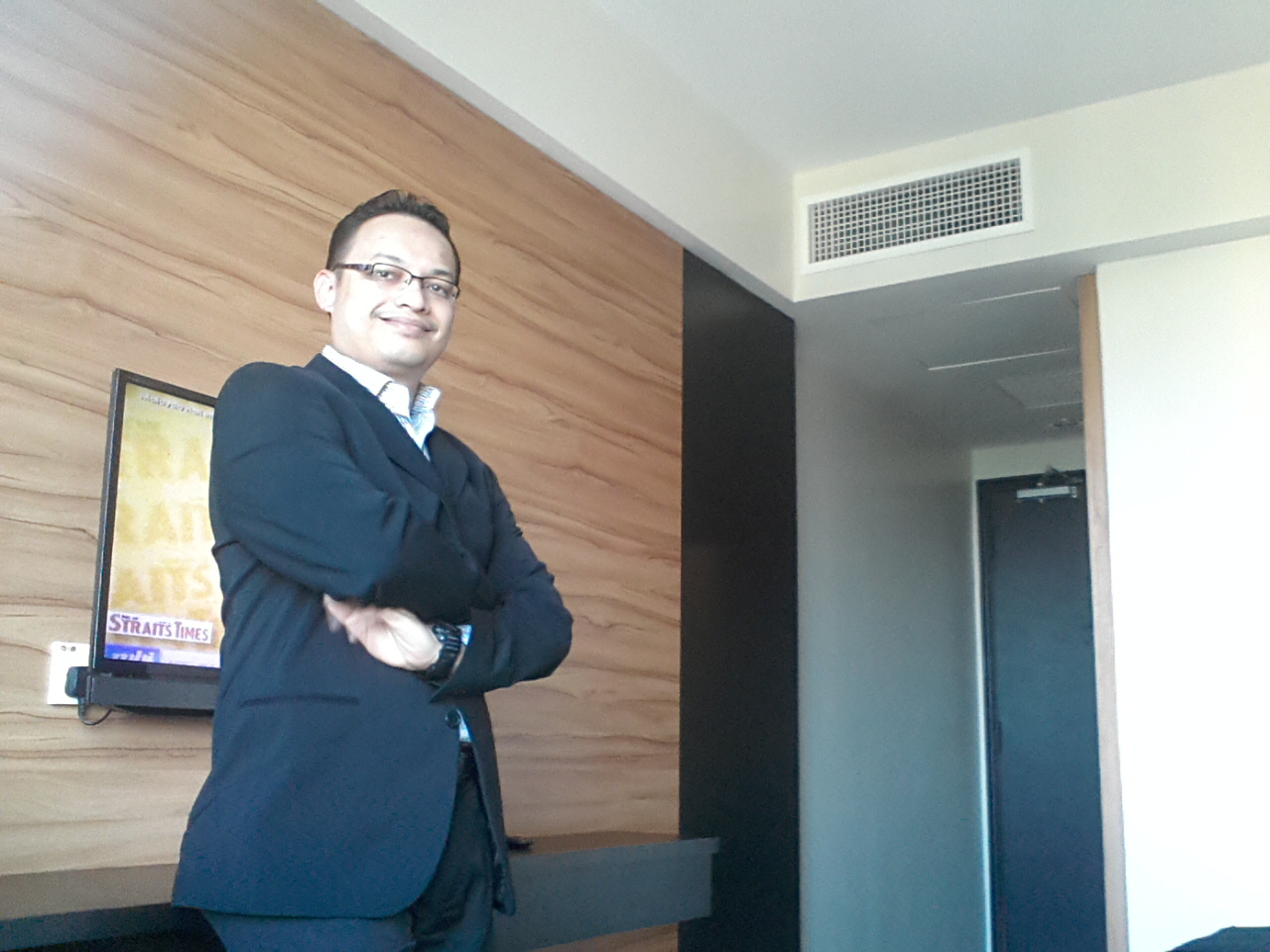
My typical day in office when not in class, meeting or others. Shot was taken last Sunday.
Circular Economy
Posted on October 9, 2019 ·
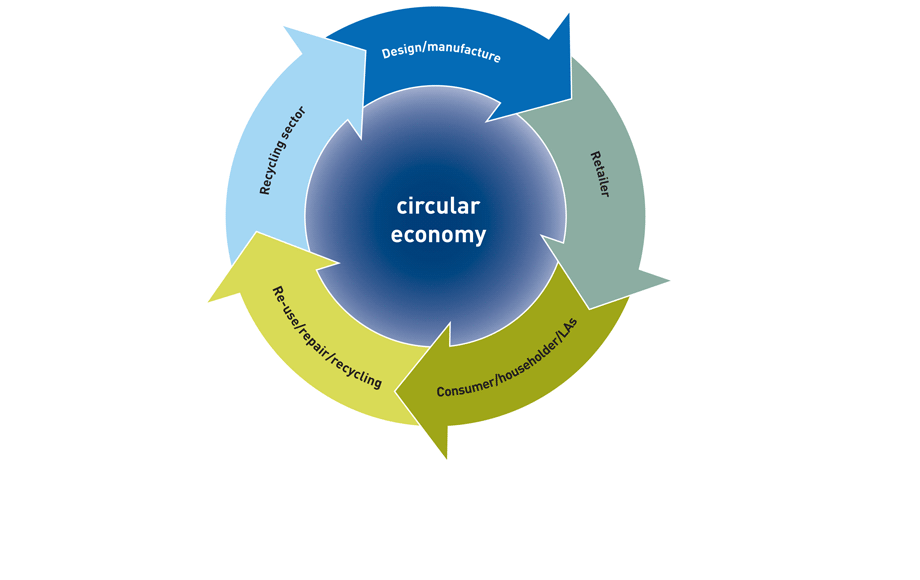 A circular economy (often referred to simply as “circularity”) is an economic system aimed at eliminating waste and the continual use of resources. Circular systems employ reuse, sharing, repair, refurbishment, remanufacturing and recycling to create a close-loop system, minimising the use of resource inputs and the creation of waste, pollution and carbon emissions. The circular economy aims to keep products, equipment and infrastructure in use for longer, thus improving the productivity of these resources. All ‘waste’ should become ‘food’ for another process: either a by-product or recovered resource for another industrial process, or as regenerative resources for nature, e.g. compost. This regenerative approach is in contrast to the traditional linear economy, which has a ‘take, make, dispose’ model of production.
Continue reading here: https://en.wikipedia.org/wiki/Circular_economy
Congratulations PM Ir. Dr. Mohamed Sultan Bin Mohamed Ali
Posted on October 9, 2019 ·
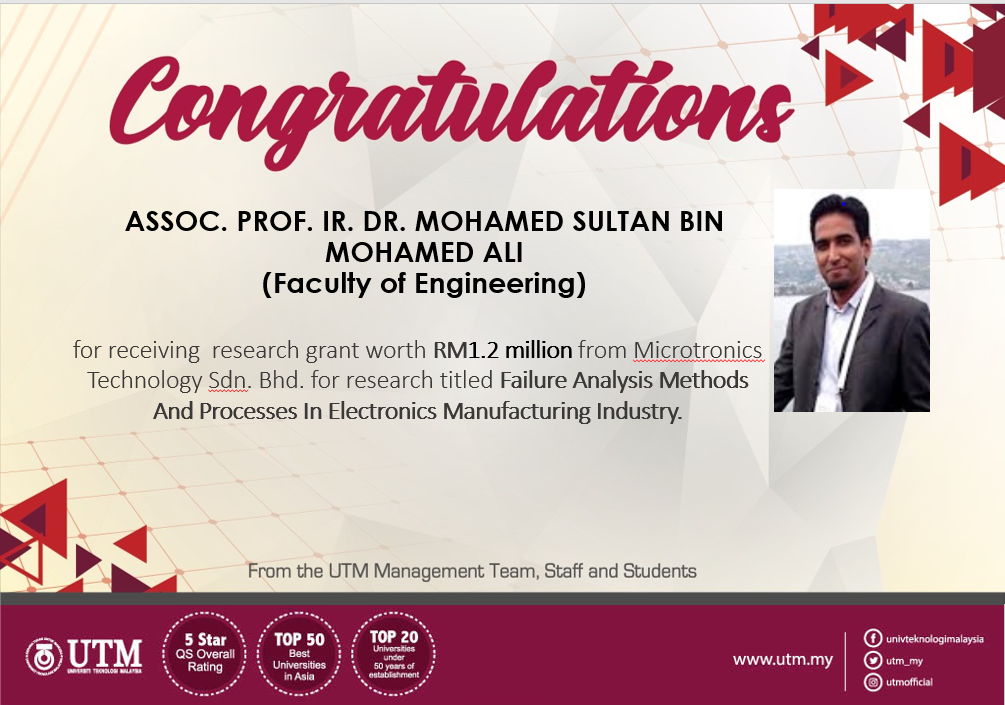
I would like to congratulate Assoc. Prof. Ir. Dr. Mohamed Sultan bin Mohamed Ali from Faculty of Engineering for receiving research grant worth RM1.2 million from Microtronics Technology Sdn. Bhd. for research titled Failure Analysis Methods and Processes in Electronics Manufacturing Industry.
Congrats Prof Dr. Syed Abdul Rahman
Posted on October 8, 2019 ·
 Very inspiring! Very proud indeed.
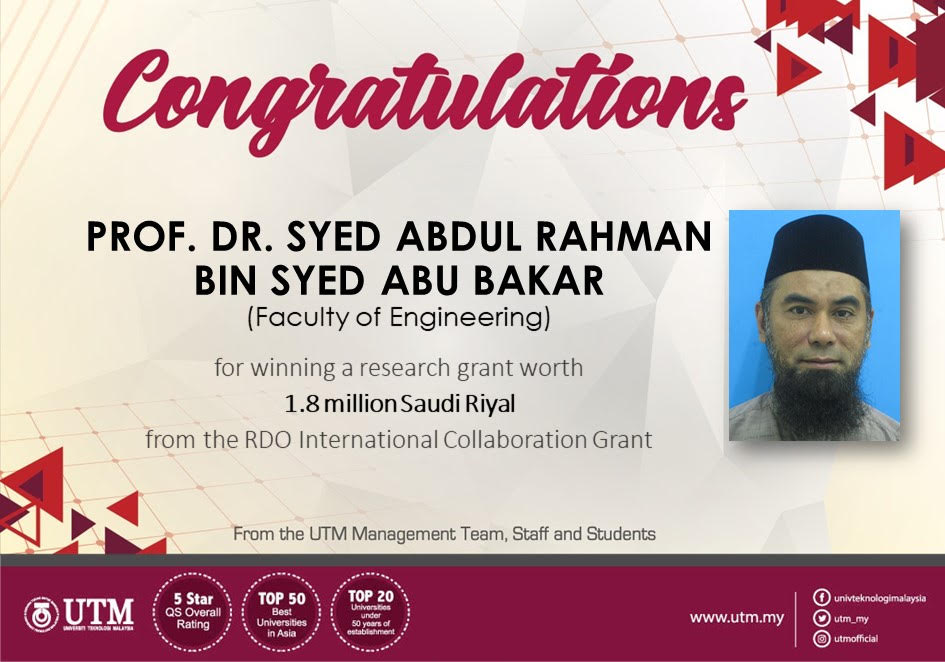
I would like to congratulate Prof. Dr. Syed Abdul Rahman bin Syed Abu Bakar from Faculty of Engineering with a collaboration of Dr. Adel Hafiz from Taibah University for winning a research grant worth 1.8 million Saudi Riyal from the RDO International Collaboration Grant for their research proposal titled “Smart Video-Based Crowd Surveillance and Management System for Pilgrimages in the Holy places of Makkah and Madina”.
This is something that we academician should do and contribute.
Quantum Computings Potential Impact on Chemicals
Posted on October 7, 2019 ·
The chemical industry is poised to be an early beneficiary of the vastly expanded modeling and computational capabilities of quantum computing. Companies must act now to capture the benefits.
Over the past several years, quantum computing has been the subject of a lot of hype. Work underway in the field at tech giants such as IBM and Google has been extensively reported, and this interest has been mirrored by investments in the quantum-computing field by players from a broad array of industries, including the chemical industry. We have been following these developments, and our assessment is that quantum computing could potentially be a game changer for chemical companies.
Continue reading this informative article here: https://www.mckinsey.com/industries/chemicals/our-insights/the-next-big-thing-quantum-computings-potential-impact-on-chemicals
Learning and Reflection Journals: Why and How?
Posted on October 2, 2019 ·
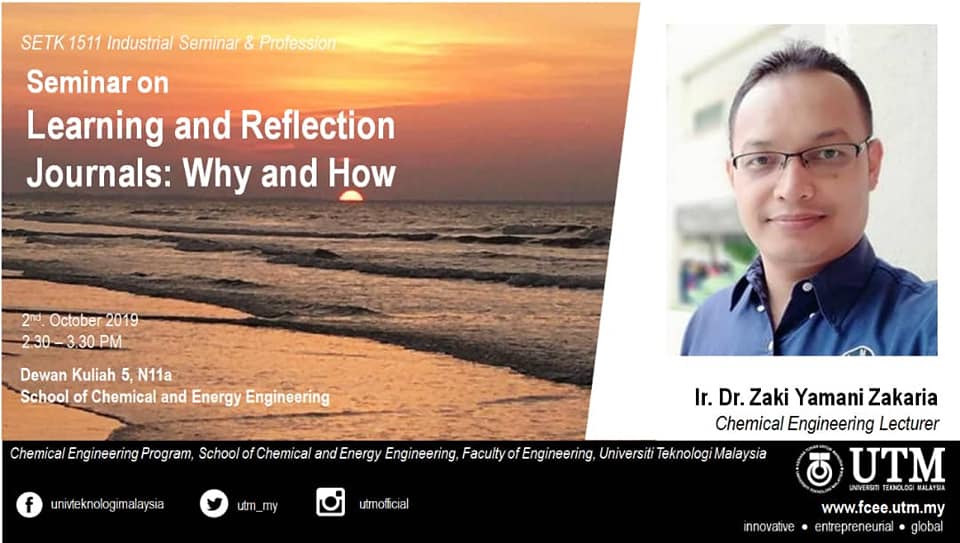 Delivered a talk to 180 Chemical Engineering first year students from the School of Chemical and Energy Engineering, UTM.
Synopsis on Reflection in Learning
Reflection is an integral part of the learning process. It allows us to learn more about ourselves and how we learn, but it also aids us in improving academic skills. Consider sports teams that watch film of the previous night’s game. They’re able to identify mistakes and correct them at practice.
Reflecting and composing a piece of self reflective writing is becoming an increasingly important element to any form of study or learning. Reflecting helps you to develop your skills and review their effectiveness, rather than just carry on doing things as you have always done them.
Through reflection, teachers and trainers can look clearly at their successes and struggles and consider options for change that greatly impact student learning. Self-reflection can allow one to: Develop a rationale for practice. Assess student learning and understanding of concepts.
To apply the reflection or reflective learning concept, Gibbs Reflective Cycle is applied.
What is the Gibbs Reflective Cycle?
In 1988, the American sociologist and psychologist Graham Gibbs published his Reflective Cycle model in his book ‘Learning by Doing’. Gibbs Reflective Cycle encourages people to think systematically about the experiences they had during a specific situation, event or activity. Check the attached image of Gibbs Reflective Cycle, then you can better visualize and comprehend the concept and its importance in learning.
Our Team Saw Gold in Pecipta 2019
Posted on September 23, 2019 ·
It was my first experience joining Pecipta 2019 prestigious national competition which combines advances and great scientific exploration and discoveries by our scientists from Malaysia. Alhamdulillah our project won Gold Medal in this competition after entering it for the first time. I was there in the second day taking care of our booth (Number 101) with Dr. Aziatul Niza Sadikin.
1 Day CEE Research Workshop
Posted on September 8, 2019 ·
Tempat: Double Tree Hotel, Johor Bahru Tarikh: 5 Ogos 2019 Masa: 8.30am – 5pm.

Lebih banyak saya belajar tentang Engineering Education, makin termenung dan terkedu saya sebab terlalu banyak teori dan methodology dalam bidang ini yang saya sedar saya tak tau.
MasyaAllah, luasnya ilmu Allah tak dapat disangkal. Maka itu, semakin tinggi kita menuntut ilmu, semakin harus kita insaf, tunduk dan sedar betapa kecilnya kita.
1-Day workshop on preparing research proposals and publications for CEE researchers. An insightful day of discussions and future planning in engineering education research.
Untuk makluman lanjut, boleh klik link ni untuk info dan gambar workshop ini di FB CEE.
BCREC International Peer-Reviewers List
Posted on September 6, 2019 ·

Can you see my name above there in the photo?