I just published a new journal….New Journal Published – Biomass Bioenergy Journal
Publication in Advances in Chemical Engineering and Sciences
Posted on December 21, 2013 ·
Alhamdulillah, we managed to publish in another great journal. Here is the detail:
Mazura Jusoh, Anwar Johari, Norzita Ngadi, Zaki Yamani Zakaria, Process Optimization of Effective Partition Constant in Progressive Freeze Concentration of Wastewater, Advances in Chemical Engineering and Science, 2013, 3, 286-293 (PDF).
Process Optimization of Effective Partition Constant in Progressive Freeze Concentration of Wastewater
Mazura Jusoh, , Anwar Johari, Norzita Ngadi, Zaki Yamani Zakaria
ABSTRACT
Response surface methodology (RSM) was employed to optimize the process parameters for effective partition constant (K) in progressive freeze concentration (PFC) of wastewater. The effects of coolant temperature, circulation flowrate, initial solution concentration and circulation time on the effective partition constant were observed. Results show that the data were adequately fitted into a second-order polynomial model. The linear and quadratic of independent variables, coolant temperature, circulation flowrate, initial solution concentration and circulation time as well as their interactions have significant effects on the effective partition constant. It was predicted that the optimum process parameters within the experimental ranges for the best K would be with coolant temperature of −8.8˚C, circulation flowrate of 1051.1 ml/min, initial solution concentration of 6.59 mg/ml and circulation time of 13.9 minutes. Under these conditions, the effective partition constant is predicted to be 0.17.
Keywords: Effective Partition Constant; Wastewater Treatment; Progressive Freeze Concentration
More of my published journals are published here.
What is Plasma Technology?
Posted on December 12, 2013 ·
Plasma technology is easy on the physical principle with matter changing. This technology is based on a simple principle. It changed the situation when he was given a solid to a liquid, and the liquid into a gas. If more power is given to gas, ionized plasma in energy-rich countries, the fourth state of things.
Plasma was first found in year 1928 by Irving Langmuir . It’s not unusual; In fact, the opposite is true. More than 99% of people who can see the universe as plasma conditions. It can be seen in its natural form in the world such as flash or light as the plants in the Arctic and Antarctic, for example. During a solar eclipse, the plasma can be accepted as a bright circle of light (corona). When it increasing energy input, the state of matter changes from solid to liquid to gaseous. If additional energy is then fed into a gas by means of electrical discharge, the gas will turn into plasma.
Reaction Kinetics
Posted on November 27, 2013 ·
Chemical Kinetic or reaction kinetics occurs in chemical solution is study about the speed of chemical reaction occur in the substances.
What is meant by the speed of a reaction? The speed of a reaction is the rate at which the concentrations of reactants and products change.
Consider the following hypothetical example. The letters A, B, and C represent chemical species (in this context, the letters do not represent elements). Suppose the following imaginary reaction occurs:
A + 2 B → 3 C
Chemical kinetics includes investigations of how different experimental conditions can influence the rates or speed of a chemical reaction and yield information about the related to the reaction’s mechanism and transition states. Chemical kinetics with respect to the experimental determination of the reaction rate is low, and the rate constants obtained. Layer only zero-order reaction frequency (where the rate of the reaction depends on the concentration), first-order reaction, and the reaction of the second order, and will be available for others. In a subsequent reaction, determine the level determining step often kinetics. In the following first-order reaction, a well-established approach simplifies beats. Activation energy for the reaction experimentally determined by the Arrhenius equation and the Eyring equation. The main factors affecting the rate of reaction include: the physical state of the reactants, reactant concentration, in which the reaction took place temperature, and whether there was a catalyst in the reaction mixture.
Finally, my PhD battle is over
Posted on November 21, 2013 ·
This is the chronological story…
After roughly 4 years, I successfully completed defending my doctorate study. Alhamdulillah. Praise be only to Allah. It has been such a challenging and tough experience, discipline demanding which at finally end up with a happy ending. Thanks to everybody who have been supporting and helping me.
I wished I can immediately update and announce this wonderful news to the world (I mean my blog). Unfortunately I was quite hectic with work. I guess now, that I am already an active lecturer, I lost the luxury of time and freedom. I am now subjected and answerable to several bosses and superiors. They can give me task, assignments and anything, you name it – I must do it.
My PhD journey was not as fast as I have expected. I targeted to complete my PhD within 3 years. However, many things happen. It took me 4 years and 4 months. Below, I would like to share my PhD timeline.
My New Publication in Biomass Bioenergy
Posted on November 20, 2013 ·
I managed to published my second journal for my PhD in another reputable Q1 journal.
Zaki Y. Zakaria, Nor Aishah Saidina Amin, Juha Linnekoski, Perspective on catalytic conversion of glycerol to olefins, Biomass and Bioenergy 55 (2013) 370-385. Impact Factor: 2.975 (PDF).
A perspective on catalytic conversion of glycerol to olefins
Zaki Y. Zakaria, Nor Aishah Saidina Amin, Juha Linnekoski
Glycerol, an alcohol and oxygenated chemical from biodiesel production, has enormous potential to be converted into higher value-added fuels and chemicals. Conversion of glycerol to olefins, although relatively new, has been proven viable by the limited number of literatures available. However, the studies on alcohol-to-hydrocarbons involving methanol and ethanol conversions to hydrocarbons (MTHC and ETHC) have extensively been conducted. Due to the increasing amount of glycerol produced worldwide and the importance of olefins in the industry, it is therefore essential to have broadened knowledge on the technology of glycerol conversion to olefin (GTO). This review focuses on GTO with reference to the more established MTHC and ETHC studies. The chemistry and reaction schemes for methanol and ethanol reactions to produce hydrocarbons are also reviewed to provide some basics study for GTO. Catalytic conversion processes with different raw
materials for obtaining olefins are then compared with GTO. GTO offers viable, sustainable and environmental friendly technology for green olefins production from renewable resources, and concerted efforts should be geared to explore its potential.
Biomass Energy in Malaysia
Posted on November 17, 2013 ·
Biomass is one of the renewable energy sources are most important in biofuel National Malaezia.Politica launched in 2006 to promote the use of environmental resources, biomass energy sustainable and viable. In the five basic fuel, the Malaysian government has identified as one of biomass energy potential of renewable sources. Malaysia atleast produce 168 million tons of biomass, including wood and palm oil waste, rice husk fiber, coconut wood, municipal waste and waste from sugar cane per year. As a major producer of agricultural commodities in the region, Malaysia is well positioned among the ASEAN countries to promote the use of biomass as a renewable energy source.
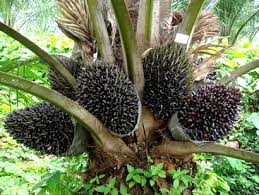
Malaysia is one of the largest producer and exporter of palm oil in the world for forty years ago. The palm oil industry, in addition to the production of crude palm oil (CPO) and palm kernel oil, producing Palm Shell, Press Gentian, empty fruit bunches (EFB), Palm Oil Mill Wastewater Effluent (POME), Palm Trunk (during replanting) and Palm Leaf (during cutting). Almost 70% of the processing of fresh fruit bunches are eliminated as waste. Malaysia has about 4 million hectares of land under oil palm plantations. Over 75% of the total planted area is located in four states, Sabah, Johor, Pahang and Sarawak, each of which has over half a million hectares. Total value of FFB processed (fresh fruit bunches) is estimated at 75 million tonnes, while total product EFB estimated 16.6 million tonnes. About 58 million tonnes of POME are produced annually in Malaysia, which has the potential to produce approximately 1:15 billion m3 of biogas can be produced every year.
Chemical Reaction Engineering
Posted on October 19, 2013 ·
Chemical engineering disciplines as a chemical reaction that began in the early 1950s under the impetus of researchers and research centers Shell and Delft University of Amsterdam. The chemical reaction of Electrical works by JC Vlugter after First European Symposium on Chemical Reaction Engineering, which was held in Amsterdam in 1957.
Chemical chemical reaction (reaction or electrical reactor technology) specialized in chemical, electrical, chemical, or house to store chemical reactors. A word that is often associated with the system catalyzed reactions of two or several aspects of a person will be present in the reactor. The reactor itself is not, and is integrated in the system, for example, reactive separation vessels, retorts, cells light oil, photocatalytic surface. Solvent effects on the reaction kinetics and is considered an important part.
The chemical reaction for monitoring electrical and optimize chemical reactions and reactor design best. Therefore it is very important to connect the structure of the reactor feed and the relationship between the phenomenon of flow, mass transfer, heat transfer, and reaction kinetics. Although initially used for the Petroleum and Petrochemical, all concepts that combine chemistry and chemical technology that makes it possible to optimize the various methods of modeling and reaction conditions of the program. The chemical reaction of certain electrical engineering approach to the development of new processes and upgrading existing technologies.
The Interesting of Solar Energy
Posted on October 17, 2013 ·
Solar energy comes from the sun as fuel to create heat or electricity. Solar technology fall into two categories: passive and active. Passive solar heat generation and provide exposure to the structure. Active solar energy to produce electricity using a technology called the Solar Photovoltaic (PV), or heat, hot water or electric technology called Solar Thermal.

Solar energy is considered environmentally friendly because the sun is a natural source of energy that does not require the burning of fossil fuels and emissions associated online. In addition, because it is considered a renewable energy generated from the sun does not reduce any of the natural resources, and endless.Solar energy, however, is called intermittent source, which means that it is not always there. When it is cloudy or rainy, the sun is not there to give light, and solar energy systems can not produce energy. Therefore, many systems are designed with one of several types of energy storage characteristics, or backup source of energy, such as electricity networks. Additional features allow users to continue to operate the rear even if the sun does not shine.
Catalyst Engineering
Posted on October 6, 2013 ·
Catalysis Group focuses on the development and demonstration of catalysis and reactor engineering focuses on the concept of a new sustainable technologies with emphasis on the seriousness of the process, feed efficiency of cattle stock, and reduction of energy consumption and the impact of human activities on the environment and industry.