A Modern Approach to Interviewing That Will Get You The Job

We’re all familiar with the job interview process. If you’ve been through one or more, it was probably very straightforward…
You sit across from someone with your resume. You know the job you’re going for, they know a bit about your past. They ask you some ‘why’ and ‘how’ questions, some of which are predictable, others that are less predictable (but probably nothing too surprising).
It’s a boring process that has ultimately become more of a routine than a necessity—studies have even shown that candidates for jobs who interview later are most likely to get the role!
So, it’s important to stand out and to make the most of it. You can no longer just follow the rules and cleverly explain your three biggest strengths and weaknesses. Here’s what Fast Company’s Marc Cenedela advises:
1. Clarify in advance
Ask what they’re looking for before going to the interview. Don’t be afraid to get specific. Find someone from within the company, maybe in HR, and ask about the three qualities they value most.
It might seem like cheating to ask what to expect before an interview, but it actually just shows that you care and are willing to take initiative.
2. Find stories from your resume
Based on what you can glean from asking in advance, prepare some specific stories on why you reflect the values the company holds. Is there some specific skill they’re looking for that’s more important than others? What kind of community is it? Do you have experience similar to the kind of tasks that will be assigned to you in the role?
You should always be prepared to tell stories of your successful moments and describe your value. Asking in advance just allows you to prepare more precisely.
3. It’s not one-sided
People fall in the trap of just focusing on what the employer wants. What about what you want? You must be certain this is the correct job for you. Ask yourself: is it in line with your goals and values? Is this what you want at this point in your career? Is it going to give you the experience you need and develop skills that are relevant to what you want to achieve?
4. Ask
Don’t be passive. Always have questions of your own prepared, and if anything is unclear to you during the conversation, be bold in asking for clarification.
No matter the job, scenario, or organization, you should be able to find things you’re either unsure or curious about. Remember: Getting the job means that you’ll be contributing and making an impact. Take seriously whether you’re comfortable with that, with helping that organization grow, and think critically about how you’ll fit in. This sort of mindset should leave you with plenty of questions.

Cheers,
Alex Mehr, PhD
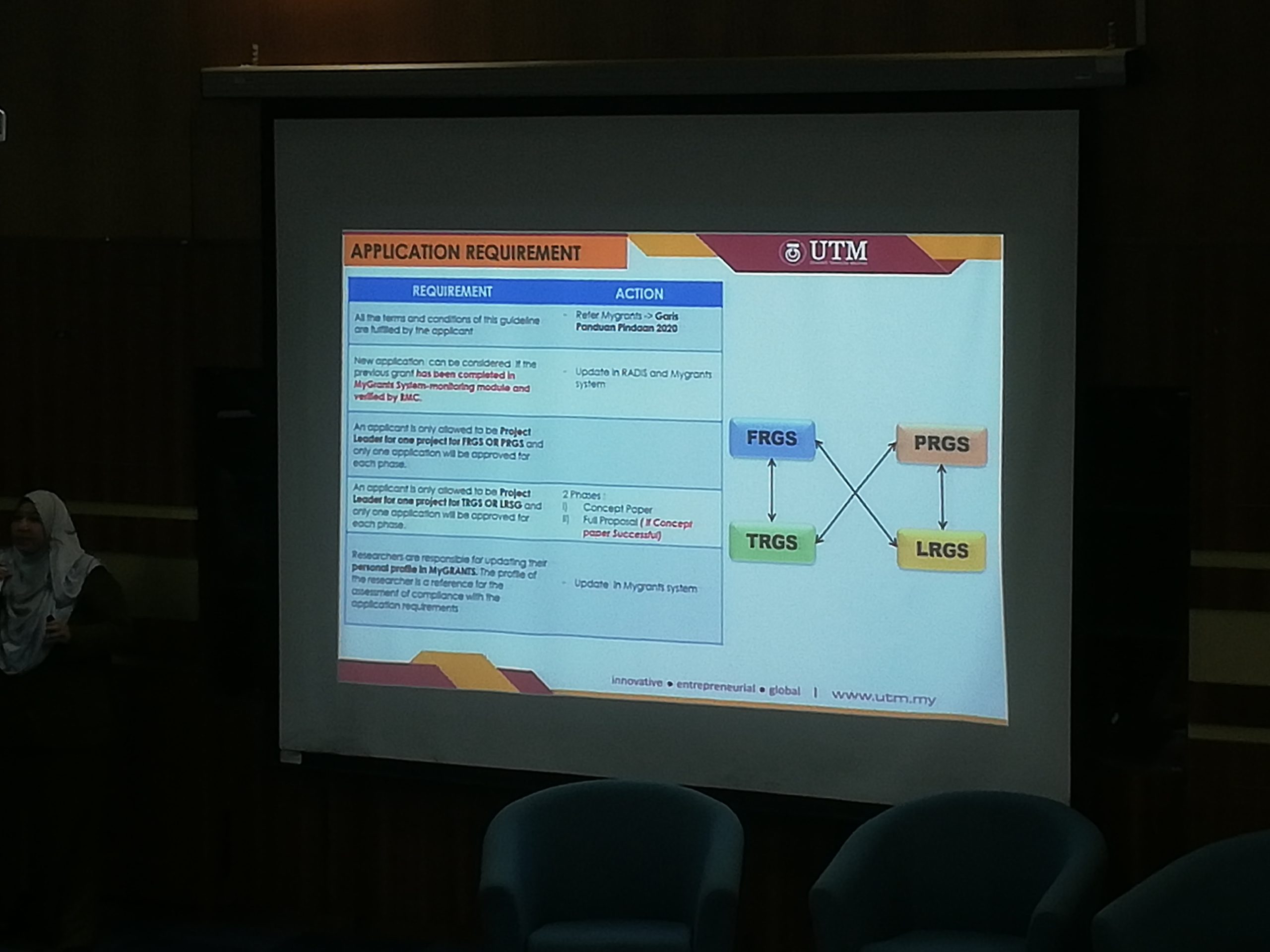
Day 12 Task: FRGS, LRGS, PRGS AND TRGS Grant Briefing


Semua penyelidik dijemput hadir ke sesi taklimat Dana Penyelidikan KPM 1/2020 yang akan diadakan sebagaimana berikut:
Tarikh : 12 Januari 2020 (Ahad)
Masa : 2.30 petang
Tempat : Dewan CTL, Bangunan F54, UTMJB
Tarikh : 16 Januari 2020 (Khamis)
Masa : 11.00 pagi
Tempat : Bilik Seminar, Menara Razak, UTMKL
Video Conferencing:
Tempat : Bilik Mesyuarat Photosynthesis, UTM Pagoh
Semua penyelidik adalah digalakkan membawa garis panduan geran semasa sesi taklimat tersebut sebagai rujukan.


Read all my “1 Official Task Per Day Record Challenge for 2020” —> https://people.utm.my/zakiyamani/category/1-activity-1-day/

Think Before You Buy Hybrid Merce

It is many people dream and wish to own a new Mercedes Benz. Then if you are the green and sustainable type of person, you will surely want to secure a hybrid Mercedes. But before that think first. What will be the cost of the Merce hybrid battery?

To know and understand more about it, read the article from NST: https://www.google.com/amp/s/www.nst.com.my/node/469255/amp

Engineering 2 Volleyball Team @ UTM Interdepartment Sports

Today is the day – the volleyball inter department game and Engineering 2 team that comprises School of Chemical and Energy Engineering, School of Civil engineering and School of Biomedical Engineering will compete against other departments.

All the best to our women team yeahhh…


Plastic Wastes from the West is Poisoning Our Neighbour Indonesia!

Indonesia has become a dumping ground for plastic from Australia, Europe and North America. The waste is burned as fuel by local communities, causing respiratory illness and other long-term health problems for people who inhale the polluted smoke. Research shows pollutants have contaminated Indonesia’s food chain. This situation must be stop urgently. As a neighbour to Indonesia, we must be extra alert before our country gets similar punishment. This is because Malaysia is also presently a trash dumping ground from other modern countries.

Continue reading by clicking the link below:

https://www.weforum.org/agenda/2019/12/plastic-waste-indonesia-pollution-health

Die During Job Interview!

Contrary to what most people think, top management are the hardest working bunch.

Just got home from work. Second late night this week. My day starts before the sun rises ⛅ and ends when the moon is up 🌒. Check out the link below:

https://bit.ly/overworkeddie

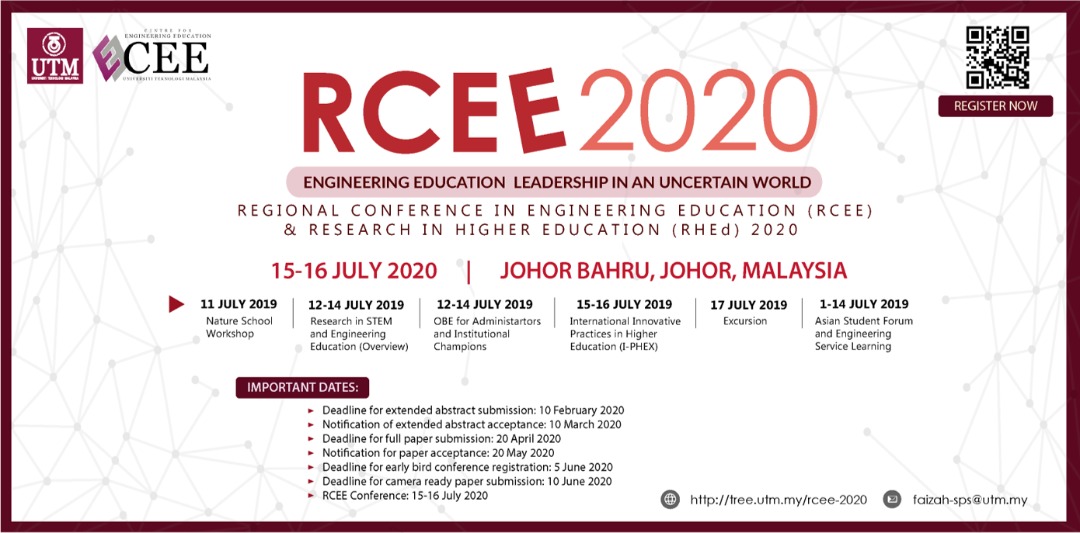
Regional Conference in Engineering Education (RCEE) & Research in Higher Education (RHeD) 2020

If you are an engineering educator and would like to share your scholarly contribution and improvement that you have made in your engineering teachings, this is a spectacular platform for you!

Just prepare an extended abstract (2 pages only) and submit before 10 February 2020.

My Typical Day As A Chemical Engineering Lecturer

My typical day in office when not in class, meeting or others. Shot was taken last Sunday.

https://youtu.be/2j18gYEq3dQ

Claus and Modified Claus Processes

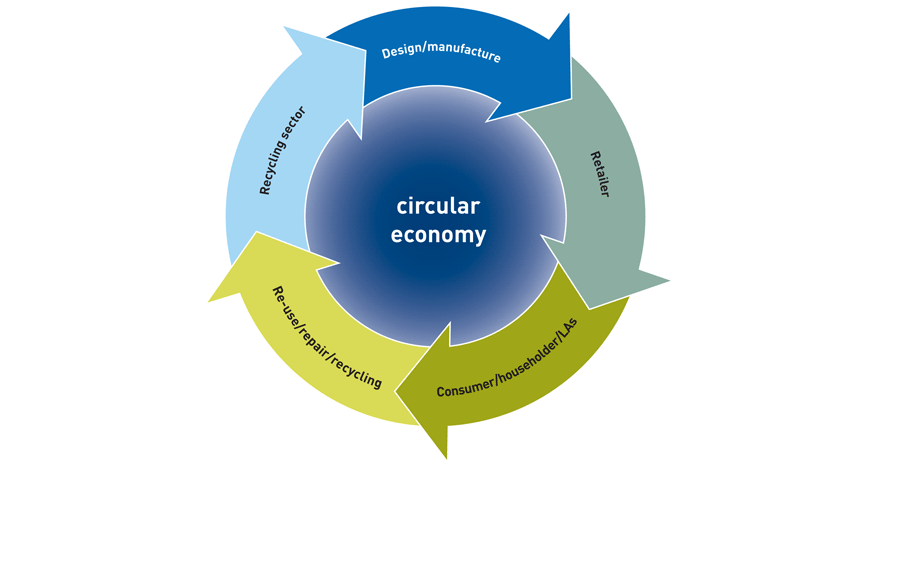
Circular Economy

A circular economy (often referred to simply as “circularity”) is an economic system aimed at eliminating waste and the continual use of resources. Circular systems employ reuse, sharing, repair, refurbishment, remanufacturing and recycling to create a close-loop system, minimising the use of resource inputs and the creation of waste, pollution and carbon emissions. The circular economy aims to keep products, equipment and infrastructure in use for longer, thus improving the productivity of these resources. All ‘waste’ should become ‘food’ for another process: either a by-product or recovered resource for another industrial process, or as regenerative resources for nature, e.g. compost. This regenerative approach is in contrast to the traditional linear economy, which has a ‘take, make, dispose’ model of production.

Continue reading here: https://en.wikipedia.org/wiki/Circular_economy

UTM Open Day