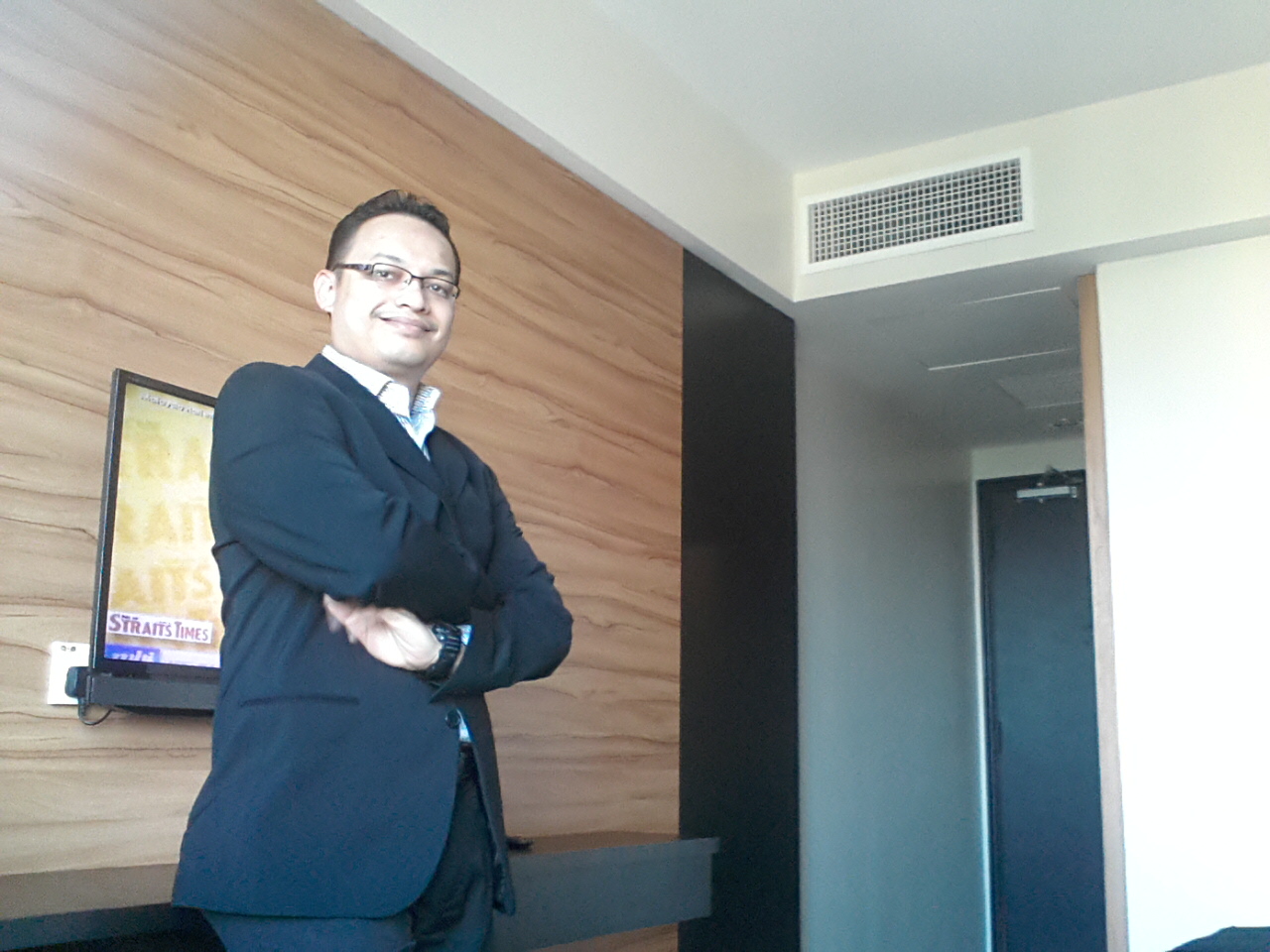
Driving UTM’s Research Mission Through eJournal Management and Academic Commitments

Management Meeting of UTM eJournal No. 1/2025

This afternoon, I attended the UTM eJournal Management Meeting No. 1/2025, held at the Meeting Room of the Office of the Deputy Vice-Chancellor (Academic & International), Sultan Ibrahim Chancellery Building (BCSI), UTM Johor Bahru. The meeting began at 2.30 p.m. and was chaired by Assoc. Prof. Dr. Siti Rahmah Bt. Awang, Director of UTM Press.

As the Chief Editor for the ASEAN Journal of Engineering Education (AJEE), which is published under Penerbit UTM, I joined fellow editors and committee members to discuss matters related to the strategic direction, quality assurance, and operational management of UTM eJournals. The meeting also revisited the minutes from the 2024 session and deliberated on action items to strengthen UTM’s academic publishing ecosystem.

The importance of this meeting cannot be overstated. As a research university, UTM places strong emphasis on knowledge dissemination and impact through scholarly publications. The UTM eJournals serve not only as platforms for academic exchange but also as benchmarks for quality, visibility, and global engagement. Effective management ensures that these journals uphold international publishing standards, attract high-quality manuscripts, and contribute significantly to UTM’s reputation and standing in the global academic community.

A Side Note on Today’s Tasks

Besides the meeting, today was also filled with several key responsibilities related to teaching, research management, and academic service:

  • ✅ I made substantial progress in preparing the final exam paper and answers for Occupational Safety in Energy System (METE1153). The paper is about 90% complete, with the exam scheduled for next week.

  • ✅ I invigilated an online test for a student who missed the METE1153 test conducted two weeks ago, ensuring fairness and academic integrity.

  • ✅ I responded to the Laporan Perkara Berbangkit (LPB) for the upcoming Management Committee on Research Grants (JKPD) meeting, scheduled for Monday.

  • ✅ At 11.30 a.m., I joined a Pra-JKPD meeting with the Director and Registrar of RMC to finalize preparations ahead of the main session.

  • ✅ I requested the preparation of the project monitoring report to be tabled at both the JKP and JKPD meetings.

  • ✅ I also took some time to watch the Vice-Chancellor’s speech, Amanat NC 2025, streamed live via Facebook, which provided valuable insights into UTM’s direction and strategic priorities for the year.

Reflection

It was a productive day that balanced editorial responsibilities, academic commitments, and research management duties. Being part of the UTM eJournal Management Meeting as Chief Editor of AJEE further reinforced my appreciation of how crucial collaborative effort is in sustaining UTM’s publishing excellence. At the same time, attending to exam preparation, student assessment, and research governance matters, while keeping abreast with the Vice-Chancellor’s vision for UTM, reminded me of the multifaceted nature of academic life, where teaching, research, service, and leadership converge.

Pre-Viva Milestone: Engineering Identity Development Framework for Malaysian Students

Today marked an important academic milestone for my PhD student, Izwan, who is pursuing his doctorate in engineering education at UTM. His pre-viva session focused on his thesis, “Engineering Identity Development Framework for Engineering Students in Malaysia.”

Why a Pre-Viva Matters

A pre-viva is a crucial rehearsal before the actual viva voce (oral defense). It allows students to present their research to a panel of academics and receive constructive feedback on their arguments, methodology, and presentation style. The process helps identify gaps, anticipate potential questions from examiners, and refine the overall flow of the thesis. In short, the pre-viva strengthens both confidence and readiness.

At MJIIT UTM, the pre-viva is organized through the ikohza system, where research groups serve as nurturing platforms for postgraduate students. This system not only prepares students academically but also provides them with a supportive community of peers and mentors. For Izwan, presenting within this framework gave him valuable input from multiple perspectives, a reflection of the collaborative spirit embedded in UTM’s research culture.

I would like to sincerely thank the panel members: Dr. Aziatul Niza Sadikin, Dr. Tengku Nur Zulaikha Tengku Busu, and the Chairman of the session, Dr. Aishah Rosli, for their time, insights, and constructive feedback. Their thoughtful comments will undoubtedly help strengthen Izwan’s thesis as he prepares for the final viva.

Why Engineering Identity Development Matters

Izwan’s work on an engineering identity development framework carries deep significance in the Malaysian context. As the nation pushes forward with IR4.0, sustainability, and global competitiveness, engineering graduates are expected not only to have technical expertise but also a strong sense of professional identity. Developing this identity ensures that students see themselves as capable engineers, ready to contribute to society, industry, and innovation. In Malaysia, where talent development is critical to national growth, this framework could help universities better shape curricula, mentoring, and experiential learning for future-ready engineers.

As the saying goes, “Sharpening the axe does not delay the work.” The pre-viva serves exactly this purpose: it is the sharpening process before the real test. By taking the time to prepare, receive feedback, and refine his arguments, Izwan is ensuring that when the final viva comes, he will be ready to strike with clarity and confidence. Far from being a delay, this step is an investment in excellence and a reminder that careful preparation is what ultimately leads to success.

Side Notes from the Day

While Izwan’s pre-viva was the highlight, my day didn’t end there. Earlier, 1 hour after the pre-viva commences, I drove to KPT Putrajaya for a PRGS pitching session, just one team today, unlike the ten UTM teams yesterday. Alhamdulillah, it went smoothly. Later, I chaired a Task Force online meeting to coordinate preparations for the Jabatan Audit Negara (JAN) auditors’ visit on 9–10 September. These coordination meetings are essential to ensure smooth audits, especially given the complexity of research management.

In the evening, I turned my attention to reviewing the NALI Award submissions for the second time. I deliberately chose to re-examine the projects carefully because, in jurying, it is vital to remain calm, objective, and fair. Rushing through evaluations risks overlooking important details, while a measured approach ensures every project receives due recognition.

Today’s journey was a reminder of how academic life intertwines mentorship, research governance, and institutional responsibilities. But the highlight remains Izwan’s pre-viva, a step closer to contributing new knowledge that can transform how we prepare engineers in Malaysia.

#20242025 Day 065

#Wednesday

A Day of Endless Tasks: Between PRGS at the Ministry, PhD Students, and End Reports

Today tested both my stamina and patience. As early as 5 a.m., I began my journey to the Ministry of Higher Education (MOHE), Putrajaya, to attend the Pembentangan Permohonan Skim Geran Penyelidikan Pembangunan Prototaip (PRGS) Tahun 2025. This is an important milestone for UTM, with 15 researchers invited to pitch their proposals at the ministry.

The PRGS sessions are scheduled from 2–4 September 2025 (Tuesday–Thursday), 9.00 a.m. to 6.00 p.m., at Jabatan Pendidikan Tinggi, Putrajaya. I arrived around 9.15 a.m. and although the first session was planned for 10.30 a.m., it was eventually delayed. That was only the beginning of what became a super hectic, tightly packed day.

From morning until evening, I had to attend 10 pitching sessions, spread across Level 5, 7, and 8. In the rush, I had no time to eat or even to perform prayers in between. Thankfully, as a musafir (traveler), I was able to pray later at my hotel after checking in.

Check out this FB post, another photo after PRGS pitching from PM Dr. Roswaniwara and team.

Why is PRGS so important? Unlike fundamental research grants, PRGS focuses on bridging the gap between research and commercialization. It helps transform promising prototypes into viable products that can benefit industries and society. For UTM researchers, securing PRGS means turning ideas into innovations that bring real-world impact.

But my responsibilities didn’t end when the pitching sessions were over. After a short rest at the hotel, I turned back to other official tasks. I arranged the pre-viva PhD session for my engineering education student, set for tomorrow morning at 8.30 a.m. At the same time, I checked on his progress in publication, and Alhamdulillah, both of his papers were accepted today, though revisions are still needed.

After Isya, my night shifted into yet another demanding phase. I sat down to settle over 50 End Reports requiring my endorsement. This is the part I dislike, not because I don’t value the work, but because I wish I wasn’t always doing it so late. The reality is that audits and endless administrative demands keep pushing these tasks down the line, and eventually, they pile up.

As I reflect on today, I realize how academic life in research management is often about navigating multiple layers of responsibility, supporting researchers in winning grants, mentoring students, ensuring compliance, and somehow finding time to complete my own scholarly commitments. It is a cycle of service, sacrifice, and silent resilience.

Tomorrow awaits, with more pitching sessions, student matters, and administrative duties. For now, I rest, hoping to find the strength to continue this journey with patience and purpose.

#20242025 Day 064

#Tuesday

Morning to Afternoon with the PDRU Postdoc Monitoring Team

Today, my morning and early afternoon were dedicated to an important task, serving as part of the PDRU postdoc monitoring team. The monitoring session was held at UTM RMC, divided into two panels. The first team consisted of Prof. Dr. Farid Said and PM Dr. Ezza Syuhada Sazali, while the second team, hosted in my office, was made up of myself and Prof. Hafiz Dzarfan. Each team was assigned to review 10 postdoctoral researchers who were appointed in 2023 (the majority) and 2024. Off course, the Postdoc secretariat were with us.

The session was engaging and insightful, with each postdoc presenting their progress, challenges, and research outputs. By 12.30 pm, we had completed all our scheduled reviews for the day.

Monitoring postdocs is a crucial exercise for the university. These researchers are appointed with the clear expectation of producing high-quality Q1 and Q2 journal papers, contributing significantly to UTM’s research excellence and global reputation. Through structured monitoring, we ensure that they are on track with their research objectives, receiving the guidance they need, and delivering outputs that strengthen the university’s standing in international rankings.

For me, it was not just a formal evaluation. It was also an opportunity to interact with highly talented researchers, understand their work in depth, and help them navigate challenges so they can produce impactful results. In the end, effective postdoc monitoring is not just about accountability; it is about nurturing excellence and driving innovation for the benefit of the university and the broader research community.

Other tasks today include attending the Pra-JKPD meeting of PPMU at T03.

#20242025 Day 039

#Friday

Understanding QS World University Rankings: Insights from the Special Briefing at UTM

Today, I had the opportunity to attend a special talk on the QS World University Rankings, by Mr. E. Way Chong, held at Dewan Kuliah 7, N24, Universiti Teknologi Malaysia (UTM). The session was conducted by representatives from Quacquarelli Symonds (QS), the organization behind this globally recognized university ranking system. The event saw the attendance of many UTM administrators, reflecting the importance of the QS ranking to the university’s strategic direction and global standing.

The QS World University Rankings are an annual evaluation of universities worldwide, providing comparative insights across various indicators such as academic reputation, employer reputation, faculty-to-student ratio, citations per faculty (research impact), international faculty and student ratio, and more recently, sustainability and international collaboration. These rankings are highly regarded by students, academic institutions, researchers, and even governments, who use them to benchmark excellence in higher education.

Quacquarelli Symonds (QS) is a British higher education analytics company established in 1990. Since publishing its first global ranking in 2004, QS has grown to become one of the most influential ranking bodies in the world, providing insights that guide institutional improvement and student decision-making globally. The QS rankings exist not only to assist students in making informed choices about where to study but also to help universities benchmark their performance, guide institutional planning, attract international collaborations, and support government and funding decisions.

For universities like UTM, the QS rankings are highly relevant. They influence the university’s global reputation, impact international student recruitment, guide internal strategy, and provide a framework for institutional improvement. Rankings also affect funding prospects, partnerships, and how employers view the institution’s graduates. In short, rankings matter, and they offer tangible benefits beyond prestige.

In the most recent QS World University Rankings, UTM continues to show commendable performance. UTM’s latest rank at 153 (2026). It ranks within the top 100–200 globally, particularly excelling in engineering and technology fields. UTM has demonstrated improvements in areas such as research output, international faculty recruitment, and sustainability initiatives, while maintaining a strong reputation among employers. These results reflect UTM’s dedication to maintaining high academic standards and expanding its global impact.

The impact of the QS World Rankings on UTM is significant. It enhances UTM’s global visibility, making it more attractive to international students, collaborators, and institutions. Rankings also serve as a benchmark for internal improvement, motivating faculties and departments to improve research, teaching quality, and student outcomes. Additionally, as the Ministry of Higher Education often references global rankings in policy and funding decisions, QS performance can indirectly influence national recognition and support.

In summary, today’s briefing was a valuable reminder that rankings such as QS are more than just numbers, they represent the university’s broader mission to strive for excellence in education, research, and global engagement. As UTM continues to advance its status as a leading research university, the QS World University Rankings will remain a key indicator and driver of its international aspirations and institutional progress.

#20242025 Day 036

#Tuesday

FRGS 2025: A Sudden Turn, a Tight Deadline, and a Research Mission That Matters

The Fundamental Research Grant Scheme (FRGS), funded by the Ministry of Higher Education (MOHE), faced an unexpected disruption in early February 2025 when the MyGRANTS system abruptly went offline. Since then, the fate of FRGS proposals and the many researchers who had applied, remained uncertain, leaving a cloud of doubt over the national research agenda.

However, today brought a surprising development. All FRGS applicants from the early 2025 cycle, including myself, received an email notification instructing us to improve and resubmit our proposals manually. Specifically, we were asked to include supporting quotations for V24000 (research materials), V28000 (professional services), and V29000 (rental and maintenance). What came as a shock was the urgency of the deadline, just 33 hours to revise, complete, and submit everything to our respective Research Alliance (RA).

Once verified for completeness and accuracy, the proposals will be forwarded to the Research Management Centre (RMC) for final submission to MOHE. The timeline is intense, but the mission remains clear.

My FRGS proposal this time focuses on a cutting-edge topic:
Converting Fuel Oil Blended Stock (FOBS) to Hydrogen using waste catalysts from refineries.
This project holds great promise in addressing the long-standing FOBS-related issues faced by refineries worldwide, particularly in sustainability and waste valorization. I believe strongly in the future relevance of this research, which is still in its early stages.

Since 2020, I have been working on this idea with the help of several research students. Together, we have built a foundation with experimental and thermodynamic studies and have already published several research articles. Alhamdulillah, the work is steadily gaining traction.

Despite the sudden rush and limited time, I remain committed to pushing this research forward. The road may be steep, but if successful, this project could contribute meaningfully to sustainable hydrogen production and industrial waste management.

Let’s hope this proposal finds its way to success and that FRGS continues to support transformative research like this for years to come.

#20242025 Day 033

#Saturday

Productive Public Holiday: EIF Proposal Submitted and Thesis Review Completed

Today is Thursday, but it’s an official holiday in Johor in conjunction with the Hol celebration. I took this opportunity to focus on academic work, especially finalizing my Engineering Information Foundation (EIF) proposal draft. Fortunately, I had already completed about 70% of the proposal earlier, so today’s task was mostly about fine-tuning the details. Alhamdulillah, I managed to submit the proposal by 6:45 p.m.

This time, my EIF project is titled:
“Enhancing Communication Skills Through Multi-Mode Presentations in an Introductory Engineering Course.”
The project aims to embed structured communication training into a CPBL-based curriculum for first-year engineering students, a topic I feel strongly about and have been working on for some time.

In addition to the proposal, I also spent time reading through my engineering education student’s thesis. Alhamdulillah, the research work is nearing completion, and it’s rewarding to see the progress made.

It’s been a meaningful and productive holiday—proof that a day off can still be fulfilling when spent on things that matter.

#20242025 Day 031

#Thursday

Attended Bengkel MyCite 2025 at USIM

Date: 16th July 2025
Venue: Seminar Room, Level 4, Library, Universiti Sains Islam Malaysia (USIM)
Participants: Assoc. Prof. Dr. Zaki Yamani Zakaria, Dr. Nurzal Effiyana, and Wan Akmal Izzati (AJEE Journal Manager)
Driver: Mr. Hussin (UTM Driver)

We began our journey as early as 5:30 a.m., heading to USIM to participate in the MyCite Workshop 2025. Our main objective was to gain insights and guidance on the requirements and evaluation process for journal acceptance into MyCite, with the ultimate goal of paving the way for ASEAN Journal of Engineering Education (AJEE)’s future inclusion in Scopus.

The session, although slightly altered from its original plan, proved highly valuable. The workshop was initially scheduled to be conducted by Prof. Dato’ Roslan Abd Shukor, Chairman of the MyCite Technical Evaluation Committee. However, due to unforeseen circumstances, he was replaced at the last minute by Prof. Dr. Abrizah Abdullah from Universiti Malaya, who is also a member of the MyCite Technical Committee. Her sharing was informative and clarifying, especially for me, as this was my first time attending a MyCite-related workshop.

Prof. Dr. Abrizah Abdullah explaining the MyCite evaluation process
It’s funny that I forgot to snap a photo of any USIM signage, but I managed to snap this photo at level 3 of the USIM library, which is quite a unique setup.

I must acknowledge the excellent groundwork done by our journal manager, Izzati, who has diligently ensured that the AJEE aligns with most of the critical indexing criteria. This puts us in a stronger position as we prepare for MyCite’s 2025 evaluation cycle.

Overall, the trip was productive and meaningful. We return with renewed clarity and motivation to fulfill the remaining requirements for AJEE’s inclusion into MyCite, an essential step toward our broader ambition of gaining recognition under Scopus.

Other Tasks Completed Today:

  1. Finalized and submitted a full paper to ReCASE 2025, targeted for publication in the Bulletin of Chemical Reaction Engineering & Catalysis (BCREC).
  2. Managed miscellaneous RMC-related tasks remotely, including emails and follow-ups.

#20242025 Day 016

#Wednesday

Managing ASEAN Journal of Engineering Education (AJEE) Journal Vol. 9, Issue 2

Alhamdulillah, six days ago, AJEE Journal, Vol. 9, Issue 1, was released. There are 9 scholarly papers in that issue, and as the Chief Editor for AJEE, I’m very glad for the release of that issue.

Today, I have just checked and accepted another manuscript, after critical comments and corrections have been made by the author. This paper is quite interesting as it narrates about a technical bootcamp being held in nature in Indonesia. I’m truly excited about the paper as it provides insightful input concerning several educational theories and models.

#20242025 Day 005

AMSET Research Group Strategic Planning Writing Workshop

In the era where research grants reduces, diminish and shrink, I was invited to this program to share about Research Grant Opportunities for UTM Researchers. It’s best to focus our effort more on industrial and international research grants. That’s the way to go. Thanks AMSET RG for inviting me as a speaker.

Hopefully the sharing was fruitful and beneficial to AMSET members, as well as the students. InsyaAllah.

After lunch I missed Dr. Ilyas inspiring sharing. I heard his sharing was aspiring!

FB Source and Linkedin source for more pics.

In the afternoon, I have MESYUARAT JAWATANKUASA PENGURUSAN JABATAN TNC (P&I) BIL. 3/2025 to attend too.

#20242025 Day 001

UTM Open Day